
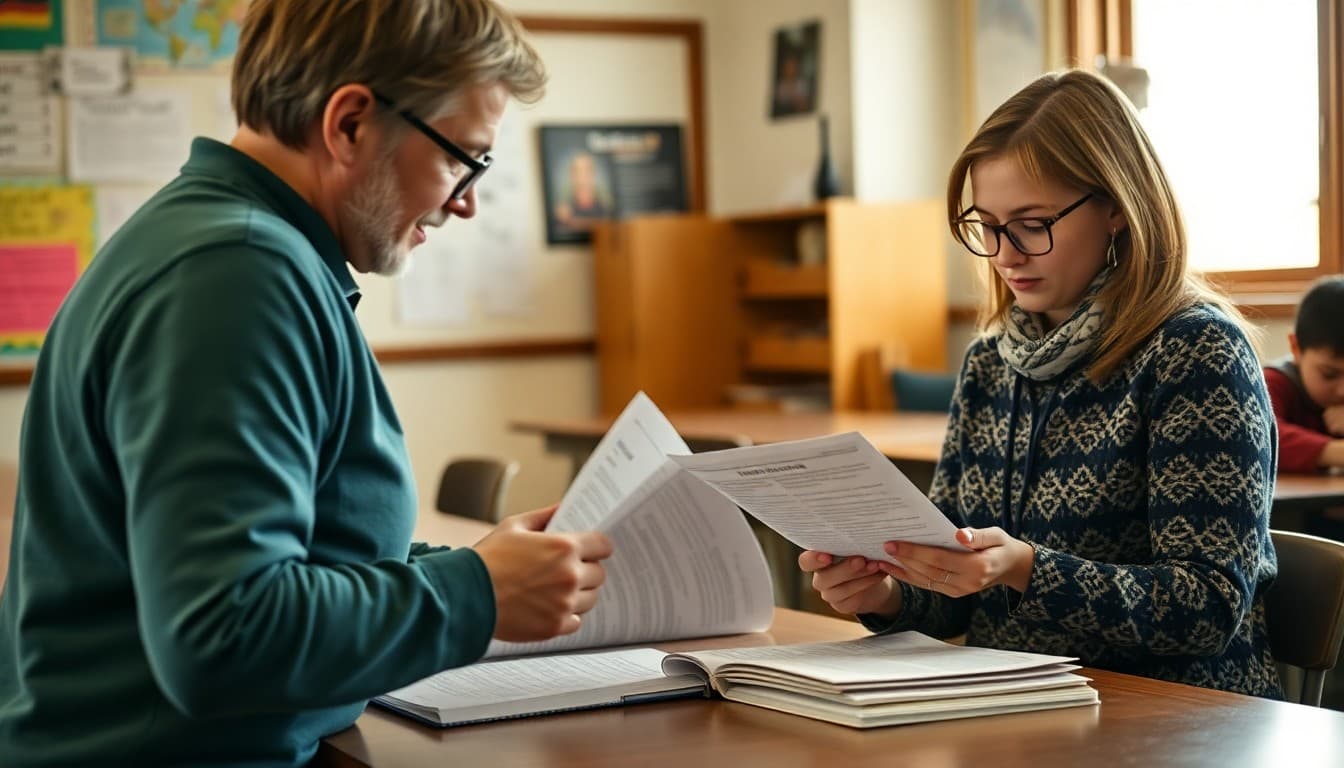
Montana ELL Program Newsletter: Guide for ESL Educators

Montana's ELL programs operate in a state where small towns can be 100 miles apart and where the nearest Spanish-speaking community liaison may be in the next county. The state's ELL families include Spanish-speaking agricultural workers, Indigenous language speakers from tribal communities, and refugee families who settled in Missoula and Billings. A newsletter that works for Montana's ELL programs has to be practical, printable, and designed for communities where resources are genuinely sparse.
Montana's Title III Communication Framework
Montana follows federal Title III and ESSA language access standards. The Montana Office of Public Instruction reviews compliance through the consolidated state plan. Essential communications for families with limited English proficiency must be translated into the family's home language. For many small Montana districts, this means working with a Spanish-speaking paraprofessional or community liaison to translate newsletters, since professional translation services may be expensive relative to the size of the program. The effort is still worth making -- even in a district with 15 ELL students, those families deserve to receive information in a language they can read.
Explain WIDA ACCESS Results in Plain Language
Montana uses WIDA ACCESS to measure English language proficiency. Families receive score reports each spring that are technical and rarely self-explanatory. Your newsletter during the testing window should explain what ACCESS measures, what the 1-6 scale means, and what your district requires for reclassification. For Spanish-speaking families, publish this explanation in Spanish. A parent who understands what the score means can follow up at the parent-teacher conference with specific questions about their child's progress toward reclassification. That is the outcome the newsletter should create.
Design for Rural Distribution
Montana's rural geography creates real distribution challenges. Many ELL families live far from schools, have limited internet access, or rely entirely on students to bring paper home. Design your newsletter for print first: clean layout, text-forward, readable in black-and-white. For families who do have email or smartphone access, digital delivery through Daystage is faster and more reliable than paper. For families in genuinely remote areas, coordinate with the school bus driver or the Spanish-speaking paraprofessional to ensure physical delivery. No single distribution method works for every Montana ELL family.
A Monthly Montana ELL Program Newsletter Template
This format covers the essentials in one printable page:
ELL Program Update -- [Month] [Year]
Your student is working on: [Language skill]
What this means at school: [One sentence description]
How to help at home: [One activity in the home language]
Important dates:
- [Date]: WIDA ACCESS testing
- [Date]: Parent conference (interpreter available, call ahead)
Questions? [ELL coordinator name, phone, email]
Acknowledge the Indigenous Language Context
Montana has seven federally recognized tribal nations and multiple tribal languages, including Crow, Blackfeet (Siksika), Northern Cheyenne, Assiniboine, and others. Students who speak tribal languages as their home language may be enrolled in ELL programs depending on their English proficiency and the district's assessment results. When working with Indigenous language-speaking families, connect with the tribal education department for the relevant nation. Cultural liaisons and tribal language teachers are the most appropriate partners for communication with these families -- they have existing trust relationships and cultural knowledge that outside translators lack.
Connect Montana Families to Available Community Resources
Montana has fewer urban immigrant support organizations than larger states, which makes school-provided information more critical. International Rescue Committee Missoula serves refugee families with resettlement and ESL services. Montana Food Bank Network reaches families across the state with food assistance. Montana Legal Services provides civil legal aid including immigration-adjacent matters. The Montana Migrant Education Program provides services for agricultural migrant families across the state. Big Brothers Big Sisters of Montana has programs in several cities. One resource mention per issue, chosen based on what is geographically accessible to your specific community, is more useful than a list of organizations that require a four-hour drive to access.
Use Daystage to Deliver Montana ELL Newsletters Efficiently
Montana ELL programs often have small staff, limited budgets, and families spread across large geographic areas. Daystage lets coordinators send formatted newsletters directly to family email addresses in Spanish and English without printing costs or backpack-delivery uncertainty. For the majority of Montana's ELL families, who primarily speak Spanish, a well-built monthly Spanish newsletter delivered directly to their phone is a significant improvement over a printed English newsletter sent home with a student. Programs that switch to digital delivery report higher rates of newsletter engagement and better attendance at the events and testing sessions that newsletters announce.
Get one newsletter idea every week.
Free. For teachers. No spam.
Frequently asked questions
What are Montana's requirements for communicating with ELL families?
Montana follows federal Title III and ESSA language access requirements. Schools must translate essential communications for families with limited English proficiency, including ELL identification notices, annual WIDA assessment results, placement letters, and conference invitations. The Montana Office of Public Instruction oversees compliance through the consolidated state plan and provides language access guidance to local districts.
What assessment does Montana use for English language proficiency?
Montana uses WIDA ACCESS for ELLs to measure English language proficiency in grades K-12. The assessment covers Listening, Speaking, Reading, and Writing on a 1-6 scale. Montana's reclassification criteria include WIDA score thresholds and academic performance indicators. Your newsletter should explain what ACCESS measures and what reclassification means when families receive score reports each spring.
What languages do Montana ELL families most commonly speak?
Montana's ELL population is small compared to most states, but linguistically varied. Spanish is the most common non-English home language, with communities in Billings, Great Falls, and agricultural areas. Montana also has significant Indigenous language communities, with Crow, Blackfeet, Northern Cheyenne, and other tribal nations having members attending public schools. Missoula has received some refugee resettlement, adding Somali, Karen, and other language speakers to the state's ELL profile.
How should Montana ELL newsletters address the Indigenous language context?
Montana is home to seven federally recognized tribal nations, and students who speak tribal languages as their home language may be enrolled in ELL programs or in separate tribal language programs depending on the district. Your newsletter for Indigenous language-speaking families should acknowledge the value of tribal languages and connect families to tribal language resources where available. Working with tribal education departments and cultural liaisons is essential for accurate, culturally appropriate communication with these families.
Can Daystage support Montana ELL programs with multilingual newsletters?
Yes. Daystage lets ELL coordinators create formatted newsletters and send them to specific family groups in their home language. For a Montana district with Spanish-speaking families as the primary ELL population, you can create and send a well-built Spanish newsletter directly to families. For smaller language groups, Daystage lets you manage multiple versions efficiently. Daystage handles formatting and delivery so coordinators focus on content.

Adi Ackerman
Author
Adi Ackerman is a former classroom teacher and curriculum writer with 8 years in K-8 schools. She writes about school communication, parent engagement, and what actually works in real classrooms.
More for ELL & ESL
Ready to send your first newsletter?
3 newsletters free. No credit card. First one ready in under 5 minutes.
Get started free