

Mississippi ELL Program Newsletter: Guide for ESL Teachers and Coordinators
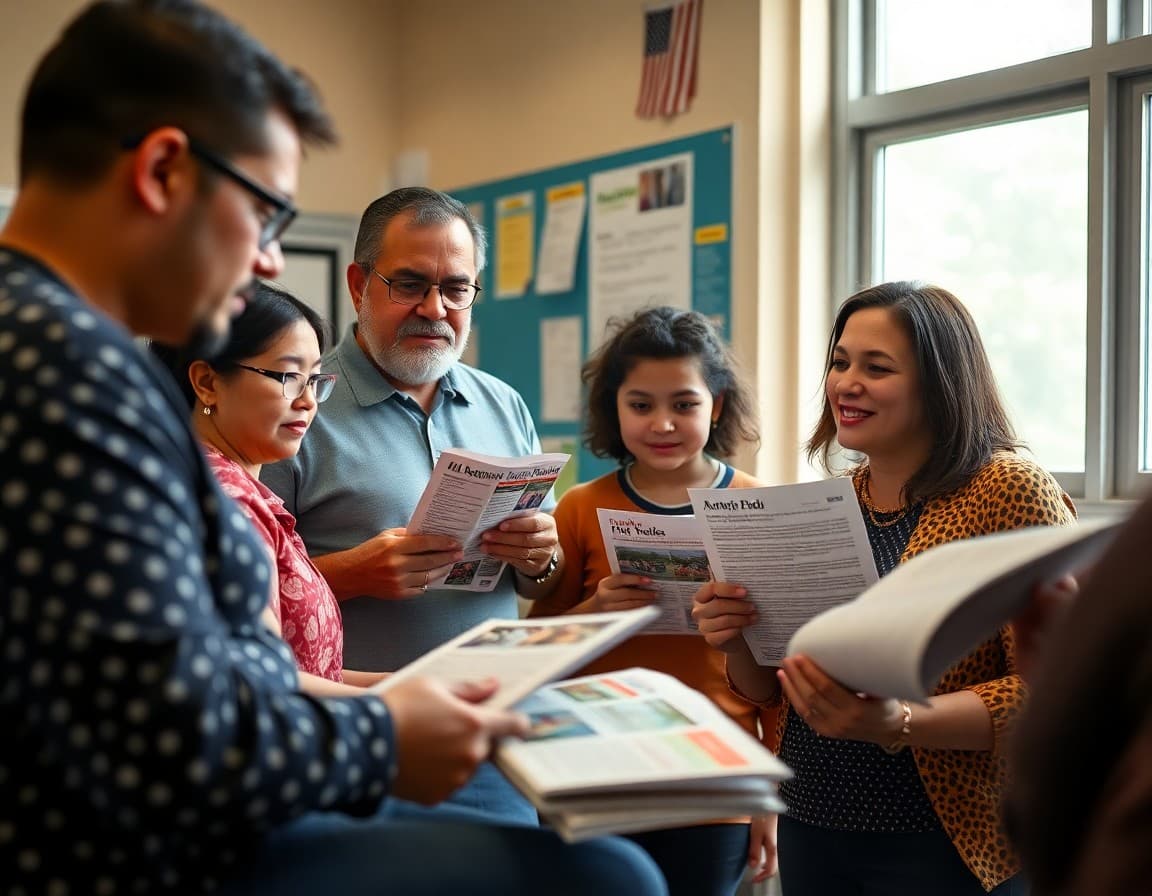
Mississippi's ELL program is much smaller than those in border states or immigrant gateway cities, but the communities it serves face some of the sharpest isolation challenges in the country. Rural poultry-processing towns in central Mississippi and the Delta have Spanish-speaking families who are far from urban services, far from established immigrant community organizations, and often far from other families who share their language. A newsletter that reaches these families in Spanish is one of the most meaningful connections the school can build.
Mississippi's Title III Communication Requirements
Mississippi follows federal Title III and ESSA language access standards: essential communications for families with limited English proficiency must be translated, annual WIDA results must be explained, and conferences must be accessible to families who do not read English. The Mississippi Department of Education reviews compliance through the consolidated state plan. For many rural Mississippi ELL programs, the newsletter is one of the few consistent, proactive communications that families receive in their home language. That makes it both a compliance tool and a lifeline for family engagement.
Explain WIDA ACCESS Results in Spanish
Mississippi uses WIDA ACCESS to measure English language proficiency. Families receive score reports each spring that require explanation. Your newsletter during the spring testing window should explain what ACCESS measures, what the 1-6 scale means for services, and what Mississippi requires for reclassification. A clear explanation in Spanish -- "Un puntaje de 4.5 o más generalmente significa que su hijo está listo para clases regulares sin apoyo adicional de ELL" -- gives families a milestone they can understand and ask about at the next parent conference. Publish this explanation in Spanish in every newsletter during and after the testing window.
Address Rural Mississippi's Specific Challenges
Central Mississippi's poultry communities are some of the most geographically isolated ELL settings in the country. Morton, Forest, and Canton are small towns with limited public services and few Spanish-language resources beyond the school and perhaps a local Catholic parish. Many families work night shifts or early morning processing shifts. Transportation to school events requires significant planning. Your newsletter should reflect these realities: design activities families can do at home without internet or special materials, provide a phone number for a Spanish-speaking liaison who can be reached in the evenings, and mention any adult ESL classes available within reasonable driving distance.
A Monthly Mississippi ELL Program Newsletter Template
This format covers the essentials in one page:
ELL Program Update -- [Month] [Year] / Actualización del programa ELL
Your student is working on / Su estudiante está trabajando en: [Language skill]
How to support at home / Cómo apoyar en casa: [One activity in Spanish]
Coming up / Próximamente:
- [Date]: WIDA ACCESS testing
- [Date]: Parent conference (interpreter available)
Questions? Call [ELL coordinator name and phone]
Connect Families to Mississippi Community Resources
Mississippi has fewer immigrant and ELL family support organizations than larger states, which makes it even more important to include the ones that exist in your newsletter. Mississippi Center for Justice handles civil rights and immigration-adjacent legal issues. Catholic Charities in Jackson serves families across the state with social services. Mississippi Delta Community College and East Mississippi Community College offer adult education programs. Mississippi State University Extension reaches rural communities through county offices. The Catholic parishes in poultry communities like Morton and Forest often have Spanish-speaking communities that organize informal mutual aid. Those parish contacts can be the most meaningful resource you mention.
Write Simply and Avoid Institutional Language
Mississippi ELL families often have limited formal education in any language. Many parents from rural Mexico or Central America completed only a few years of schooling. Your newsletter -- in Spanish and English -- should be written at a level accessible to someone with minimal formal education. Short sentences, concrete examples, and no acronyms without definitions. "Tu hijo está aprendiendo inglés en el salón de clases" is better than "Su estudiante recibe instrucción de desarrollo del lenguaje inglés en las cuatro modalidades académicas." Plain language is not a compromise. It is the communication that actually reaches families.
Use Daystage to Reach Mississippi ELL Families Directly
In rural Mississippi, paper newsletters sent home in backpacks are frequently the only delivery option programs have tried. But many families have smartphones and use WhatsApp to communicate within their networks. Daystage lets coordinators send formatted newsletters directly to family email addresses in Spanish and English, bypassing the backpack-and-paper unreliability. For a small program in Morton or Forest serving 50 ELL families, having every family receive the Spanish newsletter in their phone within an hour of the coordinator sending it is a dramatic improvement over hoping the paper version survives the bus ride home. Consistent digital delivery changes the parent engagement numbers in measurable ways.
Get one newsletter idea every week.
Free. For teachers. No spam.
Frequently asked questions
What are Mississippi's requirements for communicating with ELL families?
Mississippi follows federal Title III and ESSA language access requirements. Schools must translate essential communications for families with limited English proficiency, including ELL identification notices, annual WIDA assessment results, placement letters, and conference invitations. The Mississippi Department of Education oversees Title III compliance through the consolidated state plan and provides language access guidance through its Office of Professional Development and Instructional Programs.
What assessment does Mississippi use for English language proficiency?
Mississippi uses WIDA ACCESS for ELLs to measure English language proficiency in grades K-12. The test covers Listening, Speaking, Reading, and Writing on a 1-6 scale. Mississippi's reclassification criteria include WIDA composite and domain score thresholds along with academic performance indicators. Families need plain-language explanations of what ACCESS scores mean and what reclassification looks like in Mississippi schools.
What languages do Mississippi ELL families most commonly speak?
Spanish is overwhelmingly the most common home language in Mississippi's ELL population. The state's ELL growth has been concentrated in poultry-processing communities, particularly in the area around Morton, Forest, Canton, and in the Mississippi Delta. Most Spanish-speaking families in Mississippi are from Mexico or Central America, many having arrived through agricultural and poultry industry recruitment. Some districts also serve Vietnamese-speaking families, particularly in the Gulf Coast area with its fishing communities.
How should Mississippi ELL newsletters address rural poultry community challenges?
Mississippi's Spanish-speaking ELL families are concentrated in rural communities where resources are sparse, distances from towns are significant, and many families have limited transportation. Schools are often the primary institution these families interact with. Your newsletter should be delivered digitally when possible, mention adult ESL classes at Mississippi State University Extension and community colleges, and include contact information for Spanish-speaking community liaisons. Evening conference options and accessible phone lines matter more in rural Mississippi than in urban settings.
Can Daystage support Mississippi ELL programs with multilingual newsletter delivery?
Yes. Daystage lets ELL coordinators create formatted newsletters and send them to specific family groups in Spanish or English. For a Mississippi district where Spanish is the primary language need, you can create a well-built Spanish-language newsletter and send it directly to families. Daystage handles formatting and delivery so coordinators focus on content and community-appropriate communication.

Adi Ackerman
Author
Adi Ackerman is a former classroom teacher and curriculum writer with 8 years in K-8 schools. She writes about school communication, parent engagement, and what actually works in real classrooms.
More for ELL & ESL
Ready to send your first newsletter?
3 newsletters free. No credit card. First one ready in under 5 minutes.
Get started free