
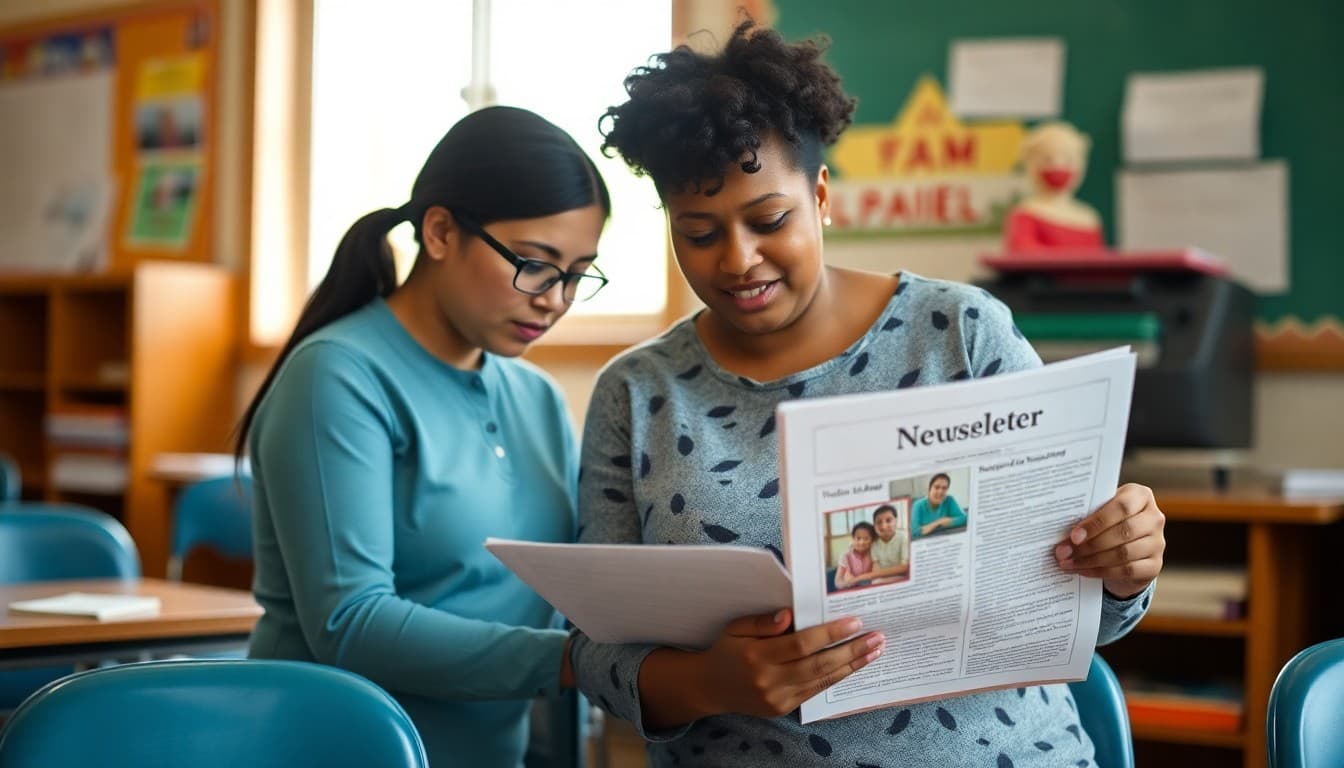
Mississippi ELL School Newsletter: Reaching Multilingual Families

Mississippi's ELL population has grown rapidly since the 1990s and is concentrated in specific geographic areas tied to economic activity. The Gulf Coast's seafood and tourism industries, the poultry processing towns of central and northern Mississippi, and the general expansion of Hispanic communities across the state have created ELL classrooms in places that had little multilingual experience a generation ago. For ELL teachers in these communities, a newsletter that reaches families in their home language is often the first genuine connection between school and home.
Mississippi's ELL Communities
Mississippi has approximately 25,000 English Language Learners in its public schools. The overwhelming majority speak Spanish as their home language, from families with roots in Mexico, Guatemala, Honduras, and El Salvador. The Gulf Coast has the highest concentrations of ELL students, particularly in Harrison and Jackson counties. Scott County, home to poultry processing in Forest and Morton, has one of the highest concentrations of Hispanic families outside the coast. Lowndes County in northeastern Mississippi has a growing Hispanic population tied to manufacturing.
Vietnamese families along the Gulf Coast represent the second largest ELL group, with communities that have been in Mississippi since the 1970s refugee resettlement. These are often multigenerational families whose older members may have limited English literacy even after decades in the state.
Meeting Title III Requirements in Mississippi
Mississippi's Title III compliance requires meaningful communication with families who have limited English proficiency. For Spanish-speaking families, this means Spanish-language newsletters or at minimum Spanish summaries of key information. Mississippi's MDE EL Program provides technical assistance to districts, and teachers in newer ELL communities can contact the MDE for guidance on meeting language access requirements.
Document your translation efforts. If a family later claims the school did not communicate adequately, a record of translated newsletters sent throughout the year demonstrates good-faith effort that protects both the teacher and the district.
Designing Effective Bilingual Newsletters for Mississippi Families
The practical format for Mississippi ELL newsletters is English content with Spanish summaries of the three to five most important items per issue. Full translation is ideal when resources support it. Prioritize: upcoming assessment dates, permission slips, service schedule changes, and information families need to act on. General classroom updates can be summarized rather than fully translated.
Keep English writing simple and jargon-free. "Your child will take a reading test on March 14" is translatable. "Students will complete a benchmark formative assessment during the testing window" is not. Write for the translation before you translate.
A Template Excerpt for Mississippi ELL Newsletters
Here is a section with an English-Spanish parallel that works for elementary and middle school:
"School Events: Parent-teacher conferences are on November 19 from 3 to 7 PM. An interpreter will be available. Please sign up online or call the front office at [number]. // Eventos escolares: Las conferencias de padres y maestros son el 19 de noviembre de 3 a 7 PM. Habrá un intérprete disponible. Por favor inscríbase en línea o llame a la oficina al [número]."
Including the assurance that an interpreter will be available in the translated section specifically is critical. Mississippi ELL families who know interpretation is available are far more likely to attend school events.
Connecting Families to Mississippi Resources
Mississippi's ELL communities have limited access to the kinds of established immigrant support organizations found in larger states. However, Catholic Charities of Mississippi provides services to immigrant and refugee families across the state. The Mississippi Immigrant Rights Alliance (MIRA) provides legal information and advocacy. Local Catholic churches in many Mississippi communities serve as informal community hubs for Hispanic families.
Including information about these resources in newsletters, at least once per semester, gives families connections to support networks that can help with immigration questions, language learning, healthcare navigation, and other challenges that affect school attendance and family stability.
Addressing Mississippi's Digital Divide for ELL Families
Mississippi's rural ELL communities face significant digital access challenges. Many families in Scott, Leake, and Lauderdale counties rely entirely on smartphones for internet access, often with limited monthly data. Keep newsletters lightweight and fast-loading. Avoid PDF attachments. For communities where smartphone-only access is common, consider WhatsApp as a supplementary distribution channel, which is widely used among Hispanic families in these communities.
Building Trust in Mississippi's ELL Communities
ELL families in Mississippi's poultry processing communities often have complicated relationships with institutions due to immigration enforcement concerns and past negative experiences. Schools that communicate consistently, in Spanish, with information that is genuinely useful rather than administrative or bureaucratic, build trust over time that makes family engagement possible. A newsletter that helps a family understand their child's MAAP testing schedule is a tangible service. Over months, tangible services build the trust that brings families to conferences and makes teachers' phone calls get answered.
Daystage and other school newsletter platforms can make this consistent bilingual communication manageable even for teachers who are new to serving ELL communities. Starting simply, with one Spanish summary per issue, and building up over time is better than waiting for a perfect system before communicating at all.
Get one newsletter idea every week.
Free. For teachers. No spam.
Frequently asked questions
What languages are most common among Mississippi ELL families?
Spanish is by far the most common ELL home language in Mississippi, with the majority of ELL students from Mexican and Central American families concentrated in the Gulf Coast region, Hattiesburg, Jackson, and the Petal/Lamar County areas. Vietnamese is the second most common language, with communities along the Gulf Coast in Biloxi and Gulfport. Smaller populations speak Chinese, Arabic, and other languages. Most Mississippi ELL teachers working outside the Gulf Coast primarily serve Spanish-speaking families.
What are Mississippi's legal requirements for ELL family communication?
Mississippi follows Title III of ESSA, requiring schools to provide meaningful communication to families with limited English proficiency. The Mississippi Department of Education's EL Program provides guidance to districts on language access obligations. Given Mississippi's relatively small but growing ELL population, some smaller districts may be newer to these requirements, but federal Title III obligations apply regardless of district size or experience.
How has Mississippi's ELL population changed in recent years?
Mississippi's ELL population has grown significantly since the 1990s, driven primarily by Hispanic immigration to the Gulf Coast following Hurricane Katrina recovery work and the growth of poultry processing and other industries in central and northern Mississippi. Communities like Forest, Morton, and Carthage in Scott and Leake counties have large Hispanic populations attached to poultry processing plants. Newsletters for these communities must be in Spanish to reach families effectively.
How can Mississippi ELL teachers get newsletters translated efficiently?
For Spanish-speaking families, which represent the large majority of Mississippi's ELL population, Google Translate produces usable initial drafts for Spanish that a bilingual staff member or parent volunteer can review for accuracy. Mississippi's growing communities in Scott, Leake, and the Gulf Coast have established Hispanic community networks with bilingual community members who can assist with translation review. Keep newsletter language simple and jargon-free so translations are more accurate.
What delivery method works best for Mississippi ELL newsletters?
Mobile delivery works well for Mississippi's Hispanic ELL families, who use smartphones as their primary internet devices. Email is the most reliable channel when families have consistent email access. For communities in poultry processing towns where family work schedules are irregular, Saturday morning delivery often gets higher open rates than weekday morning sends. Daystage creates mobile-friendly newsletters and allows scheduling to reach families at their most accessible times.

Adi Ackerman
Author
Adi Ackerman is a former classroom teacher and curriculum writer with 8 years in K-8 schools. She writes about school communication, parent engagement, and what actually works in real classrooms.
Ready to send your first newsletter?
3 newsletters free. No credit card. First one ready in under 5 minutes.
Get started free