
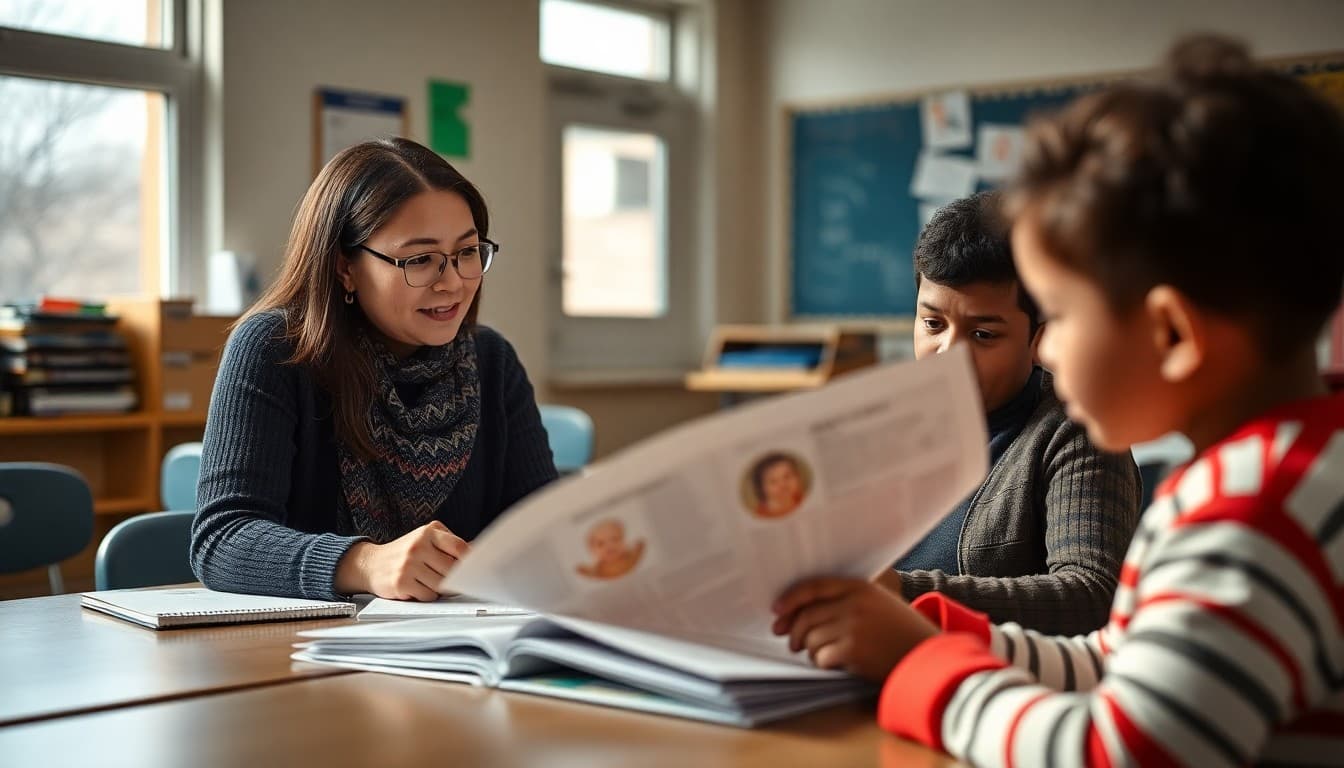
Michigan ELL Program Newsletter: Local Resources and Guide

Michigan has one of the most distinctive ELL landscapes in the United States, shaped by the world-famous Arab-American community of Dearborn, the agricultural regions of western Michigan with large Mexican-American populations, and a refugee resettlement infrastructure that has brought Somali, Burmese, and other communities to cities across the state. Effective Michigan ELL newsletters understand which community they are writing for and what local resources and cultural context actually matter to those families.
Dearborn's Arab-American Community
Dearborn, Michigan has a larger proportion of Arab-American residents than almost any other city in the United States. Arabic is the primary language of a substantial portion of the community, and Dearborn Public Schools has more Arabic-speaking ELL students than virtually any other district in the country. The Arab Community Center for Economic and Social Services (ACCESS) is a comprehensive community organization that serves Arab-American families with education, health, social services, and advocacy programs.
Arabic-speaking families in Dearborn come from Lebanese, Yemeni, Iraqi, Palestinian, and Syrian backgrounds, each with distinct cultural dialects and immigration histories. Written Modern Standard Arabic is understood across communities, but a newsletter that acknowledges the community's specific heritage builds more trust than one that is generic.
Western Michigan's Mexican-American Agricultural Communities
The western Lower Peninsula of Michigan -- including Kent County (Grand Rapids), Ottawa County, and surrounding agricultural areas -- has a large Mexican-American population tied to agriculture, horticulture, and food processing. Many of these families have been in Michigan for multiple generations. Grand Rapids has a growing Latino community with established community infrastructure. ELL newsletters for western Michigan communities can reference a long-established school-family relationship rather than treating Spanish-speaking families as newly arrived.
Michigan's Refugee Communities
Detroit, Grand Rapids, and Lansing have all received significant refugee resettlement. Somali communities are present in Detroit and Grand Rapids. Burmese ethnic minority families -- Karen, Kachin, Chin -- are present in several Michigan cities. Iraqi refugee families, some displaced by conflicts over two decades, have resettled in the Detroit metro area. The IRC Michigan and other resettlement agencies have developed multilingual family communication approaches that can inform ELL newsletter writing for these communities.
Michigan Department of Education and ISD Resources
MDE's English Learner Education unit provides guidance on the MDE website. Michigan's Intermediate School Districts provide regional support including translation resources and ELL program assistance. WIDA's multilingual family resources in Arabic and other languages are worth linking to from Michigan ELL newsletters. Dearborn Public Schools' Arabic-language family communication resources are models worth examining for districts serving significant Arabic-speaking populations.
ACCESS and Dearborn Community Resources
ACCESS (Arab Community Center for Economic and Social Services) is the anchor resource for Arab-American families in Dearborn, offering services in Arabic across health, education, immigration, employment, and social services. For Dearborn ELL newsletters, ACCESS is the first community organization to reference. The Dearborn Public Library has Arabic-language collections and multilingual programs. For Spanish-speaking families in Dearborn, the Dearborn area also has Latino community organizations worth referencing.
Grand Rapids and Statewide Resources
West Michigan Refugee Education and Cultural Center (WRECC) in Grand Rapids serves refugee families with education and integration support. Michigan Immigrant Rights Center provides statewide immigration legal assistance and advocacy. Global Detroit serves immigrant entrepreneurs and community members in the Detroit metro area. Catholic Charities Michigan serves immigrant and refugee families across the state.
Using Daystage for Michigan ELL Newsletters
Daystage supports Michigan ELL coordinators in creating newsletters with Arabic, Spanish, Somali, and other language sections and delivering them to family groups by language. For Dearborn schools where Arabic-language communication is as important as English-language communication, Daystage allows equal visual prominence for both languages in the newsletter format -- a presentation choice that matters to the Arab-American community.
Get one newsletter idea every week.
Free. For teachers. No spam.
Frequently asked questions
What languages are most common among Michigan ELL students?
Spanish is the most common home language among Michigan ELL students, with concentrations in Detroit, Grand Rapids, and agricultural communities across the western and central Lower Peninsula. Arabic is the second most common, reflecting Michigan's world-renowned Arab-American community concentrated in Dearborn and surrounding communities. Dearborn Public Schools has one of the highest proportions of Arabic-speaking ELL students of any school district in the United States. Somali communities are present in Detroit and Grand Rapids. Burmese-speaking refugees, particularly Karen and Kachin communities, are present in several Michigan cities.
What makes Michigan's ELL context distinctive?
Dearborn, Michigan is home to one of the largest Arab-American communities in the world outside of the Middle East. Arabic is not just an ELL family language in Dearborn -- it is the dominant community language. Dearborn Public Schools has developed multilingual ELL communication resources specifically for Arabic-speaking families that are models for districts nationwide. Arabic-speaking families in Dearborn come from Lebanese, Yemeni, Iraqi, and other backgrounds with distinct cultural dialects and contexts. Writing Arabic-language ELL newsletters requires understanding which Arabic community is being addressed.
What state agency oversees Michigan ELL programs?
The Michigan Department of Education (MDE) oversees ELL programs through its Office of Field Services and English Learner Education unit. Michigan administers the WIDA ACCESS assessment. MDE provides guidance and some family resources on the MDE website. Michigan's Intermediate School Districts (ISDs) provide regional support to districts for ELL programs, translation resources, and family engagement, similar to Iowa's AEA system.
What community resources serve Michigan ELL families?
Dearborn resources include the Arab Community Center for Economic and Social Services (ACCESS), which is one of the most comprehensive Arab-American community service organizations in the country. Detroit resources include the IRC Michigan, Global Detroit, and the Michigan Immigration Rights Center. Grand Rapids has the West Michigan Refugee Education and Cultural Center (WRECC) and the Latin American Students Association (LASO) programs. Statewide, the Michigan Immigrant Rights Center provides legal assistance and advocacy for immigrant and refugee families.
How does Daystage support Michigan ELL newsletters for Arab-American families?
Daystage lets Michigan ELL coordinators build newsletters with Arabic and English sections side by side and deliver them to family groups by language. For Dearborn schools where Arabic is the primary community language, a newsletter that presents Arabic content with the same visual prominence as English content signals respect for the community's linguistic identity. Daystage also supports newsletters in Spanish, Somali, Burmese, and other Michigan ELL languages for districts serving more diverse language populations.

Adi Ackerman
Author
Adi Ackerman is a former classroom teacher and curriculum writer with 8 years in K-8 schools. She writes about school communication, parent engagement, and what actually works in real classrooms.
More for ELL & ESL
Ready to send your first newsletter?
3 newsletters free. No credit card. First one ready in under 5 minutes.
Get started free