
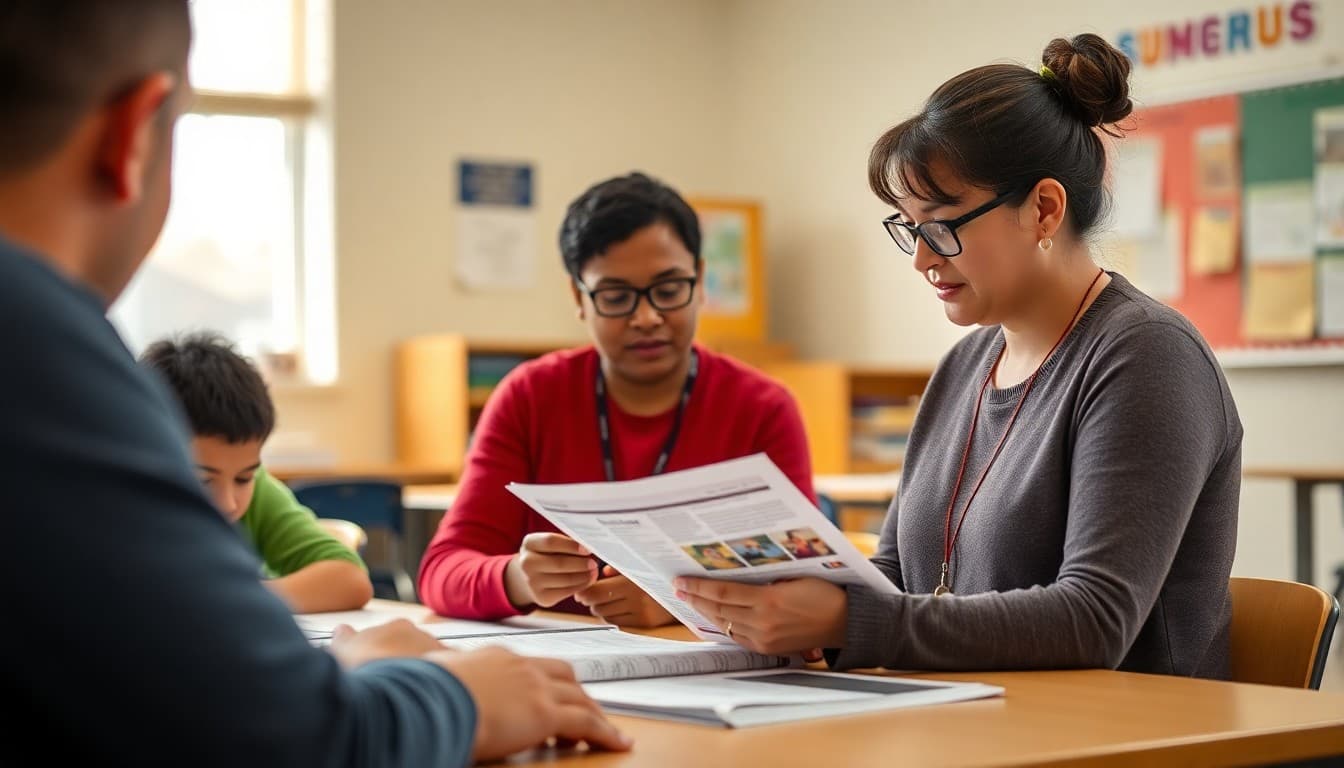
Maryland ELL Program Newsletter: Local Resources and Guide

Maryland has one of the most diverse ELL student populations in the country, driven by the state's proximity to Washington DC and its concentration of international families, immigrant communities, and refugee populations. Montgomery County alone serves families speaking over 150 languages. Prince George's County has a large Latino and Caribbean immigrant population. Baltimore City serves significant Somali, Hispanic, and West African communities. Effective Maryland ESOL newsletters understand this diversity and the sophisticated language access expectations that come with it.
Montgomery County: A Model for Multilingual Communication
Montgomery County Public Schools has one of the most developed ESOL programs and multilingual family communication systems in the United States. MCPS regularly translates family communications into 15 or more languages and provides interpretation services in over 100 languages upon request. MCPS's multilingual family resources are freely available on the MCPS website and can serve as models for smaller Maryland districts building their own ESOL communication capacity.
MCPS serves a uniquely diverse population that includes not only immigrant and refugee families but also families connected to the World Bank, IMF, embassies, and international organizations concentrated in the DC area. This means that Maryland ELL families include both families with high educational backgrounds and recent resources, and families who are newly arrived with limited formal education histories. ELL newsletters need to work across this full range.
Maryland's Ethiopian and Amharic-Speaking Community
Maryland has one of the largest Ethiopian communities outside of Ethiopia, concentrated primarily in Montgomery County and Prince George's County. The Ethiopian Community Development Council, with offices in the DC-Maryland area, is an important community partner for schools serving Ethiopian families. Amharic translation is the second most common translation need after Spanish in many Maryland districts. Amharic uses its own script (Ethiopic), which requires specific font and display considerations in digital newsletters.
Prince George's County's Latino and Caribbean Communities
Prince George's County has a large Latino population, concentrated in Langley Park, Hyattsville, and surrounding communities, with significant populations from El Salvador, Honduras, Guatemala, and Mexico. Caribbean communities -- particularly Jamaican and other English-speaking Caribbean families -- are also present but are often not identified as ELL students despite having different academic language needs. Spanish translation is a high priority for Prince George's County ELL communication.
Maryland State Department of Education Resources
MSDE's ESOL and World Languages office provides guidance documents and family resources on the MSDE website. MSDE administers Title III funding and monitors district ESOL program compliance. The Maryland Multicultural Education office provides statewide support for ESOL coordinators. CASA de Maryland and other advocacy organizations publish family guides and rights information that can supplement school newsletters.
Baltimore City's ELL Communities
Baltimore City schools serve significant Somali, Latino, and West African ELL communities. The IRC Baltimore provides resettlement services. Catholic Charities of Baltimore serves immigrant and refugee families. Baltimore City Public Schools has developed multilingual family communication resources reflecting the city's diverse population. Baltimore's community health centers and public library system offer multilingual programs and resources.
Using Daystage for Maryland ESOL Newsletters
Daystage supports Maryland ESOL coordinators in creating newsletters with Spanish, Amharic, French, Chinese, Korean, and other language sections, delivering them to family groups by language, and including links to MSDE and community resources. For smaller Maryland districts modeling their approach on MCPS, Daystage provides a practical starting point for building consistent multilingual family communication without the institutional capacity of a large county school system.
Get one newsletter idea every week.
Free. For teachers. No spam.
Frequently asked questions
What terminology does Maryland use for its ELL program?
Maryland uses the term ESOL (English for Speakers of Other Languages) for its program. Students are referred to as English Language Learners. Maryland administers the WIDA ACCESS assessment for annual proficiency testing. Montgomery County Public Schools (MCPS), one of the largest school districts in the country, has one of the most developed ESOL programs in the nation with extensive multilingual family communication resources in dozens of languages.
What languages are most common among Maryland ELL students?
Spanish is the most common home language among Maryland ELL students, with concentrations in Montgomery County, Prince George's County, and Baltimore City. Amharic is the second most common in many Maryland districts, reflecting a significant Ethiopian-American community particularly in Montgomery County and Prince George's County. French is significant among West African immigrant families. Chinese, Korean, Vietnamese, Tagalog, and Urdu are also present in significant numbers in various Maryland counties. Maryland's proximity to Washington DC draws diplomatic, international organization, and government contractor families speaking many languages.
What are Maryland ELL family rights?
Maryland ESOL families have federal rights to notification within 30 days of ELL identification, communication in their home language, interpreter access for school meetings, and translated essential documents. Maryland's State Department of Education and major county school systems have strong language access policies. Montgomery County has a language access framework that guarantees communication in the top languages spoken by its community and provides interpreter services in hundreds of languages upon request.
What community resources serve Maryland ELL families?
Montgomery County resources include Casa de Maryland (CASA), which is one of the most prominent Latino and immigrant advocacy organizations in the mid-Atlantic region, with offices throughout Maryland and DC. The International Rescue Committee Baltimore serves refugee families. Ethiopian Community Development Council has offices in the DC-Maryland area. Prince George's County has strong community organizations serving its large Latino and Caribbean populations. The Maryland Multicultural Education office provides statewide support resources for ESOL programs.
How does Daystage support Maryland ESOL newsletters for large and diverse school systems?
Daystage lets Maryland ESOL coordinators build newsletters with Spanish, Amharic, French, Chinese, and other language sections and deliver them to family groups by language. For large Maryland districts like MCPS and Prince George's County with very large ESOL populations, Daystage's delivery infrastructure supports the volume requirements that individual email systems cannot handle reliably. Smaller Maryland districts building ESOL programs for the first time benefit from Daystage's reusable template structure.

Adi Ackerman
Author
Adi Ackerman is a former classroom teacher and curriculum writer with 8 years in K-8 schools. She writes about school communication, parent engagement, and what actually works in real classrooms.
More for ELL & ESL
Ready to send your first newsletter?
3 newsletters free. No credit card. First one ready in under 5 minutes.
Get started free