
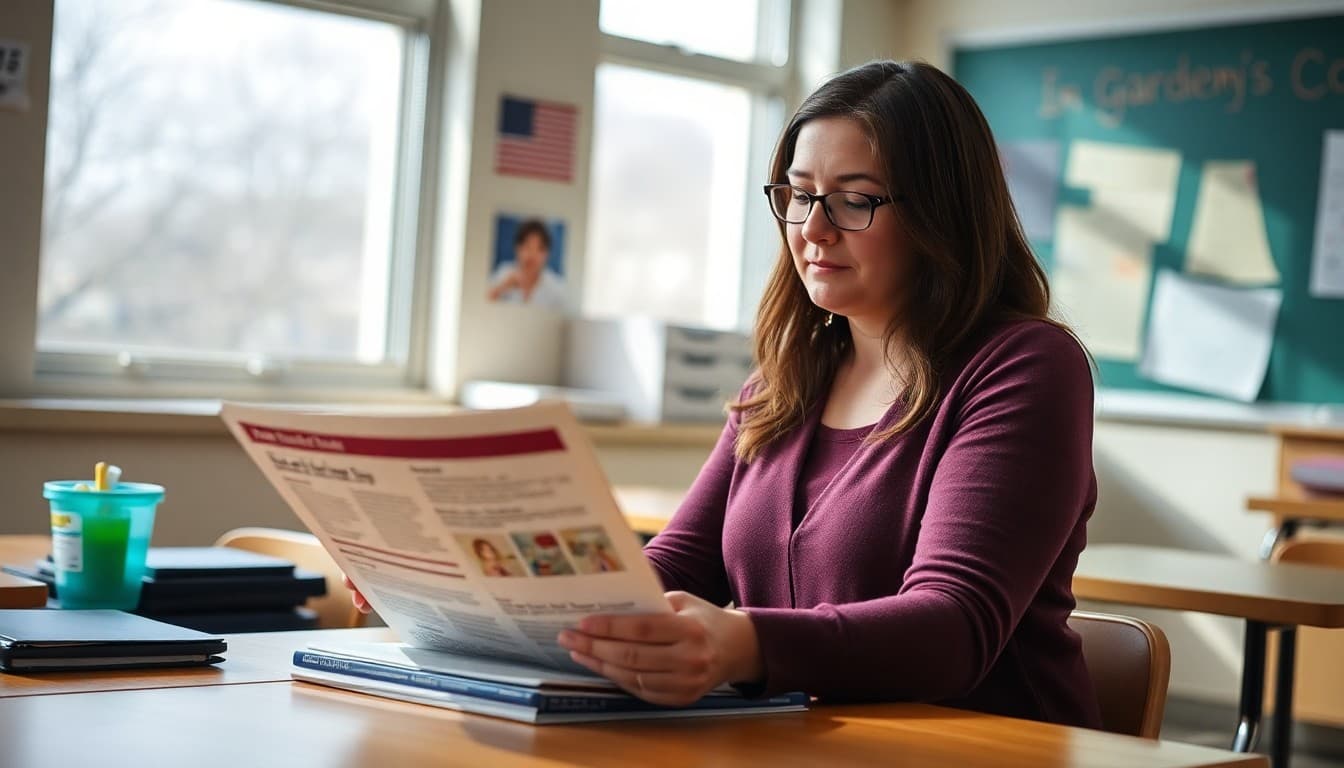
Kansas ELL Program Newsletter: Local Resources and Guide

Kansas has one of the more surprising ELL landscapes in the country. Southwest Kansas communities like Garden City and Dodge City have been receiving waves of immigrant and refugee workers for over four decades and have developed multilingual school communities that rival major cities in their linguistic diversity. Meanwhile, Johnson County suburbs south of Kansas City have seen rapid ELL growth in communities where this kind of diversity is relatively new. Effective Kansas ELL newsletters understand which context they are writing for.
Southwest Kansas: Four Decades of Multilingual Community Building
Garden City, Dodge City, and Liberal have been receiving immigrant and refugee families tied to beef processing employment since the early 1980s. Southeast Asian refugees arrived first -- Laotian, Vietnamese, and Cambodian families. Mexican and Central American workers followed in large numbers. Somali refugees from the early 2000s. Congolese and Burmese families more recently. The result is school communities where multilingual communication is not new -- it is institutional.
ELL newsletters for these communities do not need to introduce the concept of multilingual education. They can assume families have experience with ELL programs and can focus on current-year specifics, assessment updates, and local resources.
Kansas ELL Program Structure
Kansas uses the WIDA framework and WIDA ACCESS assessment for ELL programs. Cover the standard elements in your newsletter: what services students receive, what the ACCESS test measures and when it takes place, what proficiency levels mean, and how families can support language development at home. Include information about how students exit ELL services and what monitoring continues after exit.
Wichita's Refugee Communities
Wichita has received significant refugee resettlement, particularly Burmese ethnic minority families including Karen and Karenni communities, as well as families from Iraq, Somalia, and the Democratic Republic of Congo. The IRC Wichita and Catholic Charities Wichita are the primary resettlement agencies. Wichita Public Schools has developed multilingual family communication capacity reflecting this diverse population. For newly arrived refugee families in Wichita schools, ELL newsletters should include basic orientation information about how the US school system works.
Kansas State Department of Education Resources
KSDE's ELL unit website provides guidance and family resource information for Kansas ELL programs. WIDA's multilingual family resources are worth linking to from Kansas ELL newsletters in the many languages served across the state. The Kansas Migrant Education Program provides services for migrant agricultural worker families, which is relevant for ELL coordinators in agricultural regions of the state.
Johnson County and Suburban Kansas City
Johnson County and the broader Kansas City metro area have seen rapid ELL growth driven by both skilled worker immigration and service industry communities. These districts serve a different ELL profile than rural southwest Kansas -- families who may be more economically secure, have different educational backgrounds, and have access to different community resources. ELL newsletters for suburban Kansas City communities should reflect local resources that are genuinely accessible to those families.
Community Organizations Serving Kansas ELL Families
The IRC Wichita, Catholic Charities of Wichita, and the Multicultural Coalition of Garden City are key community partners for their respective regions. Kansas Legal Services provides immigration legal assistance statewide. The University of Kansas Hospital International Patients Office serves some of the international community in the Lawrence and Kansas City areas. Local library systems in Wichita, Garden City, and Johnson County offer multilingual programs and ESL resources.
Using Daystage for Kansas ELL Newsletters
Daystage supports Kansas ELL coordinators in creating professional newsletters with Spanish, Burmese, Somali, Arabic, and other language sections and delivering them to family groups by language. For southwest Kansas communities with decades of multilingual school communication experience, Daystage provides an upgrade in the professional quality and digital delivery of that communication. For growing suburban districts building ELL programs for the first time, it provides a ready-to-use structure.
Get one newsletter idea every week.
Free. For teachers. No spam.
Frequently asked questions
What languages are most common among Kansas ELL students?
Spanish is the most common home language among Kansas ELL students, with heavy concentration in southwest Kansas communities like Garden City, Dodge City, and Liberal where beef processing plants are major employers. Burmese-speaking refugee communities, including Karen and Karenni speakers, are significant in Wichita and Kansas City. Somali communities are present in Garden City and other western Kansas cities that received early refugee resettlement tied to meatpacking industry recruitment. Vietnamese, Arabic, and Kinyarwanda speakers are also present in Wichita and Johnson County districts.
What state agency oversees ELL programs in Kansas?
The Kansas State Department of Education (KSDE) oversees ELL programs through its English Language Learner unit. Kansas administers the WIDA ACCESS assessment for annual proficiency testing. The KSDE ELL unit website provides guidance and family resource information. Kansas's ELL program infrastructure has grown significantly in areas like Garden City and Dodge City, which have had high ELL enrollment for decades and have developed substantial local expertise.
What is notable about southwest Kansas ELL communities?
Southwest Kansas -- Garden City, Dodge City, Liberal -- has one of the most ethnically and linguistically diverse populations in the Great Plains, driven by decades of beef processing industry employment. Garden City's school district has served ELL students since the 1980s when meatpacking plant recruitment brought workers from Southeast Asia, Mexico, and Central America. The community has since received waves of Somali, Congolese, and Burmese refugees. This long history means that Garden City and similar districts have developed deep local expertise in multilingual ELL communication.
What community resources serve Kansas ELL families?
Wichita resources include the International Rescue Committee Wichita, the Catholic Charities of Wichita, and Immigrant and Refugee Services programs. Garden City has developed local resources including Multicultural Coalition of Garden City. Kansas Legal Services provides immigration legal assistance across the state. The Kansas Migrant Education Program serves migrant agricultural worker families. Johnson County, home to affluent suburban communities south of Kansas City, has a growing ELL population with a different profile and different resource needs than rural southwest Kansas communities.
How does Daystage support Kansas ELL newsletters for diverse communities?
Daystage lets Kansas ELL coordinators build newsletters with Spanish, Burmese, Somali, and other language sections and deliver them by email to family groups. For southwest Kansas communities like Garden City with complex multilingual populations, Daystage's language-segmented delivery makes reaching many different language communities practical. For suburban Johnson County districts with growing ELL populations, Daystage provides a professional newsletter platform that meets the communication expectations of an affluent suburban school community.

Adi Ackerman
Author
Adi Ackerman is a former classroom teacher and curriculum writer with 8 years in K-8 schools. She writes about school communication, parent engagement, and what actually works in real classrooms.
More for ELL & ESL
Ready to send your first newsletter?
3 newsletters free. No credit card. First one ready in under 5 minutes.
Get started free