

Korean School Newsletter Guide for Korean Families
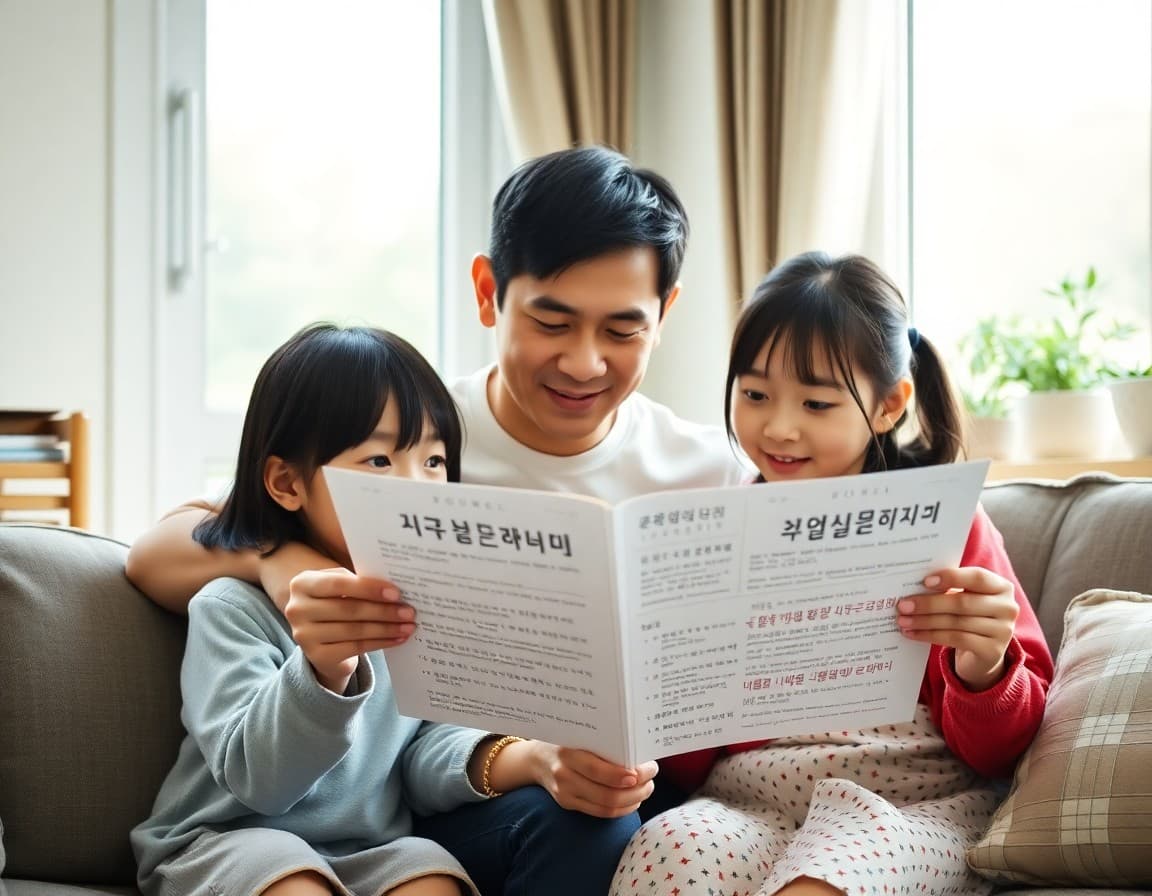
Korean-speaking families bring strong educational values and high engagement potential to any school community. The barrier to that engagement is often purely linguistic. A well-crafted Korean school newsletter removes that barrier and opens the door to the kind of family-school partnership that research consistently links to better student outcomes.
Understanding Korean Honorifics in School Communication
Korean has a grammatical honorific system that encodes social relationships into every sentence. The formal polite register -- called jondaemal -- uses specific verb endings (-yo, -eumnida) and honorific vocabulary that signals respect for the reader. This is the correct register for school newsletters.
Using informal Korean (banmal) in a school newsletter would be read as disrespectful or unprofessional, similar to addressing parents by their first name in a culture that uses formal address conventions. Google Translate sometimes produces informal Korean. Any translation going to families should be reviewed by a native Korean speaker specifically for register and formality level, not just vocabulary accuracy.
What Korean Families Most Want to See in School Newsletters
Korean families with high educational expectations often want more academic detail than American school newsletters typically provide. They want to know when standardized tests are scheduled, what the curriculum covers in each unit, how grades are calculated, and what the school's academic support programs look like. They want to understand the college admissions timeline and when AP or IB courses become available.
This does not mean your Korean newsletter should be 10 pages long. It means including a brief academic update section that covers current learning focus areas, upcoming assessments, and available support programs. Korean families who receive this level of information stay engaged because there is substance to engage with.
A Template Section in Korean
Here is a sample opening and first section that works for a Korean family newsletter:
"존경하는 학부모님께, 안녕하세요. [학교 이름]의 소식을 전해드립니다. 이번 주 학교에서 일어나는 중요한 소식과 일정을 확인하시고, 궁금한 점이 있으시면 [전화번호]로 연락해 주십시오. 한국어를 구사하는 직원이 도움을 드릴 준비가 되어 있습니다."
This translates to: "Dear respected parents, hello. We bring you news from [School Name]. Please check the important news and schedule for this week, and if you have any questions, please contact us at [phone number]. Staff who speak Korean are ready to assist you." The honorific opener "존경하는" (respected) and formal verb endings throughout signal the appropriate register for school-to-family communication.
Korean Saturday Schools and the Broader Education Ecosystem
Many Korean families complement their children's public school education with Korean Saturday schools (hangul hakkyo) that teach Korean language, history, and culture. These schools are a significant part of Korean community life in many cities. Your newsletter can acknowledge this by occasionally referencing Korean community learning resources, noting Korean Heritage Month events, or highlighting students who participate in Korean cultural programs.
This recognition costs nothing and earns significant goodwill. Korean families who see their educational investments outside of public school acknowledged feel the school understands them as whole families rather than just as students in seats.
Navigating Academic Pressure Conversations
Some Korean families push for acceleration, gifted services, or advanced coursework earlier than the school recommends. Your newsletter can address this proactively by explaining the school's gifted identification process and timeline, the criteria for course placement, and the support available for students who are ready for additional challenge. Providing this information in Korean, before families have to ask for it, positions the school as responsive to Korean families' informational needs rather than making them feel like they are pursuing information the school is reluctant to provide.
After-School Programs and Enrichment Opportunities
Korean families highly value enrichment opportunities. A newsletter section covering available after-school clubs, tutoring programs, academic competitions, and enrichment activities -- in Korean -- will get read carefully by Korean parents. Include specific enrollment information, deadlines, and costs (including which programs are free) in each mention. Vague references to "opportunities available" are less actionable than "STEM club meets Tuesdays and Thursdays, registration opens September 5th, no cost."
Building the Translation Infrastructure
Korean translation requires more than a one-time effort. Building a sustainable translation workflow means identifying a bilingual Korean staff member or parent volunteer who can review newsletter content monthly, establishing a consistent format that reduces translation time, and building Korean newsletter production into the regular schedule rather than treating it as an add-on that gets done when time permits.
Some districts with large Korean-speaking populations have hired bilingual Korean family liaisons as part of their Title III budget. In districts without that resource, a parent volunteer committee that reviews translations in exchange for direct access to school administrators can create the same outcome.
Korean New Year and Cultural Calendar Points
Seollal (Lunar New Year) and Chuseok (Korean harvest festival, roughly September) are the two major cultural observances for Korean families. Acknowledging these in your school newsletter -- even briefly -- sends the same signal that Mandarin newsletters send when they acknowledge the Lunar New Year: the school sees its Korean families and values their cultural identity. Small acknowledgments done consistently accumulate into a culture of genuine inclusion.
Get one newsletter idea every week.
Free. For teachers. No spam.
Frequently asked questions
How accurate is automated translation for Korean school newsletters?
Korean machine translation quality from English has improved significantly, but Korean has complex honorific systems that automated tools often get wrong. Korean uses different verb endings and vocabulary based on the formality level and the relationship between speaker and listener. School newsletters should use formal polite Korean (jondaemal), which uses -yo and -eumnida verb endings. A native Korean speaker should review any translated content before it goes out, particularly for content that involves rights, procedures, or sensitive topics.
What are the main Korean-speaking school communities in the U.S.?
Korean-speaking families are concentrated in California (Los Angeles, Orange County, the Bay Area), New York and New Jersey, Virginia and Maryland suburbs of Washington D.C., Texas (Dallas, Houston), and Georgia (Atlanta). The Koreatown neighborhoods in Los Angeles and New York have dense Korean-speaking school populations, but Korean families are also present in suburban districts nationwide. Unlike some immigrant communities, Korean families in the U.S. include both recent arrivals and multigenerational families with varying English proficiency.
What academic expectations do Korean families typically have?
Korean cultural emphasis on education (known in Korean as gyoyuk yeol) is well documented. Many Korean families have high academic expectations, invest in private tutoring, and are highly engaged with their children's academic performance. This means Korean families often want detailed academic information in newsletters: test dates, curriculum scope and sequence, grade distribution data, and clear explanations of how American academic pathways work for college preparation. Providing this level of detail in Korean builds credibility with these families.
How do you reach Korean families who prefer text or app-based communication?
KakaoTalk is the dominant messaging platform for Korean families, comparable to WeChat for Chinese communities. Many Korean parent communities in U.S. schools maintain KakaoTalk group chats where school news gets shared. If you can get newsletter links shared in relevant KakaoTalk groups through a trusted Korean parent liaison, reach rates will significantly exceed email. Naver, a Korean search and communication platform, is also used by some families for news and information.
Can Daystage support Korean language newsletters for school communities?
Yes. Daystage lets you send a Korean version of your newsletter to Korean-speaking families simultaneously with your English version. You can include photos, important dates, and links to documents or forms all within one newsletter. Korean-speaking families who receive well-formatted, accurate Korean newsletters report feeling significantly more included in school communication and attend parent events at higher rates than families who receive only English communication.

Adi Ackerman
Author
Adi Ackerman is a former classroom teacher and curriculum writer with 8 years in K-8 schools. She writes about school communication, parent engagement, and what actually works in real classrooms.
Ready to send your first newsletter?
3 newsletters free. No credit card. First one ready in under 5 minutes.
Get started free