

Illinois ELL School Newsletter: Reaching Multilingual Families
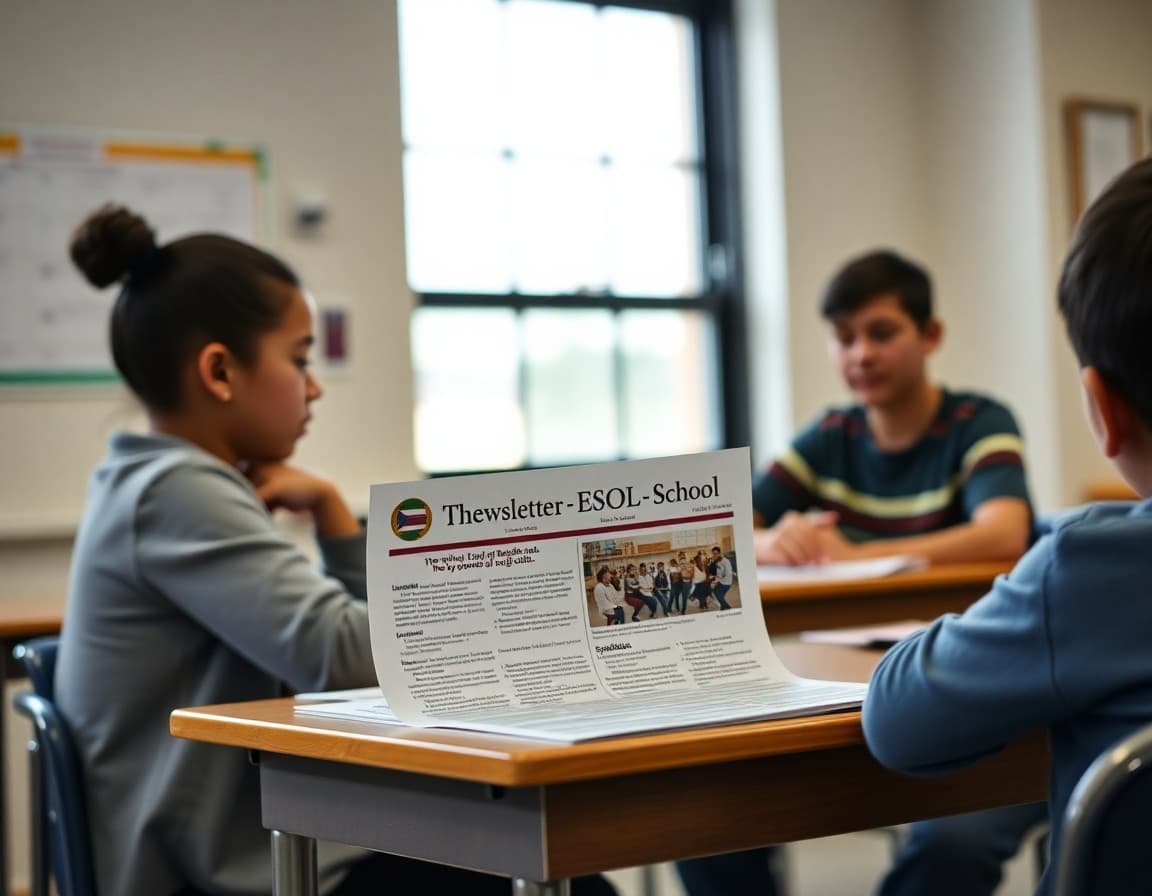
Illinois has one of the strongest bilingual education mandates in the country. When 20 or more students at a grade level share the same home language, the district is required to provide a Transitional Bilingual Education program. That framework means Illinois ESOL and bilingual teachers operate in a more structured and legally complex environment than most states. An ELL newsletter that reflects that context -- explaining the program, communicating assessment timelines, and reaching families in their home language -- is both a compliance tool and a genuine service to the families you work with.
Illinois Bilingual Education: The Legal Framework
Illinois's bilingual education mandate (Article 14C of the School Code) requires districts to provide TBE programs when enrollment thresholds are met. This goes beyond the federal IDEA and Title III requirements that most states follow. Illinois ISBE monitors compliance with bilingual education requirements, and program placement decisions must be communicated to families in their home language. If your school has a TBE program, your newsletter should explain clearly: what TBE means, how students enter and exit the program, and what families' rights are throughout that process. Many families in TBE programs do not fully understand the difference between native language instruction and transition support, which creates confusion and sometimes unnecessary conflict at program review meetings.
Explaining Illinois's ELL Programs in Plain Language
Illinois families may encounter several program types: Transitional Bilingual Education, Dual Language programs (where both English and another language are used for instruction), and English as a Second Language programs. A newsletter that explains your specific program, why their child is placed there, and what the transition to general education looks like is more valuable than any generic explanation of ELL services. "Your child is in our 2nd grade Spanish-English Dual Language program. They receive instruction in both languages every day. The goal is full biliteracy by 5th grade. Here is what that means for your child's reading and math development this year." That is the kind of specificity that builds family confidence.
ACCESS for ELLs: Illinois's Annual Proficiency Assessment
Illinois administers ACCESS for ELLs through WIDA from January through March each year. ACCESS measures English proficiency in listening, speaking, reading, and writing on a 1-6 scale. Families need to understand that ACCESS scores determine ESOL service levels and, once a student reaches proficiency, may lead to program exit. Your December newsletter should cover: what ACCESS measures, when the testing window is for your school, what scores mean for ESOL services, and what families can do to support English development before the assessment. Include a translated parallel section in the top language of your school community.
Content Structure for Illinois ELL Newsletters
A structure that works for Illinois bilingual and ESOL programs:
- Program update: what students are working on in language development
- Academic connection: how language skills connect to content area work
- Home language strategy: one specific activity in the home language
- ACCESS testing update: (December-March) schedule, what to expect, parent actions
- Illinois resource: ISBE bilingual parent resources, community organizations
Template Excerpt: February Illinois ESOL Newsletter
English and Spanish parallel sections:
"This month we are working on academic reading strategies -- specifically how to find the main idea in informational texts. Your child will see this skill on the IAR in April. You can help at home by reading a news article or informational book together and asking, 'What is the most important point the author is making?' ACCESS for ELLs testing begins February 24. Testing takes 3-4 school days total. Please avoid scheduling appointments during this window."
"Este mes trabajamos en estrategias de lectura academica -- especificamente como encontrar la idea principal en textos informativos. Puede ayudar en casa leyendo un articulo o libro informativo juntos y preguntando: '¿Cual es el punto mas importante del autor?' Las pruebas ACCESS para ELL comienzan el 24 de febrero. Las pruebas toman 3-4 dias escolares en total."
Building a Year-Round Illinois ELL Newsletter Practice
Illinois ESOL and bilingual teachers have some of the most complex compliance workloads in education. Finding time for monthly newsletters requires a sustainable production system. Build a template with fixed sections, identify which sections need translation versus which can stay English-only, and schedule your newsletter production on a fixed day each month. Tools like Daystage preserve your bilingual template between issues so you are never rebuilding from scratch. For Illinois teachers who manage both TBE and ESL students across multiple grade levels, that consistency is the difference between a newsletter practice that lasts the year and one that fades by November.
Get one newsletter idea every week.
Free. For teachers. No spam.
Frequently asked questions
What are Illinois's language access requirements for ELL newsletters?
Illinois schools must comply with Title VI of the Civil Rights Act, the Equal Educational Opportunities Act, and Illinois's own language access statutes. Illinois has a Language Access Act that requires state agencies -- including schools receiving state funds -- to provide translation and interpretation for families who are limited English proficient. Key communications about student placement, progress, and required parental consent must be in families' home languages. Illinois ISBE's bilingual education guidelines reinforce these requirements specifically for ELL program communications.
What languages are most important for Illinois ELL newsletters?
Spanish is the most widely needed language for Illinois ELL newsletters, particularly in Chicago, Aurora, Elgin, Cicero, Joliet, Rockford, and Waukegan. Polish is significant in parts of northwest Chicago and suburban Cook County. Arabic is critical in parts of the Chicago suburbs, particularly in communities like Bridgeview and Orland Park. Urdu and Hindi serve South Asian communities in parts of DuPage County. Chicago Public Schools has translation services in all major languages, and suburban districts increasingly have access to ISBE-funded translation resources.
How should Illinois ELL newsletters cover the ACCESS for ELLs assessment?
Illinois administers the ACCESS for ELLs through WIDA, typically from January through March. ELL families need clear advance communication about what ACCESS measures, when their child will be tested, what the results mean for ESOL services, and whether high scores lead to program exit. A December newsletter section in English with a Spanish (or appropriate home language) parallel translation directly addresses the questions most ELL families have but rarely ask.
How does Illinois's Transitional Bilingual Education program affect newsletter content?
Illinois has a robust Transitional Bilingual Education (TBE) mandate that requires bilingual instruction when 20 or more students at a grade level share the same home language. Many Illinois ELL families do not understand the difference between TBE programs (which include native language instruction) and English as a Second Language programs (English-only instruction). A newsletter that explains which type of program their child is in and why that choice was made builds family trust and reduces the confusion that sometimes arises during program transitions.
Does Daystage support Illinois ESOL teachers who need bilingual newsletters?
Yes. Daystage lets Illinois ESOL teachers create bilingual newsletter layouts in a single document. For teachers in Chicago or suburban districts with Spanish-dominant ELL populations, having a bilingual production workflow built into your newsletter tool eliminates the copy-paste between two separate files that wastes time each month.

Adi Ackerman
Author
Adi Ackerman is a former classroom teacher and curriculum writer with 8 years in K-8 schools. She writes about school communication, parent engagement, and what actually works in real classrooms.
Ready to send your first newsletter?
3 newsletters free. No credit card. First one ready in under 5 minutes.
Get started free