

Hawaii ELL School Newsletter: Reaching Multilingual Families
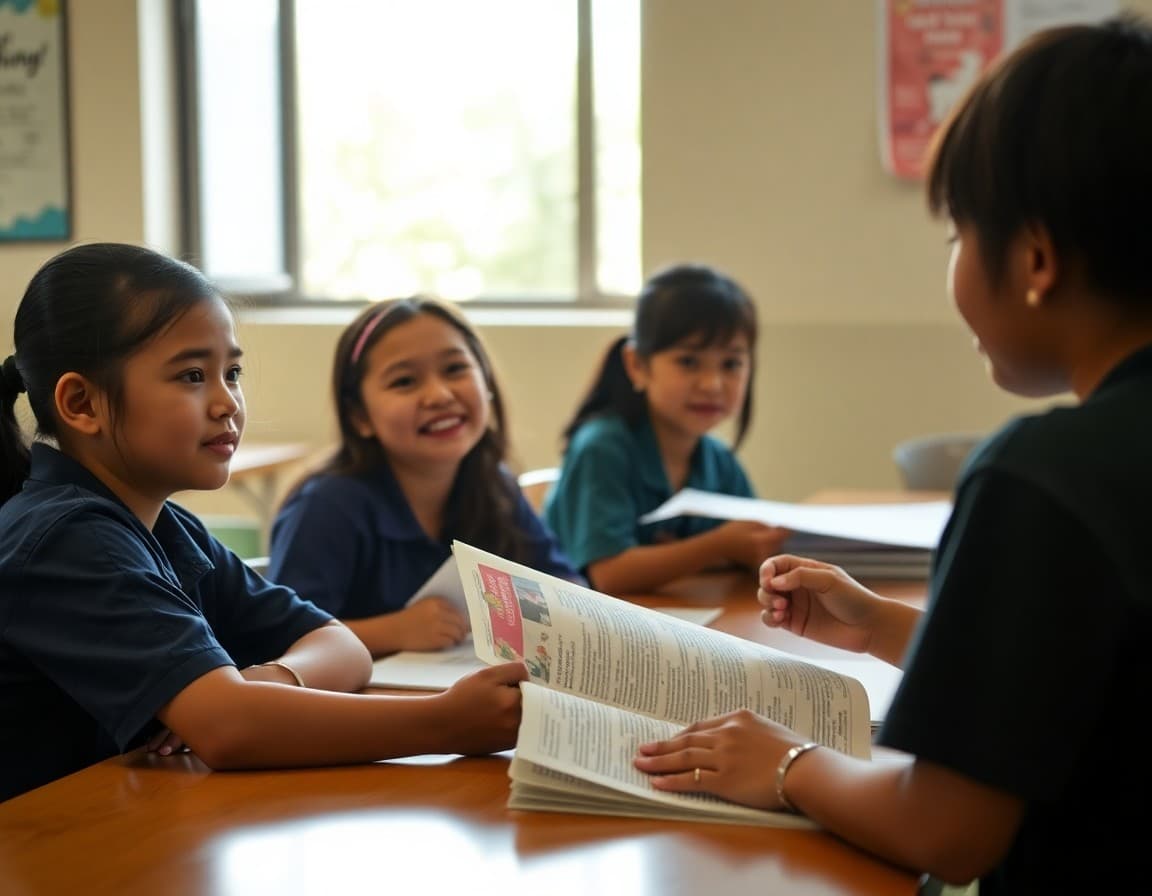
Hawaii is one of the most linguistically diverse states in the nation, and its ELL population reflects that. Filipino families speaking Ilocano and Tagalog, Micronesian families speaking Chuukese, Marshallese, and Pohnpeian, Korean and Japanese communities in Honolulu, and growing Spanish-speaking agricultural worker families on Maui -- a Hawaii ESOL teacher managing communication across these groups faces a genuinely complex challenge. This guide focuses on what works for Hawaii ELL newsletters and how to prioritize your translation and content decisions.
Hawaii's ELL Population: Who Are Your Families?
Hawaii's English Language Learner population is approximately 10,000 students statewide, with the largest concentrations in Oahu's Leeward and Windward communities, parts of Honolulu, and west Maui. The Filipino community is the largest ELL group overall, with Ilocano and Tagalog as the dominant languages. The Micronesian COFA migrant community -- primarily from Chuuk, the Marshall Islands, and Pohnpei -- is concentrated in Kalihi, Waianae, and Ewa on Oahu. This population is particularly vulnerable to communication gaps because translation resources for Chuukese and Marshallese are limited statewide. Knowing which languages your specific school community speaks is the essential first step before you decide what to translate.
Hawaii DOE Language Access and ESOL Requirements
The Hawaii Department of Education's language access plan follows Title VI and EEOA requirements for meaningful communication with ELL families. The DOE has a language services team that provides interpretation and translation support for high-priority documents. For newsletters, the key principle is that any communication about student progress, program placement, or required parent action needs to be available in families' home languages. Newsletters that are general program updates can be in English with a translated subject line and key dates -- but newsletters that include a required response, like a consent form or a meeting request, need full translation of that specific section.
Communicating About Hawaii's ESOL Services
Many Hawaii ELL families do not fully understand how the ESOL program works: what English proficiency levels mean, how students move between levels, and what ESOL services are provided alongside general education instruction. A simple explainer in your first newsletter of the year -- translated into the top language of your school community -- addresses questions that families have but rarely ask. "Your child is in our Beginning ESOL program, which means they receive 90 minutes of direct English language instruction each day in addition to their grade-level classes." That specificity is what families need to understand and support their child's progress.
Newsletter Content for Hawaii ELL Families
A content structure that works across grade levels in Hawaii:
- ESOL program news: what students are working on in English language development
- Academic connection: how English skills connect to grade-level content area work
- Home language tip: one activity families can do in any language
- ACCESS testing update: (December through March) what the assessment involves and when it happens
- Hawaii community resource: a local support service for multilingual families
Template Excerpt: January Hawaii ESOL Newsletter
A sample section:
"This month in ESOL, students are building vocabulary for science and social studies -- words like 'environment,' 'community,' and 'responsibility.' These are words your child will see in class and on assessments. You can help at home by asking your child to explain what a word means in their own words -- in any language. ACCESS for ELLs testing begins in late January. This is an annual English proficiency test that helps us understand how to support your child's language development. I will send more information home next week. If you have questions, please contact me."
Supporting Micronesian COFA Families in Hawaii Schools
Hawaii's Micronesian COFA community faces unique challenges that general ELL communication strategies do not fully address. COFA families have the legal right to live and work in Hawaii under federal compact agreements, but many are unfamiliar with U.S. school systems and face significant language barriers since professional Chuukese and Marshallese translation is scarce. If your school has a significant Chuukese or Marshallese population, building a relationship with a community liaison is more valuable than any translation software. The Pacific Islanders in Communications network and the Micronesian Area Research Center have resources for educators working with these communities.
Building a Year-Round ESOL Communication Cadence in Hawaii
ACCESS testing in winter, ESOL service review meetings in spring, and program enrollment in fall give you three natural anchor points for your newsletter year. Build your content calendar in August around these milestones and you will never start an issue without a clear main topic. Tools like Daystage make it practical to maintain a consistent monthly cadence even when your workload peaks during ACCESS testing windows, because the template structure means each issue requires updating content rather than rebuilding format.
Get one newsletter idea every week.
Free. For teachers. No spam.
Frequently asked questions
What languages should Hawaii ELL newsletters be available in?
Ilocano and Tagalog are the highest-priority languages for Hawaii ELL newsletters, given the large Filipino community on Oahu, Maui, and Kauai. Chuukese, Marshallese, and Pohnpeian are critical for schools in lower-income Oahu neighborhoods serving Micronesian and Compact of Free Association (COFA) migrant families. Japanese, Korean, and Chinese (Mandarin) are significant in some Honolulu schools. Knowing your school's specific language demographic is essential -- ask your school's EL coordinator for the language distribution data.
What are Hawaii's language access obligations for ELL families?
Under Title VI of the Civil Rights Act and the Equal Educational Opportunities Act, Hawaii schools must provide meaningful communication to families with limited English proficiency. Hawaii's DOE has a language access plan that applies statewide. Key communications -- including program placement, student progress, and IEP participation -- must be available in a language families understand. Hawaii's large Chuukese-speaking COFA migrant population has historically been underserved in this area, and the DOE has worked to improve translation resources in recent years.
How should Hawaii ESOL newsletters address the ACCESS for ELLs assessment?
Hawaii administers the ACCESS for ELLs assessment from January through March. Many ELL families in Hawaii are unfamiliar with what WIDA language proficiency levels mean and how they relate to ESOL service decisions. A December newsletter that explains what ACCESS tests, how scores affect your child's ESOL services, and what families can do to support language development before the assessment window is essential preparation. Write in plain language and provide a parallel translation in the top language of your school community.
How can Hawaii ELL newsletters support Micronesian COFA families specifically?
COFA migrant families from the Marshall Islands, Chuuk, and Pohnpei are among the most underserved in Hawaii schools. Many have limited formal schooling backgrounds, extended family caregiving structures, and significant cultural distance from U.S. school norms. ELL newsletters for schools with large Micronesian populations should use simple English and translated sections, avoid academic jargon entirely, include visual cues where possible, and feature community events and resources specific to Pacific Islander families. Partnering with community liaisons who speak Chuukese or Marshallese can help ensure your translations are accurate and culturally appropriate.
Does Daystage support multilingual ELL newsletters for Hawaii teachers?
Yes. Daystage lets Hawaii ESOL teachers build bilingual newsletter layouts in one document, which eliminates the need to maintain parallel files in different languages. For teachers in Hawaii schools with multiple language communities, having a streamlined production workflow is especially useful when translation turnaround time is already tight.

Adi Ackerman
Author
Adi Ackerman is a former classroom teacher and curriculum writer with 8 years in K-8 schools. She writes about school communication, parent engagement, and what actually works in real classrooms.
Ready to send your first newsletter?
3 newsletters free. No credit card. First one ready in under 5 minutes.
Get started free