
English Learner Progress Newsletter for Multilingual Families
Language acquisition is not linear and does not always look like progress to families watching from home. A student who spent six months absorbing English without speaking much may suddenly begin producing sentences. A student who seemed to be advancing quickly may plateau at a specific proficiency level for a year or more. Families who understand these patterns are better partners in supporting their child's development than families who are left to interpret the signs alone.
The Stages of Language Acquisition
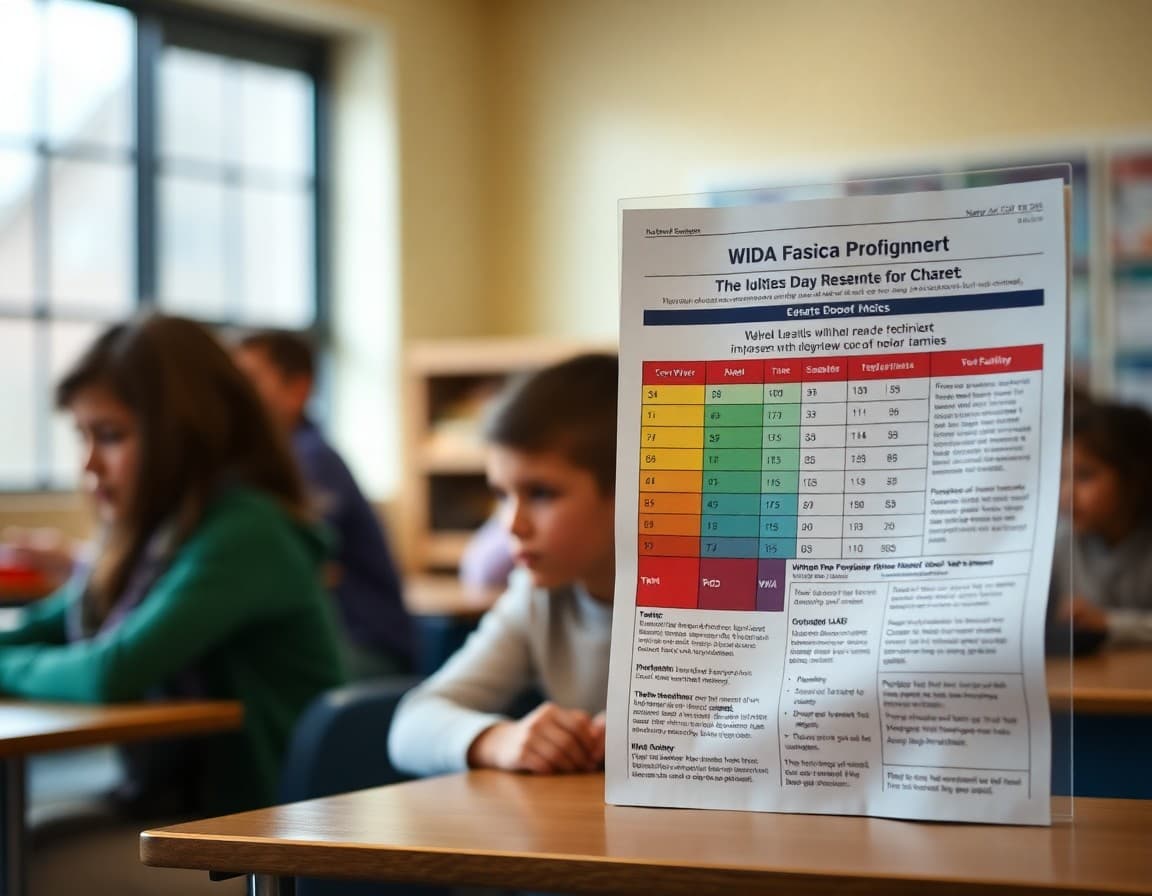
Second language acquisition follows a general progression that research has documented across languages and learners. The WIDA framework used in most states describes six proficiency levels. But the underlying process begins before a student even reaches Level 1 on a formal assessment.
The pre-production or silent period is when students are absorbing the new language through listening. They understand more than they produce. This stage can last from days to several months depending on the individual learner, their prior language experience, and their exposure level.
Early production begins when students start producing one- and two-word responses, yes-no answers, and simple phrases. WIDA Level 1-2 reflects this range. Vocabulary is growing rapidly but grammar is limited.
Speech emergence brings more complex sentence production, basic conversation, and increased accuracy. WIDA Level 3 corresponds to this stage. Students can communicate in most everyday situations but academic language is still developing.
Intermediate fluency, WIDA Levels 4-5, involves increasingly sophisticated academic language, nuanced expression, and the ability to engage with grade-level content with some support.
Advanced fluency, WIDA Level 6, is near-native proficiency in academic contexts. Students at this level may still benefit from vocabulary and writing support but perform at or near grade-level standards.
Explaining Progress to Families Using Plain Language
A progress newsletter should translate each student's current proficiency level into what it means practically. "At this level, your child can follow multi-step instructions in English, participate in class discussions on familiar topics, and read grade-level texts with some support. They are working toward producing more complex written responses independently."
Pair this description with a note about what you are specifically working on in ELL instruction this quarter: "We are focusing on academic vocabulary for our current social studies unit and on writing complete paragraphs with topic sentences."
Template: Progress Newsletter Structure
"Hello, families. Here is an update on your child's English language development progress.
Current proficiency level: [Level name and number]. What this means: [plain language description of what the student can do at this level in listening, speaking, reading, and writing].
Progress since last report: [brief description of growth observed, with one or two specific examples if possible].
What we are working on now: [specific language skill or content area focus this quarter].
How you can support at home: [two to three specific suggestions]. Remember that continuing to use and develop [home language] at home is one of the most powerful things you can do to support English language development.
Next steps: [whether reclassification is on the horizon, what the next assessment period is, or what milestone the student is working toward]."
The Importance of Home Language Maintenance
Many ELL families have been told, formally or informally, to speak only English at home to help their child learn faster. This advice contradicts decades of language acquisition research. Bilingualism is additive, not subtractive. A strong foundation in a first language provides the conceptual framework that transfers to the second language. Families who speak rich, complex language at home in their home language are giving their child a cognitive advantage, not a deficit.
Include this message explicitly in your progress newsletter. "Speaking [home language] at home is not a barrier to learning English. It builds the language foundations that make English acquisition stronger."
When Progress Is Slower Than Expected
Some students progress through language acquisition stages more slowly than their peers despite consistent instruction. This may reflect a learning disability, limited prior schooling, significant trauma, or other factors. When progress is slower than the typical range, the ELL teacher and the evaluation team should be in communication. A newsletter can prompt families to reach out: "If you have concerns about your child's progress or feel their rate of English acquisition seems different from peers, please contact me. We want to ensure we are providing the right level of support."
Get one newsletter idea every week.
Free. For teachers. No spam.
Frequently asked questions
What are the WIDA language proficiency levels and how should I explain them to families?
WIDA uses a 1-6 scale: 1 is Entering, 2 is Emerging, 3 is Developing, 4 is Expanding, 5 is Bridging, and 6 is Reaching. Each level describes what a student can do with language at that stage, not what they cannot do. Families benefit most from knowing what the level means concretely: 'At level 2, your child can follow familiar spoken directions and communicate basic needs. They are building vocabulary quickly.' That description is more useful than a number alone.
How often should ELL teachers communicate progress to families?
At minimum, annually through the ACCESS assessment results and at each report card period. Many ELL programs send additional progress updates at the midpoint of each quarter or semester. For students making slower than expected progress or for students near the reclassification threshold, more frequent communication is both good practice and legally prudent. Families of ELL students are entitled to be informed about their child's program participation and progress under Title III.
How do I explain the Silent Period to families of early ELL students?
The silent period is a well-documented stage of second language acquisition when new learners listen intensively without yet producing much language in the new language. It is not a sign of a learning disability or social withdrawal. Explain it plainly: 'Your child may speak very little English right now and that is normal and expected. They are absorbing everything around them. Most students begin producing language actively after several weeks to a few months.'
What home support is most valuable for English language development?
Maintaining and strengthening the home language is one of the most powerful things families can do to support English acquisition. Research consistently shows that strong home language literacy accelerates English acquisition rather than competing with it. Families should read in their home language, tell stories, discuss news events, and use rich vocabulary at home. This is not a consolation strategy; it is what the research shows produces the best English outcomes.
How does Daystage support ELL family communication?
Daystage newsletters can include bilingual sections so families receive progress information in both English and their home language. ELL coordinators managing large caseloads appreciate being able to send a single well-formatted bilingual newsletter to all ELL families at once rather than crafting individual emails. The structured newsletter format also makes it easy to include the consistent sections families come to rely on: current proficiency level, what we are working on, and how to support at home.

Adi Ackerman
Author
Adi Ackerman is a former classroom teacher and curriculum writer with 8 years in K-8 schools. She writes about school communication, parent engagement, and what actually works in real classrooms.
More for ELL & ESL
Ready to send your first newsletter?
3 newsletters free. No credit card. First one ready in under 5 minutes.
Get started free