

ELL Reclassification Newsletter: What It Means for Your Child
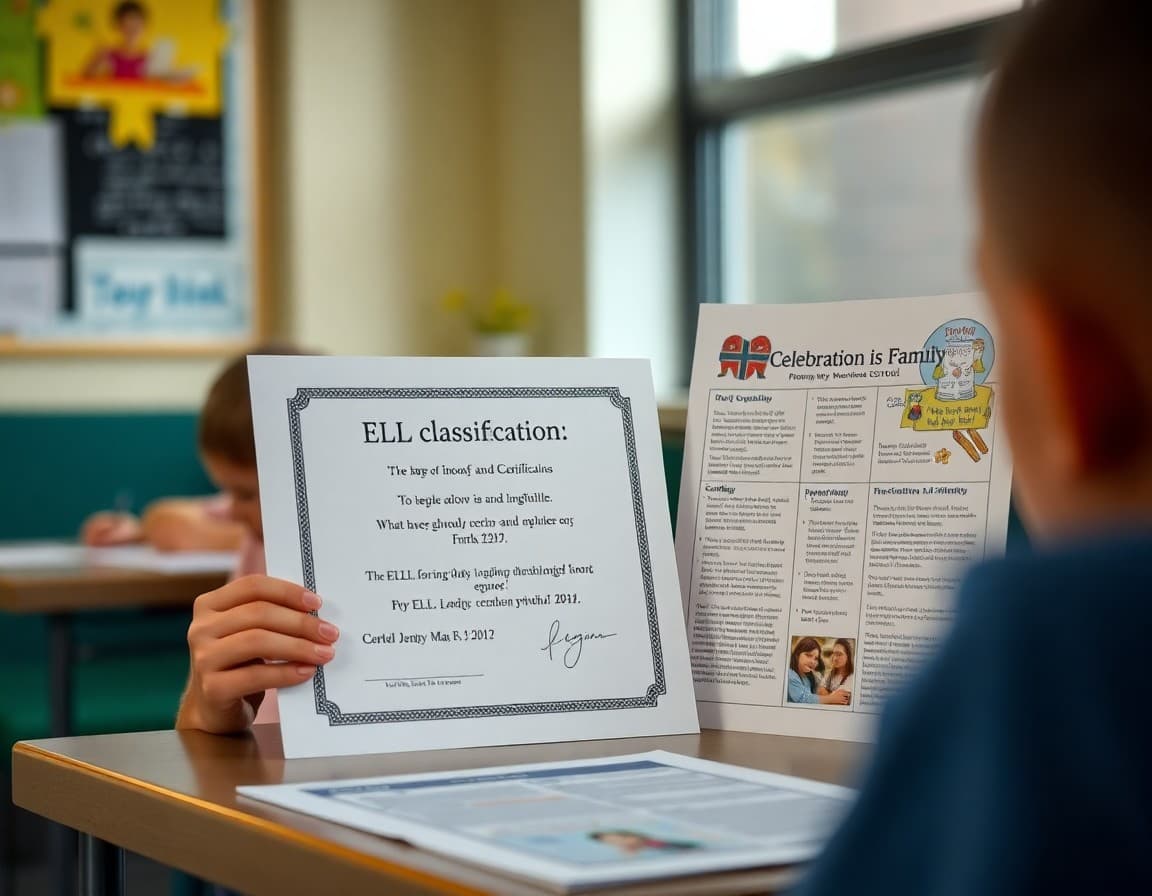
Reclassification is one of the most significant milestones in an English learner's school career. It marks the point where the data shows the student has developed enough English proficiency to access the general education program without specialized ELL support. Communicating about this milestone well protects the student's gains and ensures families understand what changes and what does not.
What Reclassification Is Not
Reclassification does not mean a student speaks perfect English. It does not mean the student's language acquisition journey is complete. It does not mean the school stops supporting the student. And it does not mean the student's home language or cultural identity has changed.
Reclassification means the student has demonstrated that they can access grade-level content in English with the supports available to all students. It is a milestone, not a graduation from language. That distinction matters when communicating with families who may fear that reclassification means their child is on their own.
The Reclassification Criteria
Every state has specific reclassification criteria. Most include: a score on the English language proficiency assessment (often ACCESS for ELLs, a WIDA assessment) that meets the state-set cutoff for proficiency, typically a composite score of 4.5 to 5.0; evidence of academic performance meeting or approaching grade-level standards; teacher assessment of the student's readiness; and parent input.
Explain your state's specific criteria in your reclassification newsletter. "To be reclassified as English Proficient in [state], students must achieve [score] or higher on the ACCESS assessment and demonstrate [academic performance criteria]. Your child has met these criteria based on [assessment results] from [date]."
Template: Reclassification Notification Newsletter
"Dear [Student Name]'s family,
We are pleased to share that [Student Name] has been recommended for reclassification from English Language Learner status. This means the data shows that [Student Name] has developed the English language skills needed to participate successfully in the general education program without specialized ELL services.
This determination is based on: [brief list of evidence: ACCESS score, academic performance, teacher recommendation]. These results reflect significant growth and hard work.
What changes: [Student Name] will no longer receive ELL program services beginning [date]. What does not change: [Student Name] will be monitored by our ELL team for [period] to ensure continued success. All general education accommodations and supports remain available as needed.
We celebrate this milestone and look forward to sharing more information at our scheduled meeting on [date]. Please contact me at [email] with any questions."
Post-Reclassification Monitoring
Most states require monitoring of reclassified students for two to four years. The monitoring process checks whether the student continues to make adequate academic progress after exiting ELL services. A newsletter that explains this monitoring gives families confidence that reclassification is not a cliff edge.
"For [period] after reclassification, we continue to monitor your child's academic progress. If at any point you have concerns about how your child is managing in the general education program, please contact me. We can discuss additional supports if needed, including possible re-entry into ELL services."
Celebrating Language Milestones at the Program Level
A program-level reclassification newsletter that goes to all ELL families each spring is a way to celebrate the achievement of students who are exiting while also showing current students what is possible. Without naming specific students, you can describe how many students reached their proficiency goals this year, what they are moving on to, and what their progress represents for the program as a whole.
This type of community celebration builds morale across the ELL program and gives families of students at earlier stages of acquisition a visible goal to look toward.
When Families Have Concerns After Reclassification
Some families worry that reclassification means reduced support. Some are proud but anxious. Some do not understand the criteria well enough to feel confident in the decision. Your newsletter should create an open invitation for these conversations rather than presenting reclassification as a closed administrative matter. "If you have questions about this decision or about what support looks like after reclassification, I am glad to meet with you" signals that the relationship does not end when the ELL service does.
Get one newsletter idea every week.
Free. For teachers. No spam.
Frequently asked questions
What is ELL reclassification and when does it happen?
Reclassification, also called redesignation or exit, is the process of determining that a student has attained sufficient English language proficiency to participate meaningfully in the general education program without specialized ELL services. The criteria for reclassification vary by state but typically include performance on an English language proficiency assessment like ACCESS for ELLs, academic performance indicators, and sometimes teacher recommendation and parent input. Students are not reclassified until the data shows they are ready.
What happens to a student after ELL reclassification?
After reclassification, a student exits the ELL program and is no longer counted as an English learner for reporting and funding purposes. Most states require monitoring of reclassified students for two to four years to ensure they continue to make adequate academic progress without ELL supports. If a reclassified student struggles significantly after exit, the IEP team or ELL coordinator can consider re-entry into the program.
Should families be involved in the reclassification decision?
Title III requires that families be notified of reclassification decisions and of the basis for the decision. While parent consent is not always required for reclassification, most states require notification and some require consent. Best practice is to involve the family in a conversation about reclassification rather than simply sending a form letter. A family who understands the decision is more supportive of the transition than one who feels the change happened to them.
What if a family does not want their child reclassified?
Families can advocate for keeping a student in the ELL program longer if they have concerns about readiness. The ELL coordinator should discuss the data with the family, explain what the reclassification criteria show, and address specific concerns. If a family disagrees with reclassification after a full explanation, some states have a formal review or appeal process. Document the conversation and the family's position in the student's record.
How do I celebrate reclassification in a newsletter without embarrassing the student?
Celebrate reclassification at the class or program level without naming specific students unless you have their explicit permission. 'Several of our students have reached their English proficiency goals this year and have exited our ELL program. This is a major achievement representing years of hard work' recognizes the milestone without identifying who. Daystage newsletters let you share this kind of community milestone naturally within your regular communication.

Adi Ackerman
Author
Adi Ackerman is a former classroom teacher and curriculum writer with 8 years in K-8 schools. She writes about school communication, parent engagement, and what actually works in real classrooms.
More for ELL & ESL
Ready to send your first newsletter?
3 newsletters free. No credit card. First one ready in under 5 minutes.
Get started free