

ELL Parent Workshop Newsletter: Learning Together in English
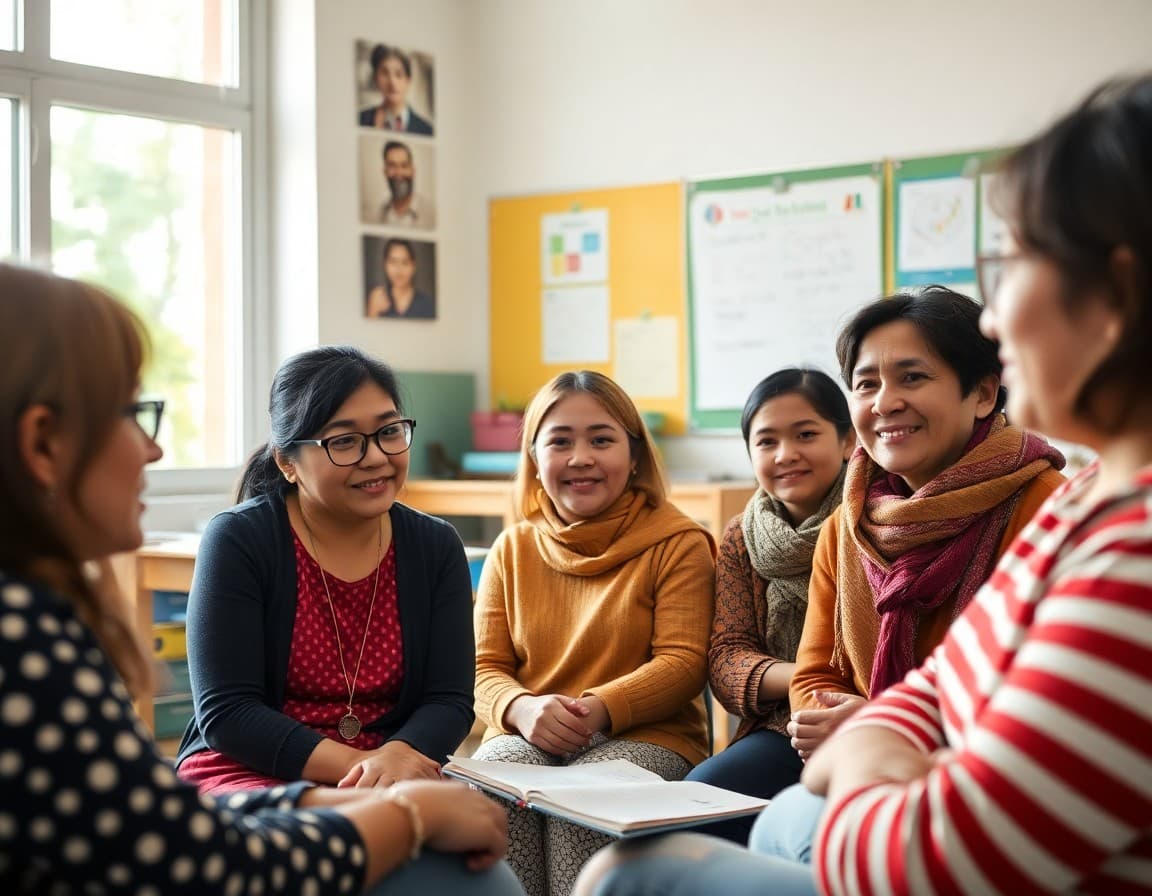
An ELL parent workshop is only as good as the number of families who show up. And families only show up if the newsletter that invites them gives them a compelling, specific reason to be there. Generic invitations get ignored. Specific ones get circled on the calendar.
Why ELL Parent Workshops Matter More Than General Parent Nights
General school events are valuable, but they are often designed by and for English-proficient families who already know how the school system works. ELL families need something different: a space where they are not navigating a language barrier, where their experience is the center of the conversation, and where they can ask the questions they would not ask in a general PTA meeting.
Research on family engagement in multilingual communities consistently shows that language-specific workshops run by bilingual facilitators produce stronger school-family relationships than general events with translation services added as an afterthought. The newsletter that invites families to an ELL workshop is the first step in creating that targeted relationship.
What the Newsletter Needs to Tell Families
An ELL parent workshop newsletter fails when it is vague. "Come learn about supporting your child's education" does not give a family a reason to find transportation, arrange childcare, and show up on a weeknight. What works instead is specificity about what will be covered, who will facilitate it, what language support will be available, and what practical outcome families will leave with.
Effective workshop newsletter language sounds like: "At this workshop, you will learn three things you can do at home every day to support your child's English learning -- even if you do not speak English yourself. You will meet with our ELL teacher and a parent from your language community who will answer your questions. Childcare is available on site and dinner will be served."
A Template Workshop Invitation Newsletter
Here is a complete invitation section that works:
"We are hosting an ELL Family Learning Night on [date] from [time] to [time] in [location]. This workshop is for families of students in our English Language Development program. At this event: you will learn simple ways to support English learning at home, you will meet the ELL teachers who work with your child, and you will have a chance to ask questions with a trained interpreter available in [languages]. Dinner and childcare are provided at no cost. Please RSVP by [date] by calling [phone number] or signing up at [link]. We hope to see you there."
That template covers logistics, learning outcomes, support services, and a clear RSVP path. It answers the questions that keep families from attending before they have to ask them.
Topics That Drive Attendance Among ELL Families
Workshop topics that consistently produce strong attendance among ELL families include: "How to help with homework when you do not speak English" (a question virtually every ELL parent has), "Understanding your child's report card," "How to request a meeting with your child's teacher and what to say," and "What your child's test scores mean and what happens next." Frame each workshop around a problem families actually have rather than around a program the school wants to promote.
English language classes for parents offered as part of or alongside an ELL family workshop are also high-demand. Many ELL parents want to learn English themselves and are grateful for any structured opportunity to do so. Even a 30-minute "English for School" segment at the end of a family workshop -- practicing phrases like "My child is absent today" or "I have a question about the homework" -- produces significant goodwill and practical benefit.
Translating the Workshop Newsletter Into Home Languages
The workshop invitation newsletter should be in the home language of the families being invited. An invitation in English to a workshop for non-English-speaking families is a self-defeating strategy. Send the invitation in Spanish, Arabic, Somali, or whatever language your ELL families read, and include English as a secondary reference if needed.
If you are hosting workshops for multiple language communities, consider whether to run separate workshops for each community or one multilingual event. Separate workshops in each language tend to produce deeper conversation and better attendance because families are not navigating multiple languages at once. Combined multilingual workshops are more efficient but require skilled multi-language facilitation.
The Follow-Up Newsletter Is as Important as the Invitation
After the workshop, send a follow-up newsletter within three days. Recap the most important points covered. Include any handouts or resources distributed. Thank the families who attended by name (with permission) to build social recognition. And announce the next event. Families who could not attend see that others are benefiting from these workshops, which increases their motivation to attend next time.
Building a Workshop Series Over the School Year
One workshop per year is better than none. A series of three or four workshops spread through the year is significantly more effective at building ongoing family-school relationships. Consider a fall kickoff workshop, a midyear workshop around report card time, and a spring workshop covering summer learning and next year preparation. Each newsletter in the series builds on the relationship established by the previous ones, and families who attended once are much more likely to return for a second or third session.
Get one newsletter idea every week.
Free. For teachers. No spam.
Frequently asked questions
What topics are most valuable for an ELL parent workshop?
The most requested topics from ELL parents are: how to support their child's English learning at home without being fluent themselves, how to navigate the American school system (grading, report cards, parent-teacher conferences), understanding their child's rights under Title III, how to talk to teachers when there is a language barrier, and how to use technology for communication with the school. The most effective workshops connect these topics to the parents' own literacy and language development, not just their child's.
How do you get ELL families to actually attend a parent workshop?
Attendance goes up when the newsletter includes specific practical appeals rather than generic invitations. Tell families exactly what they will learn, who will be there, that interpreters will be available, whether childcare or transportation is available, and that light refreshments will be provided. Include RSVP information with a phone number option for families who do not use email forms. Personal outreach from a bilingual liaison to families who have not responded is often the highest-return follow-up action.
Should ELL parent workshops be conducted in English or in the home language?
The most effective ELL parent workshops use the home language as the primary instruction language with English woven in as a learning tool. This means having bilingual facilitators or interpreters. A workshop conducted entirely in English is not accessible to the parents who most need it. A workshop conducted entirely in the home language misses the opportunity to model the kind of bilingual support that parents can use at home. The best balance is welcoming home language use while also teaching some English vocabulary and phrases relevant to school communication.
What makes a parent workshop follow-up newsletter effective?
A follow-up newsletter after the workshop should recap the three to five most important things covered, include any handouts or resources that were distributed, and provide a way for families who could not attend to access the content. It should also announce the next workshop with enough lead time for families to plan. Including a short testimonial or quote from an attendee (with permission) in the follow-up newsletter builds social proof that the workshops are worth attending.
How can Daystage help with ELL parent workshop newsletters?
Daystage lets you create a professional workshop invitation newsletter with RSVP links, event details, photos from previous workshops, and multilingual content all in one send. You can send it to your ELL family list specifically and track who has opened it so you know who needs a follow-up call. Schools that use Daystage for workshop invitations consistently report better attendance than with plain-text email or paper flyers alone, largely because the newsletter looks professional enough to take seriously.

Adi Ackerman
Author
Adi Ackerman is a former classroom teacher and curriculum writer with 8 years in K-8 schools. She writes about school communication, parent engagement, and what actually works in real classrooms.
More for ELL & ESL
Ready to send your first newsletter?
3 newsletters free. No credit card. First one ready in under 5 minutes.
Get started free