

Connecticut ELL Program Newsletter: Local Resources and Guide
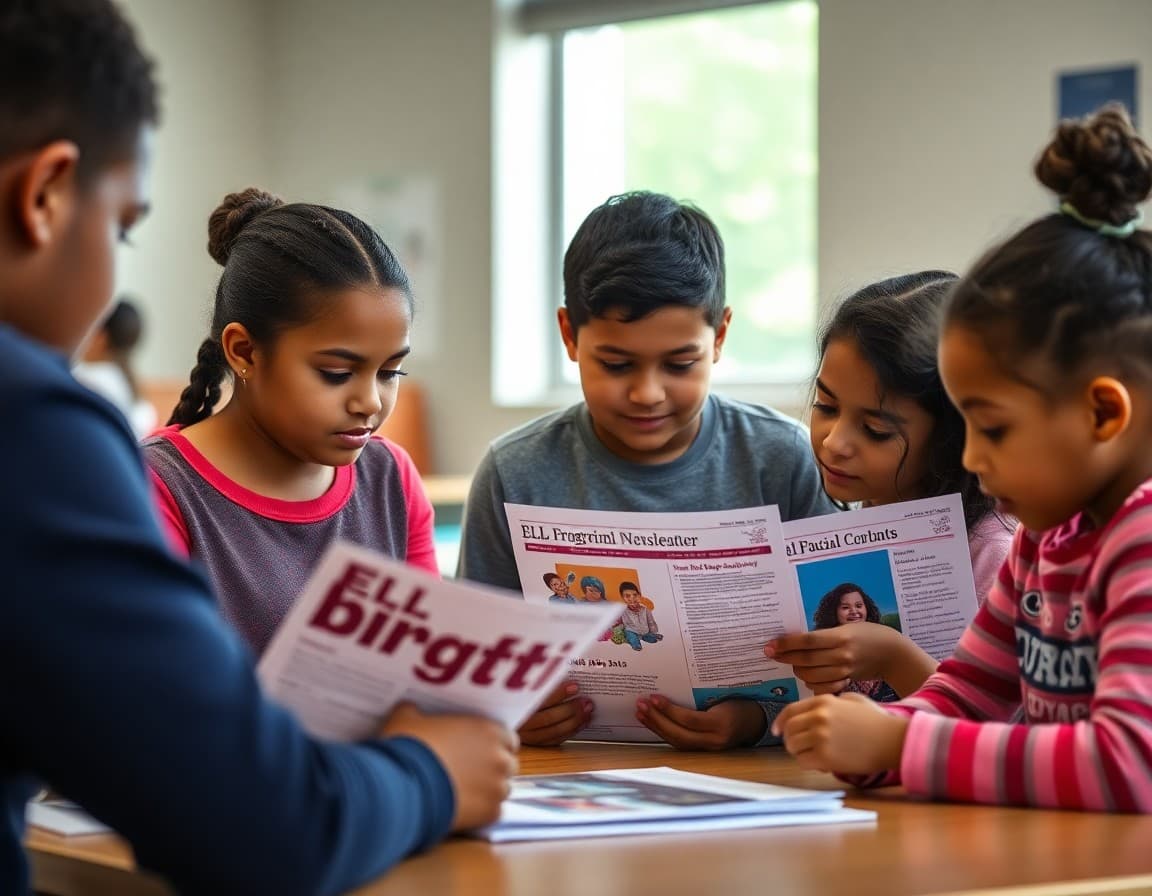
Connecticut's ELL student population is concentrated heavily in its urban centers -- Hartford, Bridgeport, New Haven, Waterbury, and Danbury -- where multilingual communities have deep roots and where schools serve families speaking Spanish, Portuguese, Arabic, Nepali, Karen, and dozens of other languages. Writing an effective ELL newsletter in this context requires understanding both the specific languages and communities in your district and the resources available in your city.
Connecticut's Urban ELL Communities
Hartford's ELL population is heavily concentrated in Puerto Rican and Dominican families, with growing communities of Bhutanese refugees and families from West Africa. Bridgeport has a large Brazilian Portuguese-speaking community alongside significant Spanish-speaking populations. New Haven's ELL population reflects the city's history of immigrant settlement, with Spanish, Haitian Creole, and Arabic-speaking families among the most numerous. Danbury has a large Brazilian community, and the Danbury School District has built significant multilingual communication capacity as a result.
Know your specific community before deciding on translation priorities. The languages that matter in Hartford are different from those that matter in Danbury, even though both districts are in the same state.
What Connecticut ELL Program Newsletters Should Include
Cover the standard elements: what ELL services the child receives, what the WIDA ACCESS test measures and when it takes place, what proficiency levels mean, and how families can participate in their child's language development. Include information about family rights under Connecticut law and Title III, and clear contact information for requesting interpreter services for parent meetings.
Connecticut's urban districts often serve significant populations of students experiencing homelessness and unaccompanied minors. If your school serves these populations, note the additional supports available under the McKinney-Vento Act and relevant state programs.
Connecticut State Department of Education Resources
The CSDE Office of Student Supports publishes guidance documents and family resources on its website. The CSDE ELL resources page includes information about Title III programs, family rights, and the WIDA framework. Many Connecticut regional educational service centers (RESCs) provide translation resources and multilingual family liaison services to member districts. The RESC in your region is worth contacting if your district needs translation support beyond what you can manage internally.
City-Specific Community Resources
Hartford-area families can access Connecticut Institute for Refugees and Immigrants (CIRI), the Hispanic Health Council, and a robust network of community health centers with multilingual staff. Bridgeport has IRIS and Catholic Charities. New Haven has JUNTA for Progressive Action and several legal aid organizations that assist immigrant families. Community Legal Aid serves low-income families including immigrant families with legal needs across the state. Each city's public library has multilingual programs worth including in a resources section.
Portuguese-Language Communication in Connecticut
Connecticut's substantial Brazilian Portuguese-speaking community -- particularly in Danbury and Bridgeport -- requires specific attention to Portuguese translation. Brazilian Portuguese differs from European Portuguese in vocabulary and register, and translation intended for one community may not read naturally to the other. If your district serves Brazilian families, verify that translations are in Brazilian Portuguese rather than European Portuguese.
Building Family Trust in Urban Connecticut Schools
Urban Connecticut schools often serve families who have had limited positive experiences with school systems, either in the US or in their home countries. An ELL newsletter that is written in a warm, non-bureaucratic tone and that positions families as partners rather than passive recipients of school decisions contributes to the trust-building that makes family engagement possible. Consistency of communication builds that trust over time.
Sending Connecticut ELL Newsletters With Daystage
Daystage supports Connecticut ELL coordinators in creating professional newsletters with content in Spanish, Portuguese, Arabic, and other languages, delivered by email to family groups. For high-need urban districts where family contact information changes frequently, Daystage's email delivery with tracking helps coordinators identify which families are being reached and which may need follow-up through other channels.
Get one newsletter idea every week.
Free. For teachers. No spam.
Frequently asked questions
What languages are most common among Connecticut ELL students?
Spanish is the most common home language among Connecticut ELL students, with large concentrations in Hartford, Bridgeport, New Haven, and Waterbury. Portuguese, particularly Brazilian Portuguese, is significant in the Danbury and Bridgeport areas due to substantial Brazilian immigrant communities. Arabic-speaking communities are present in cities including Hartford. More recently, Nepal and Bhutan's Bhutanese community has grown in the Hartford area, and Karen refugee communities from Myanmar are present in parts of the state. Review current home language data for your district each year.
What state agency oversees Connecticut ELL programs?
The Connecticut State Department of Education (CSDE) oversees ELL programs through its Office of Student Supports. The CSDE administers Title III funding and provides guidance on English Language Development requirements. Connecticut uses the WIDA ACCESS assessment for annual ELL proficiency measurement. The CSDE website has family guides and resource documents for ELL programs in several languages that are worth linking to in district ELL newsletters.
What are Connecticut ELL family rights under state law?
Connecticut requires school districts to identify ELL students within 30 days of enrollment and to notify families about ELL status and services. Families have the right to communication in a language they understand, to interpreter access for school meetings, and to translated essential documents. Connecticut also has specific provisions around the education of unaccompanied minors and students experiencing homelessness who are English learners, which intersects with ELL communication obligations in urban districts serving these populations.
What community resources should Connecticut ELL newsletters reference?
Hartford-area resources include the Consultation Center at Yale School of Medicine for refugee mental health support, Connecticut Institute for Refugees and Immigrants (CIRI), and the Hispanic Health Council. Bridgeport resources include IRIS (Integrated Refugee and Immigrant Services). New Haven has a strong immigrant services infrastructure including JUNTA for Progressive Action and Unidad Latina en Accion. Community Legal Aid provides assistance to immigrant families across the state. Local public libraries in all major cities offer multilingual programs and ESL classes.
How does Daystage support Connecticut ELL program newsletters for urban schools?
Connecticut's urban ELL programs -- particularly in Hartford, Bridgeport, and New Haven -- serve large and linguistically diverse populations. Daystage lets coordinators build newsletters with sections in Spanish, Portuguese, Arabic, and other home languages, deliver them by email to family groups, and include links to CSDE and community organization resources. ELL coordinators who use Daystage in high-need urban districts report that digital delivery with language-segmented content significantly improves family reach compared to paper distribution alone.

Adi Ackerman
Author
Adi Ackerman is a former classroom teacher and curriculum writer with 8 years in K-8 schools. She writes about school communication, parent engagement, and what actually works in real classrooms.
More for ELL & ESL
Ready to send your first newsletter?
3 newsletters free. No credit card. First one ready in under 5 minutes.
Get started free