
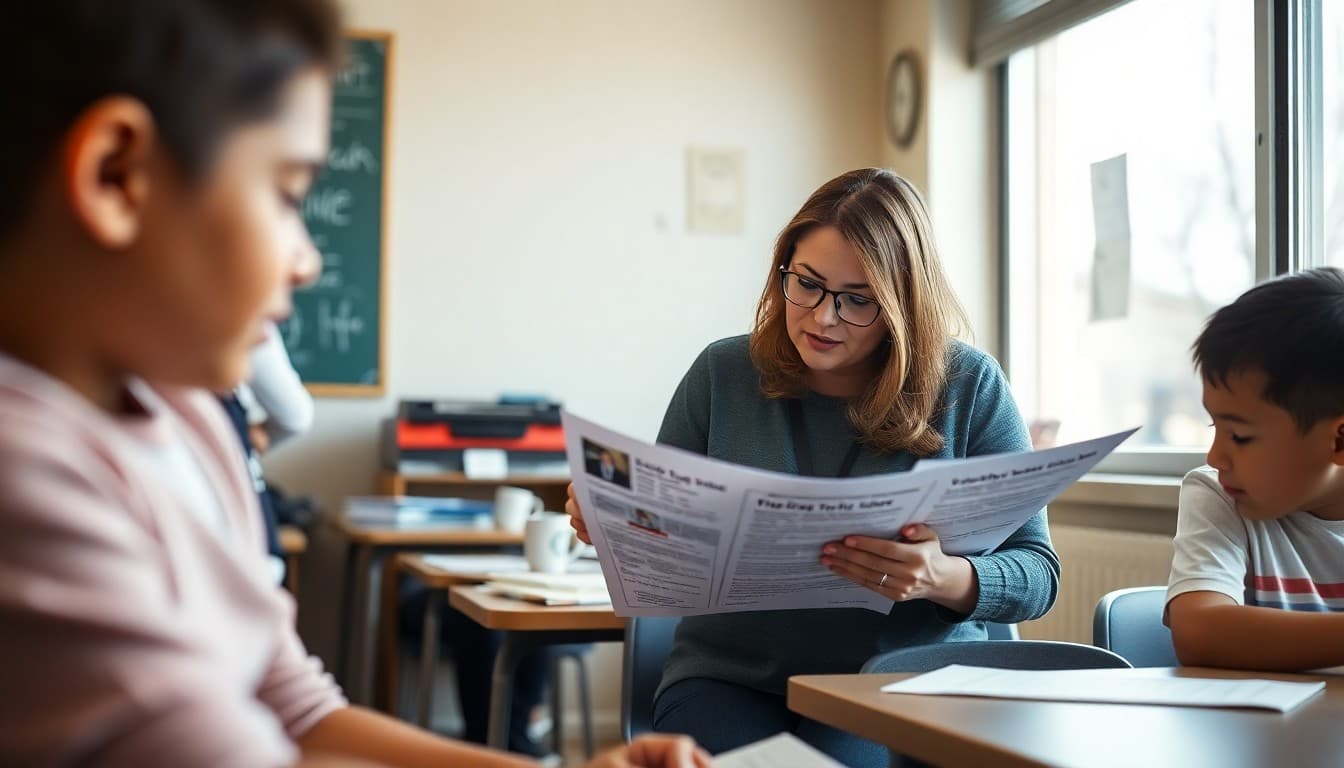
Colorado ELL Program Newsletter: A Guide for ESL Educators

Colorado's ELL population has grown steadily as the Denver metro area expanded and agricultural communities across the Eastern Plains and San Luis Valley continued to draw Spanish-speaking workers. Aurora, one of the most diverse cities in the country, has ELL families speaking dozens of languages. A Colorado ELL program newsletter that works needs to account for that range of communities and communicate in the language that each family actually reads.
Colorado's ELPA Requirements Create Clear Communication Obligations
The Colorado English Language Proficiency Act establishes specific rights for ELL students and their families, including written notification of identification, program services, and parental rights within 30 days of a student's ELL identification. The act also requires annual written notification of ACCESS for ELLs results. Your ELL program newsletter builds on these required communications by offering ongoing, accessible information about what the program is doing and how families can support their students at home. The ELPA creates the floor; your newsletter raises the ceiling.
Translate ACCESS Results Into Family-Readable Language
Colorado uses WIDA ACCESS to measure English language proficiency. Families receive score reports each spring that few can interpret without help. Your newsletter during the testing window and immediately after scores release should explain what ACCESS measures, what the 1-6 scale means in practical terms, and what your district requires for reclassification. A plain-language summary -- "Your student scored a 3.5 overall, which means they are developing strong English skills. Most students exit the ELL program when they reach a 4.5 or above" -- turns an abstract number into an actionable target that families can track and ask about.
Address Colorado's Refugee and Newcomer Population
Aurora and Denver have been major refugee resettlement destinations for decades. Families from Somalia, Ethiopia, Eritrea, Burma, Afghanistan, and Iraq have settled in the metro area and enroll children in ELL programs. These families often arrive with significant educational gaps, trauma histories, and limited familiarity with American school systems. Your newsletter for newcomer families should explain the basics of the American school calendar, how grades and report cards work, what ELL services look like, and how to contact the school. Cover Ground Zero before moving to program-specific details.
A Monthly Colorado ELL Program Newsletter Template
This format works across grade levels and language groups:
ELL Program Update -- [Month] [Year]
Current language focus: [Listening, Speaking, Reading, or Writing skill]
What your student is working on: [One sentence in plain language]
How to help at home: [One activity in the family's home language]
Important dates:
- [Date]: ACCESS testing (no family preparation needed)
- [Date]: Parent conference (interpreter available, request in advance)
Contact: [ELL coordinator name, phone, email]
Include Colorado-Specific Resources in Each Issue
Colorado has a strong network of resources for ELL families that many do not know about. The Colorado Refugee Services Program connects newly arrived families to support services. El Centro AMISTAD in Aurora serves Spanish-speaking families with ESL classes and family support. African Community Center in Denver works with East African refugee families. Colorado State University Extension offers adult ESL through several county programs. Every issue of your newsletter that mentions one local resource moves a family one step closer to support they may urgently need.
Keep the San Luis Valley and Eastern Plains in Mind
Not all Colorado ELL communication challenges are urban. The San Luis Valley, one of the oldest Spanish-speaking communities in North America, has ELL families in rural districts where resources are sparse, internet may be slow, and the school is one of the few institutions families interact with. Your newsletter should be printable, readable in low-light conditions, and designed to survive a trip in a backpack. Including a phone number families can call with questions is often more accessible than a website link for rural families.
Use Daystage to Reach Families Where They Are
Colorado ELL programs that use email or text delivery for newsletters reach families more reliably than programs that depend on paper sent home with students. Daystage lets coordinators send formatted newsletters directly to family email addresses, with Spanish, English, Arabic, and other language versions going to the right families automatically. Programs using Daystage report higher rates of parent conference attendance and better participation in testing preparation events when families receive clear, translated communications in advance. That outcome is measurable and it matters for program accountability.
Get one newsletter idea every week.
Free. For teachers. No spam.
Frequently asked questions
What does Colorado require for ELL family communication?
Colorado follows federal Title III and ESSA language access requirements. Schools must translate essential communications -- program identification notices, annual assessment results, placement letters, disciplinary notices, and conference invitations -- for families with limited English proficiency. Colorado also has the Colorado English Language Proficiency Act (ELPA), which establishes specific requirements for ELL program identification, services, and parental rights notification.
What assessment does Colorado use for English language proficiency?
Colorado uses the ACCESS for ELLs (WIDA) assessment to measure English proficiency. The assessment covers Listening, Speaking, Reading, and Writing on a 1-6 scale. Reclassification in Colorado requires meeting score thresholds on ACCESS along with additional criteria including academic achievement and teacher input. Your newsletter should explain ACCESS results and what reclassification means when families receive score reports each spring.
What languages do Colorado ELL families most commonly speak?
Spanish is the home language for approximately 75 percent of Colorado's English learner population. The Front Range urban corridor, Denver metro, and agricultural communities in the San Luis Valley and Eastern Plains have large Spanish-speaking populations. Colorado also serves meaningful populations of Arabic, Vietnamese, Somali, Amharic, and Russian speakers, particularly in the Denver and Aurora metro areas where refugee resettlement has been significant.
How should Colorado ELL newsletters handle agricultural community schedules?
Eastern Plains and San Luis Valley communities often involve seasonal agricultural work that affects family availability and student attendance patterns. Your newsletter should acknowledge those realities: offer evening and weekend conference options, design home practice activities that do not require stable internet, and mention community resources like adult ESL programs through Colorado State University Extension that serve rural agricultural communities.
Can Daystage help Colorado ELL programs send multilingual newsletters?
Yes. Daystage lets Colorado ELL coordinators prepare formatted newsletters and send separate language versions to different family groups. You can route Spanish, Arabic, and English versions to the right families without managing separate production processes. The platform handles formatting and delivery so coordinators spend time on content quality rather than logistics.

Adi Ackerman
Author
Adi Ackerman is a former classroom teacher and curriculum writer with 8 years in K-8 schools. She writes about school communication, parent engagement, and what actually works in real classrooms.
More for ELL & ESL
Ready to send your first newsletter?
3 newsletters free. No credit card. First one ready in under 5 minutes.
Get started free