

Colorado ELL School Newsletter: Reaching Multilingual Families
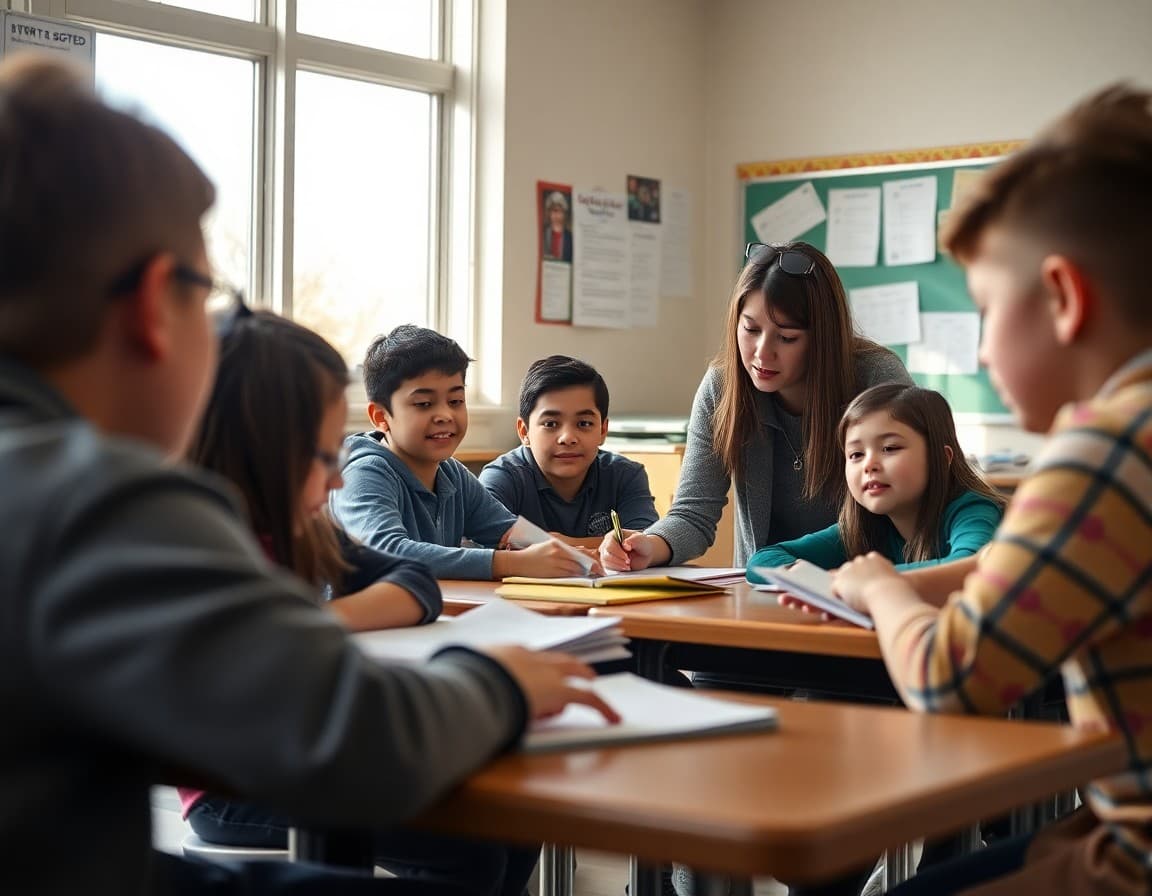
Colorado's ELL population is concentrated in urban centers and agricultural communities, with Spanish-speaking families representing the large majority alongside smaller but significant Somali, Arabic, Hmong, and Burmese communities. A newsletter strategy that reflects your specific school community's language profile will reach more families and build more trust than a generic template.
Communicate WIDA ACCESS Results Clearly
Colorado uses WIDA ACCESS as its annual ELP assessment. Scores run from 1 (Entering) to 6 (Reaching), with 4.5 to 5.0 typically representing the exit threshold depending on the district. After annual results arrive, send a newsletter section that translates scores into plain language: "Your student scored 3.8 Overall on the ACCESS. This means they can communicate effectively in social English and handle most academic tasks with some language support. The threshold for exiting ELL services in our district is a 4.8 Overall score." This translation makes the score meaningful rather than abstract. Include next steps the family can take to support continued language development at home.
Explain Colorado's Dual Language Programs
Colorado has expanded dual language and two-way immersion programs significantly. If your district offers a dual language option, your newsletter should explain what two-way immersion is, how it differs from SEI, what research says about outcomes, and how families can apply or inquire. For ELL families whose students are already enrolled in a dual language program, a newsletter that explains the program goals for the current grade level and how families can support both languages at home is particularly useful.
Reach the San Luis Valley's Historic Spanish-Speaking Community
Colorado's San Luis Valley has a Spanish-speaking community that traces its roots to before Colorado was a US state -- families who have been in the region since the Spanish Colonial period. This community has a distinct cultural identity from more recent immigrant communities and may have different communication preferences. A newsletter that acknowledges this history respectfully, uses appropriate Spanish register for the community, and connects school content to the community's cultural assets builds stronger engagement than one that treats all Spanish-speaking families as a homogeneous group.
A Colorado ELL Family Newsletter Template
ELL Program Update -- [Month]
Your student is working on: [Academic language skill in plain language]
ACCESS note: [Test date or score translation if applicable]
Home support activity: [Specific activity in home language]
Dual language update: [If applicable]
Important dates: [Events with interpreter availability noted]
Contact: [ELL coordinator name, phone]
Address Colorado's Somali and African Refugee Communities
Aurora and Denver have significant Somali, Ethiopian, and other East African refugee communities with students in Colorado schools. These families may have experienced interrupted formal education, may have limited literacy in any language, and may be navigating multiple systems simultaneously (resettlement, employment, language learning). A newsletter designed for these families benefits from partnership with resettlement agencies like the International Rescue Committee's Denver office or Lutheran Family Services Rocky Mountains. Knowing which community organizations already have trusted relationships with these families and routing communication through those channels reaches more families more effectively than direct digital communication alone.
Support Home Language Literacy
Colorado's shift toward dual language education reflects a statewide recognition that home language maintenance supports English development. Your newsletter can reinforce this message directly: "Research shows that students who read in Spanish at home develop stronger English academic vocabulary. We encourage families to read, discuss, and tell stories in whatever language comes most naturally." This explicit encouragement, communicated from the school through the newsletter, gives families permission to maintain their home language rather than abandoning it in the name of English-only support.
Connect Families to Colorado ELL Community Resources
Colorado has several resources for ELL families: the Rocky Mountain Immigrant Advocacy Network for families with immigration-related concerns, Servicios de La Raza for Denver's Latino community, and the Colorado Department of Education's CLD family resources page. Adult ESL programs are available through Emily Griffith Technical College and community centers throughout the Denver metro area. Including one resource per newsletter issue that is specifically relevant to your school's primary language community positions the school as a partner in family success rather than a service provider focused only on students.
Build a Two-Way Communication Practice
ELL families are more likely to engage with a school that visibly asks for their input. Include a response mechanism in every newsletter: a phone number for questions in the home language, a QR code linking to a brief multilingual form, or an explicit invitation to attend the next family engagement event with interpreter support. Families who trust that the school wants their perspective are more likely to flag concerns early, participate in conferences, and engage with the ELL program as genuine partners rather than passive recipients of services.
Get one newsletter idea every week.
Free. For teachers. No spam.
Frequently asked questions
What ELP assessment does Colorado use?
Colorado uses WIDA ACCESS for ELLs as its annual English language proficiency assessment. ACCESS measures listening, speaking, reading, and writing on a 1-6 scale. Students who score at or above the exit threshold -- typically an Overall composite score of 4.5 or 5.0 depending on the district -- are considered for reclassification to Fluent English Proficient status. Your newsletter should explain what ACCESS measures and what the score scale means for a student's services.
What languages are most common among Colorado ELL families?
Spanish is the home language for the large majority of Colorado ELL students, concentrated in Denver, Aurora, Greeley, Pueblo, Longmont, and the San Luis Valley. Colorado also has Somali and Arabic-speaking communities in the Denver metro area, Vietnamese and Burmese communities, and a Hmong community. The San Luis Valley has a historic Spanish-speaking community with deep generational roots in Colorado that differs culturally from more recent immigrant communities.
What are Colorado's requirements for communicating with ELL families?
Colorado must provide meaningful access to school information for families with limited English proficiency under Title III and ESSA. Essential communications -- program placement notices, IEP-related notices for dually identified students, assessment results -- must be available in the family's home language. Colorado also has state-level bilingual education program requirements that include family notification and engagement.
What is Colorado's approach to dual language and bilingual education?
Colorado has expanded dual language and two-way immersion programs significantly over the past decade. The Colorado Department of Education's Culturally and Linguistically Diverse (CLD) Education unit supports these programs. If your district or school offers a dual language program, your newsletter should explain the program model, how it differs from English-only ELL instruction, and how families can apply if they are interested. Waiting list information is also worth communicating proactively.
Can Daystage support Colorado ELL newsletters?
Yes. Daystage lets ELL teachers create and send newsletters in multiple language versions. For Colorado schools serving several language communities simultaneously, the platform's straightforward formatting tools help teachers maintain consistent communication without spending excessive time on layout.

Adi Ackerman
Author
Adi Ackerman is a former classroom teacher and curriculum writer with 8 years in K-8 schools. She writes about school communication, parent engagement, and what actually works in real classrooms.
More for ELL & ESL
Ready to send your first newsletter?
3 newsletters free. No credit card. First one ready in under 5 minutes.
Get started free