

California ELL School Newsletter: Reaching Multilingual Families
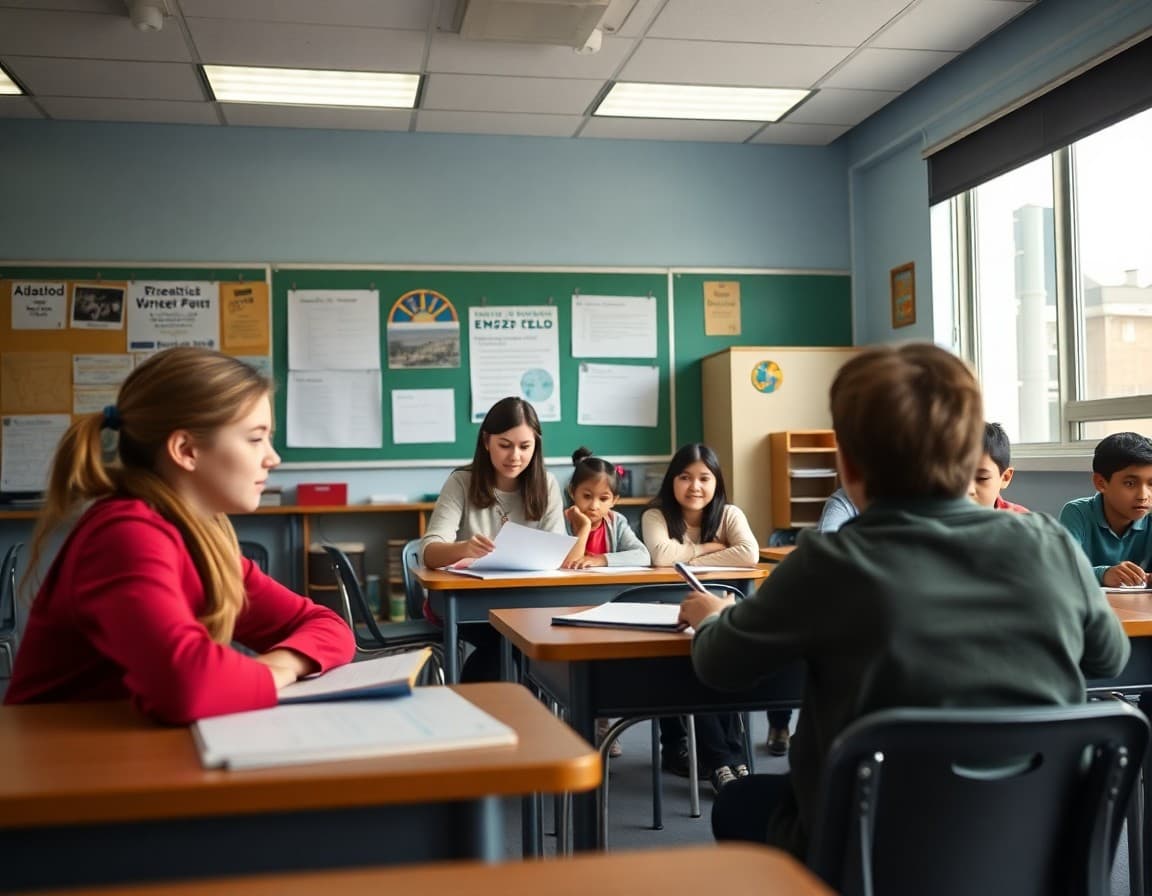
California has over 1.1 million English learner students across more than 60 home language backgrounds. The ELL newsletter strategy that works in Stockton's Central Valley schools looks different from the one that works in Monterey Park's Cantonese-speaking community or the East Bay's Mam-speaking Guatemalan refugee community. Starting with your school's specific language data is essential.
Understand California's ELL Classification System
California classifies students as English Learners (EL), Reclassified Fluent English Proficient (RFEP), Initially Fluent English Proficient (IFEP), or English Only (EO). The reclassification process requires meeting four criteria: ELPAC score of Overall 4, teacher evaluation, parent opinion and consultation, and comparison of performance in basic skills to grade-level peers. Your newsletter should explain this reclassification pathway clearly so families understand what their student is working toward and what steps are involved in the process.
Explain ELPAC Results in Plain Terms
California's ELPAC assessment measures language proficiency on a 1-4 scale across Listening, Speaking, Reading, and Writing. After results arrive in the spring, send a newsletter that translates scores into plain language. "Your student scored 3 in Reading, which means they can understand most grade-level academic texts but need some support with complex vocabulary and longer passages. The reclassification threshold in our district is an Overall 4 in all four areas." Without this translation, families receive a score report that tells them little about what it means for their student's program.
Describe California's Language Program Options
Following Proposition 58 in 2016, California schools can offer dual language immersion programs, bilingual education, and other multilingual pathways in addition to or instead of Structured English Immersion. If your district offers multiple program options, your newsletter should explain what each option is, how enrollment works, and what the research says about outcomes for each approach. Families who understand their options are better equipped to advocate for a program that fits their student's needs and goals.
A California ELL Family Newsletter Template
ELL Program Update -- [Month]
Your student is working on: [Academic language skill in plain language]
ELPAC update: [Test date or score translation if applicable]
Reclassification pathway: [Brief note on where student stands]
How to help at home: [Activity in home language]
ELAC meeting: [Date, time, location -- parents welcome]
Contact: [ELL coordinator name and phone]
Support ELAC Participation
California's English Learner Advisory Committee meets at each school and advises on the ELL program. Many ELL parents are unaware that this formal advisory body exists or that they can participate in it. Your newsletter should mention ELAC meeting dates and welcome parents to attend. ELAC is one of the few formal channels where ELL family voices directly influence program decisions, and a newsletter that consistently publicizes it increases the parent engagement that state law requires and that effective programs depend on.
Connect Home Language Literacy to Academic Success
California's Proposition 58 explicitly supports multilingual education, reflecting a statewide shift from the Proposition 227 era of English-only instruction. Your newsletter can reinforce this shift in practical terms: families who maintain Spanish, Cantonese, Vietnamese, or any other home language are supporting their child's cognitive development and transfer of literacy skills. A brief explanation of additive bilingualism research in plain language encourages home language maintenance and validates the cultural and linguistic assets families bring to the school community.
Reach the Central Valley's Hmong and Mixtec Communities
California's Central Valley has significant Hmong populations in Fresno and surrounding communities, as well as growing communities of indigenous Mexican language speakers, particularly Mixtec and Triqui speakers, in agricultural areas. These communities have limited written literacy resources in their heritage languages, which means newsletters in Spanish alone do not reach Mixtec-speaking families for whom Spanish may itself be a second language. Working with community organizations like California Rural Legal Assistance or indigenous language advocacy groups helps identify community liaisons who can bridge communication gaps that translation alone cannot close.
Build Two-Way Communication Channels
California's ELL families are more likely to engage with a program that visibly invites their input. Include a response mechanism in every newsletter: a phone number for questions, a QR code linking to a brief multilingual form, or an explicit invitation to request an interpreter for an upcoming conference. Families who receive a newsletter that feels like a conversation rather than a one-way information broadcast are more likely to maintain engagement through the school year and more likely to participate in the ELAC and other family engagement structures that California's ELL framework depends on.
Get one newsletter idea every week.
Free. For teachers. No spam.
Frequently asked questions
What ELP assessment does California use?
California uses the ELPAC (English Language Proficiency Assessments for California) for initial ELL classification and annual ELP measurement. ELPAC measures listening, speaking, reading, and writing on a 1-4 scale. Students who score Overall 4 and meet additional criteria are reclassified as Fluent English Proficient (FEP). Your newsletter should explain what the ELPAC measures and what reclassification means for a student's services and academic program.
What legal requirements does California have for ELL family communication?
California's LCFF requires districts to engage parents of ELL students meaningfully, including through the English Learner Advisory Committee (ELAC) at the school level and the District English Learner Advisory Committee (DELAC) at the district level. Proposition 58 (2016) requires schools to provide meaningful information about language programs to families. All essential communications for ELL families must be in the family's primary language or mode of communication.
What languages are most common among California ELL families?
Spanish is the home language for approximately 80% of California ELL students. The next most common languages are Vietnamese, Cantonese, Tagalog, Mandarin, Korean, Arabic, Punjabi, and Russian. The specific language mix varies enormously by region: Los Angeles has large Spanish, Korean, Armenian, and Tagalog communities; the Bay Area has large Spanish, Cantonese, Mandarin, and Vietnamese communities; the Central Valley has large Spanish and Hmong communities.
What is the ELAC and why should it appear in ELL newsletters?
The English Learner Advisory Committee is a parent advisory body at each school with ELL students. ELAC advises the principal on the school's ELL program, curriculum, and parent education. Federal and state law requires schools to establish and consult ELAC. A newsletter that explains what ELAC is, when it meets, and how parents can participate creates an accessible entry point for ELL families who want to be involved beyond their individual student's program.
Does Daystage support California ELL program newsletters?
Yes. Daystage lets ELL coordinators and teachers send newsletters to families. For schools managing newsletters in multiple languages simultaneously, Daystage's straightforward approach to formatting and distribution reduces the time burden of multilingual communication.

Adi Ackerman
Author
Adi Ackerman is a former classroom teacher and curriculum writer with 8 years in K-8 schools. She writes about school communication, parent engagement, and what actually works in real classrooms.
More for ELL & ESL
Ready to send your first newsletter?
3 newsletters free. No credit card. First one ready in under 5 minutes.
Get started free