

Alaska ELL Program Newsletter: Local Resources and Guide
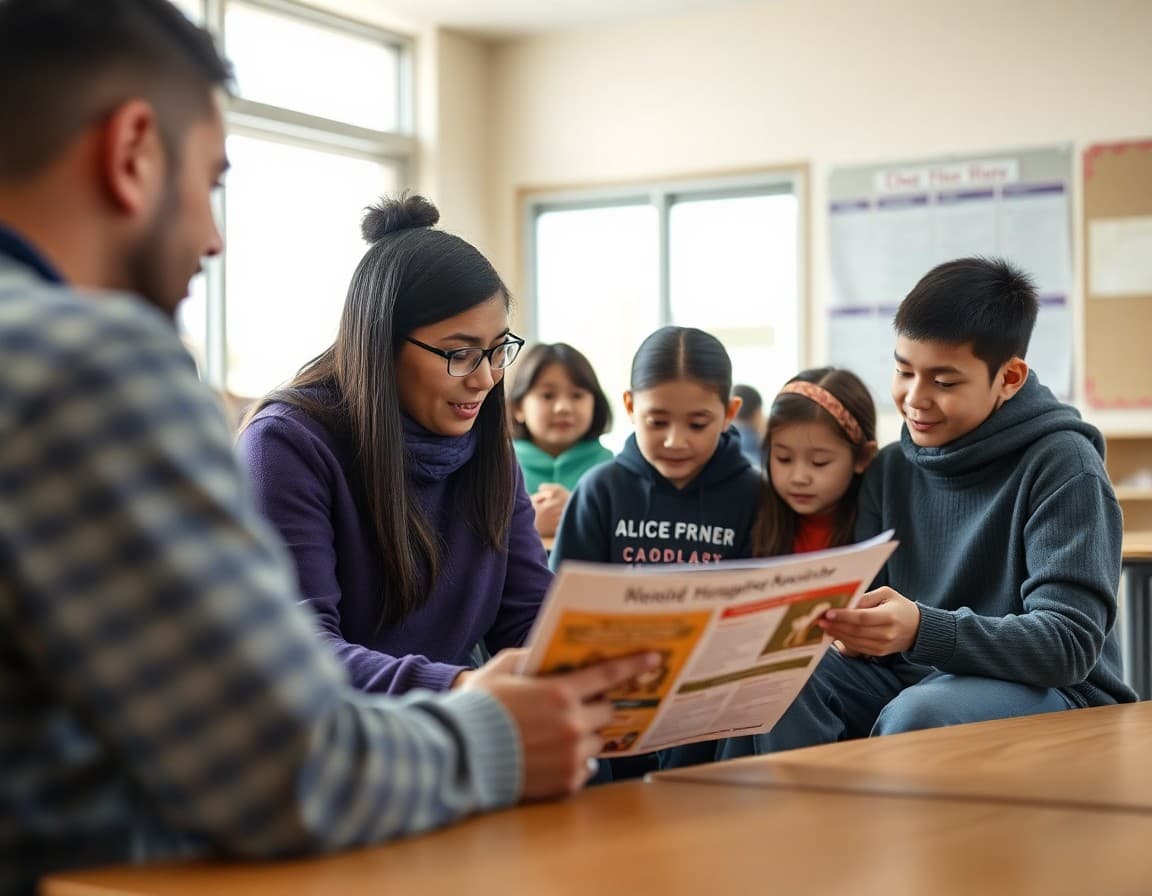
Alaska has one of the most linguistically diverse student populations in the country relative to its size. Anchorage school districts regularly serve families speaking over 100 different languages, while rural communities maintain Alaska Native languages that have been spoken for thousands of years. Writing an ELL program newsletter that reaches Alaska's multilingual families requires understanding both the demographics of your specific district and the distinct communication challenges of urban versus rural Alaska.
Understanding Alaska's ELL Population
Alaska's ELL students come from two distinct contexts that require different communication approaches. Urban districts, particularly in Anchorage and Fairbanks, serve immigrant and refugee families speaking Spanish, Tagalog, Somali, Korean, and dozens of other languages. Rural Alaska serves communities where Alaska Native languages are the home language for many students, and where English is the language of instruction in schools that many families have had complicated historical relationships with.
Both contexts require thoughtful communication, but the approach differs significantly. Urban ELL newsletters focus on connecting recent immigrant families to school services and community resources. Rural ELL newsletters may need to navigate issues of language preservation and community trust in ways that go beyond standard ELL communication templates.
What Alaska ELL Program Newsletters Should Include
Cover the core elements families need: what English language development services the student is receiving, what the WIDA ACCESS assessment measures and when it happens, what proficiency levels mean and how they affect academic placement, and how families can be involved in their child's language development. Include information about Title III and Indian Education Act funding if relevant to your district.
Alaska families, particularly in communities with historical tensions around language and schooling, respond positively when the newsletter explicitly affirms the value of home language maintenance alongside English development. This is not just culturally appropriate -- it is educationally accurate.
Alaska State Resources for ELL Families
The Alaska Department of Education and Early Development provides guidance documents for ELL families on the DEED website, including information about student rights and program requirements. The Alaska Native Language Center at UAF is a resource for districts serving Alaska Native students. Many Anchorage community organizations, including the International Rescue Committee and Catholic Social Services, provide multilingual family support services worth referencing in newsletters for urban districts.
Addressing Rural Communication Challenges
For rural Alaska schools, newsletter distribution requires a different approach than urban districts. Paper distribution through school backpacks may be more reliable than email where internet access is inconsistent. For digital newsletters, keep file sizes small and avoid media-heavy formats that do not load well on slow connections. Coordinate with local community organizations and tribal offices about the most effective way to reach families in specific communities.
Translation and Language Access
Alaska school districts can access telephone interpretation through the Language Line for hundreds of languages. The Anchorage School District and other large Alaska districts have multilingual family liaison staff for the most common languages in their communities. For written translation, districts should use qualified professional translators rather than machine translation for family-facing communications. Include clear information in your newsletter about how families can request an interpreter for school meetings.
Building Community Trust Through Consistent Communication
In many Alaska communities -- particularly Alaska Native communities -- consistent, respectful school communication builds the kind of trust that translates into family engagement. An ELL newsletter that arrives regularly, is written in a tone that treats families as partners rather than recipients, and includes local resources that are actually accessible goes a long way toward repairing or strengthening the school-community relationship.
Using Daystage for Alaska ELL Newsletters
Daystage supports Alaska ELL coordinators in creating consistent, professional newsletters with translated sections and email delivery to family groups. Once your template is built, monthly updates take a fraction of the time needed to start from scratch. For districts with limited administrative capacity, the time savings of a reusable Daystage template can be significant.
Get one newsletter idea every week.
Free. For teachers. No spam.
Frequently asked questions
What languages are most common among Alaska ELL students?
Alaska has a uniquely diverse ELL population. Spanish is the most common non-English home language in Anchorage and other urban areas, followed by Tagalog due to a substantial Filipino community. Anchorage schools serve families speaking over 100 different languages. Rural Alaska has significant Alaska Native language communities including Yup'ik, Inupiaq, and Athabascan. The Alaska Department of Education and Early Development publishes annual data on ELL student languages by district, which is the most reliable source for planning your translation priorities.
What state agency oversees ELL programs in Alaska?
The Alaska Department of Education and Early Development (DEED) oversees ELL programs through its Federal Programs office. DEED administers Title III funding for ELL programs and provides guidance on the WIDA English language development framework used across most Alaska districts. The Alaska Native Language Center at the University of Alaska Fairbanks is an important resource for districts serving students with Alaska Native language backgrounds, providing materials and linguistic expertise not available elsewhere.
How do Alaska ELL newsletters address rural and remote family communication?
Rural Alaska presents significant communication challenges because many communities are only accessible by air or boat, internet connectivity is often limited, and some families do not have consistent phone service. ELL newsletters for rural Alaska communities should be designed for both digital and paper distribution. Simple formats that load quickly on low-bandwidth connections are important for digital delivery. Districts that serve Alaska Native communities should consult with local community organizations about the most effective communication channels for specific villages.
What rights do Alaska ELL families have regarding language access?
Alaska ELL families have the same federal rights as ELL families in all states: the right to meaningful communication in a language they understand, the right to an interpreter for parent meetings, the right to translated essential school documents, and the right to timely notification when their child is identified as an English learner. Alaska DEED provides guidance to districts on meeting these obligations. Districts that serve Alaska Native families with Indigenous language backgrounds have additional considerations under the Indian Education Act.
How does Daystage support Alaska ELL program newsletters for multilingual families?
Daystage helps Alaska ELL coordinators create newsletters with translated sections for Spanish, Tagalog, and other home languages, with email delivery to family groups. For schools with limited staff capacity -- common in rural Alaska -- Daystage's reusable templates mean that once the structure is set up, monthly updates take significantly less time. The platform supports attaching translated documents and linking to DEED resources, making it a centralized communication hub for ELL families.

Adi Ackerman
Author
Adi Ackerman is a former classroom teacher and curriculum writer with 8 years in K-8 schools. She writes about school communication, parent engagement, and what actually works in real classrooms.
More for ELL & ESL
Ready to send your first newsletter?
3 newsletters free. No credit card. First one ready in under 5 minutes.
Get started free