
Statistics Unit Newsletter for Parents: Elementary School Guide
Statistics is one of the most practical topics in elementary mathematics, and it is also one of the easiest to connect to family life. A unit newsletter at the start of your statistics unit gives parents the context they need to reinforce learning at home in ways that feel natural rather than like extra homework.
Why Statistics Deserves Its Own Unit Newsletter
Many parents remember statistics as abstract and confusing from their own school years. A newsletter that reframes statistics as "reading graphs, finding averages, and making sense of data from everyday life" changes how families approach the unit. Parents who understand that their student is learning to read a bar chart, calculate a mean, or interpret a line graph are far more likely to point out these skills in everyday contexts.
What Students Are Learning This Unit
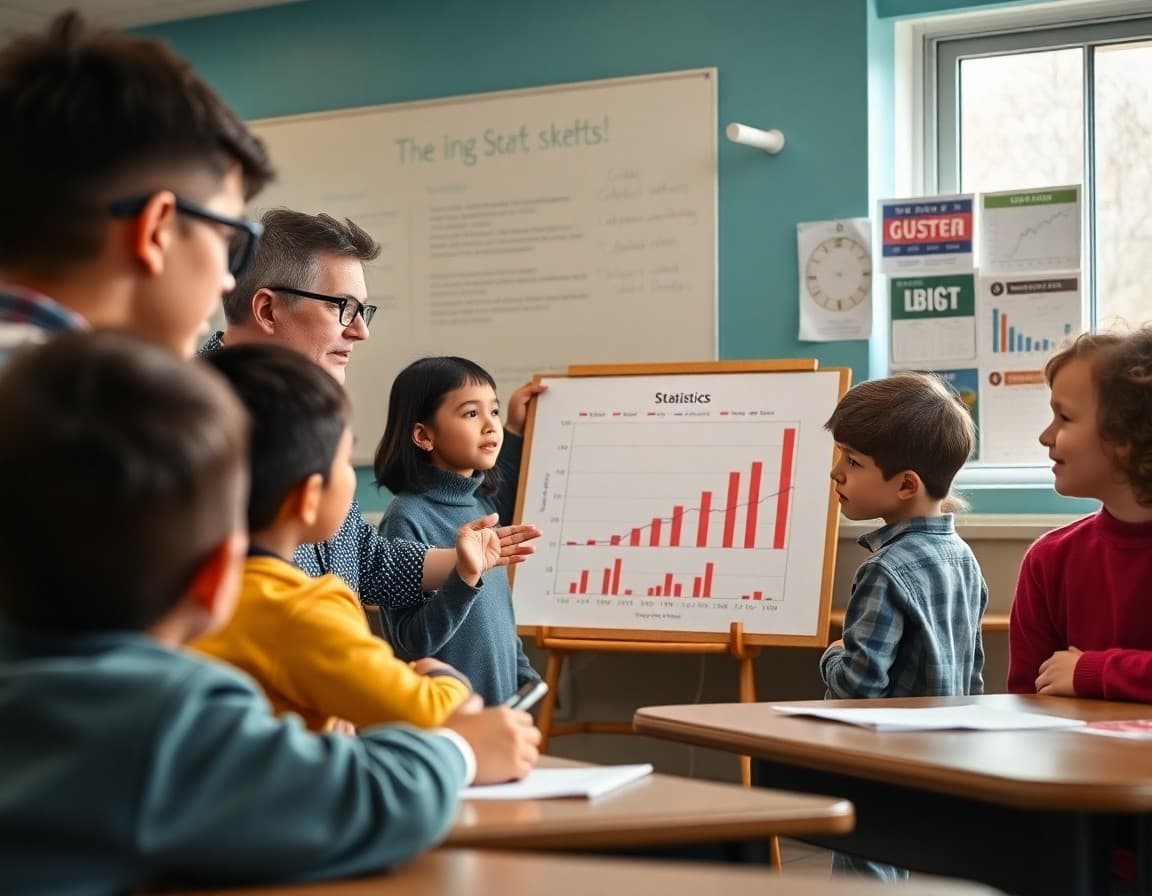
Start with a plain-language overview of the unit content. For a third grade statistics unit: "We are studying how to collect data, organize it into charts and graphs, and describe what the data shows. Students will work with bar graphs, pictographs, and tally charts." For a fifth grade unit: "Students are learning to calculate the mean, median, and mode of data sets and to interpret line plots and scatter plots."
That level of detail tells parents exactly what skills are being built and what to look for in homework and conversation.
Key Vocabulary to Know
List the terms students will learn this unit with plain definitions. For a lower elementary statistics unit: data (information we collect), tally chart (a way to count using marks), bar graph (a chart that uses bars to compare amounts), and survey (a set of questions we ask to gather information). For upper elementary: mean (the average), median (the middle value), mode (the most common value), and range (the difference between the largest and smallest values).
A Template for the Newsletter Opening
Here is a simple opening you can adapt:
"We are starting our statistics and data unit this week. Students in [GRADE] will learn how to [2-3 core skills] over the next [X] weeks. This unit is a great opportunity to connect math to everyday life. Key vocabulary: [list]. A fun activity to try at home is below."
That structure works for any elementary grade and any statistics topic.
At-Home Activities That Reinforce the Unit
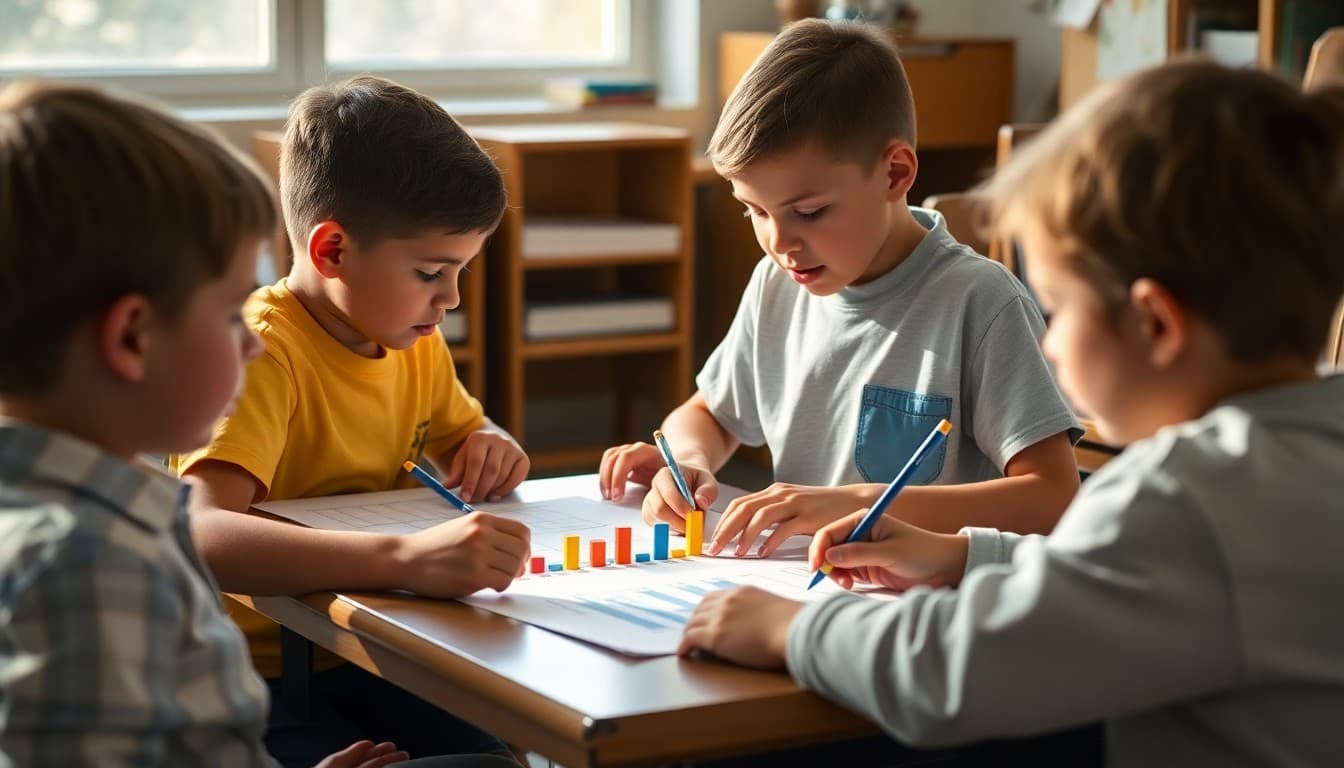
Give parents one specific activity they can do at home. For a lower elementary unit on bar graphs: "Pick a question to ask family members, like 'What is your favorite breakfast food?' Record the answers in a tally chart, then draw a bar graph together. Ask your student to tell you which bar is tallest and what that means."
For an upper elementary unit on mean, median, and mode: "Collect a data set from your daily life, like the number of minutes your family watches TV each day for a week, or the daily high temperature for five days in a row. Have your student calculate the mean and identify the median. Discuss whether the mean or median better represents the typical value."
Connecting Statistics to the Real World
Elementary parents often wonder why their student needs to learn statistics at this age. A brief explanation of real-world relevance builds motivation. "Statistics is how scientists describe their findings, how sports analysts report player performance, and how companies decide what products to make. Understanding data helps your student read charts in news articles, evaluate claims made in advertising, and make sense of information they will encounter throughout their lives." That paragraph is worth including once, at the start of the year's first statistics unit.
What to Expect From the Assessment
Tell parents how the unit will be assessed. For elementary statistics, the assessment might include a short test on reading and creating graphs, a project where students collect and analyze their own data set, or both. A line like "Students will complete a data project in week three where they design a survey, collect at least 10 responses, and present their results in a graph and a written summary" gives families a concrete expectation to plan around.
How to Reach Me With Questions
Close with your contact information and an invitation to reach out. A brief, specific note is more likely to generate responses than a generic sign-off. "If you have questions about the unit or want to share what your student discovered in their at-home data activity, I would love to hear about it" invites genuine interaction without requiring anything of families who are too busy to respond.
Get one newsletter idea every week.
Free. For teachers. No spam.
Frequently asked questions
What should I include in an elementary statistics unit newsletter?
Cover the grade level, what type of data and graphs students will study, key vocabulary like mean, median, and mode or tally chart and bar graph depending on the grade, any projects or assessments planned, and one at-home activity that connects the unit to family life. Elementary parents are very receptive to at-home activities that feel like games or family projects rather than homework extensions.
How do I explain statistics concepts to elementary parents without using jargon?
Use real-world examples from everyday life. Instead of 'we are studying measures of central tendency,' try 'we are learning how to find the middle value, most common value, and average of a set of numbers, which is how sports statistics, weather reports, and surveys work.' That framing is accurate and gives parents something concrete to connect to.
What at-home activities reinforce elementary statistics learning?
Collecting and graphing simple data works well at any elementary grade. Families can track something over a week (outdoor temperature, number of birds at a feeder, steps walked per day) and make a bar graph or line graph together. At lower grades, sorting objects into categories and counting each group connects directly to tally chart and bar graph concepts. At upper elementary, calculating the mean of weekly data introduces central tendency in a meaningful context.
When should I send a statistics unit newsletter for elementary school?
Send it on the first day of the unit. Elementary parents benefit most from early notice because so many statistics concepts can be reinforced through playful daily activities at home. A family that starts collecting data on day one of the unit has weeks of reinforcement available. A newsletter sent at the end of the unit gives families no time to use the suggestions.
Can Daystage help elementary teachers create statistics unit newsletters quickly?
Daystage works well for elementary teachers who want to send consistent unit newsletters without spending significant time on formatting. You can save a unit newsletter template and update the topic, vocabulary, and at-home activity each time you start a new unit. Most teachers complete a unit newsletter in under 15 minutes once their template is set up.

Adi Ackerman
Author
Adi Ackerman is a former classroom teacher and curriculum writer with 8 years in K-8 schools. She writes about school communication, parent engagement, and what actually works in real classrooms.
More for Elementary
Ready to send your first newsletter?
3 newsletters free. No credit card. First one ready in under 5 minutes.
Get started free