

Life Science Elementary Newsletter: Learning Updates for Parents
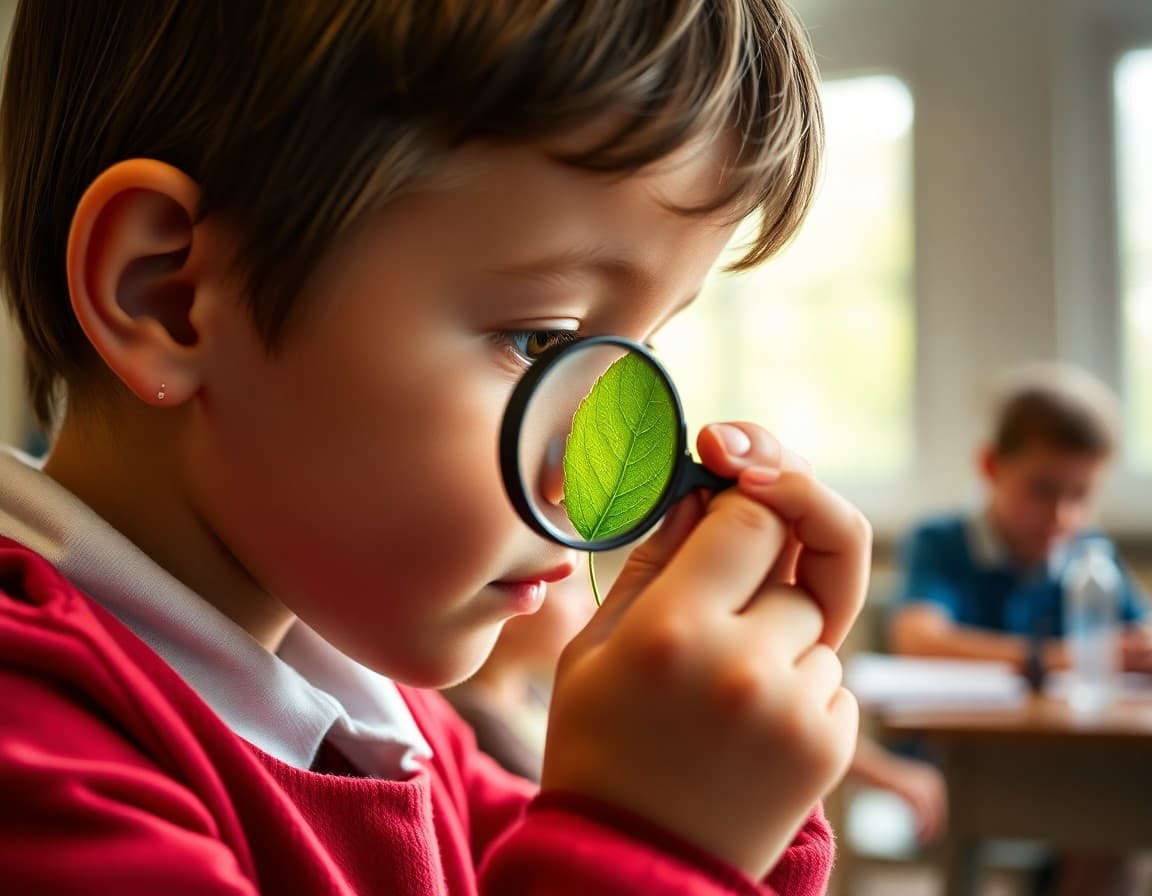
Life science is the branch of science that elementary students connect with most naturally. Living things are everywhere, from the ant on the sidewalk to the tomato plant in the garden to the family pet on the couch. A life science newsletter that helps families see biology in their daily environment turns every outing into a learning opportunity without requiring any special equipment or expertise.
Open With the Unit's Central Concept
Name the topic and frame it around a genuine question. "This month, third graders are exploring food webs: how energy moves from plants to animals and back again. Our central question is: what happens to an ecosystem when one species disappears?" That framing gives parents something to talk about at dinner. "Did you figure out what happens if rabbits disappear from a meadow food web?" is a much more specific and engaging question than "how was science today?"
Describe the Investigations
Life science at the elementary level should involve direct observation and hands-on investigation. Tell parents what that looks like: "Students built food web diagrams using cards representing producers, herbivores, carnivores, and decomposers. They physically removed one organism and traced how every connected species would be affected. Next week we observe a garden ecosystem and identify as many connections as we can." Concrete descriptions help parents understand the quality of the learning happening in your classroom.
Suggest a Backyard or Kitchen Investigation
Life science has the best at-home activities of any elementary subject. Pick one specific investigation and explain it clearly: "Spend five minutes in your backyard or nearest park with your child and a piece of paper. Try to build a mini food web from what you observe. What plants do you see? What insects are on those plants? What birds are eating the insects? You might not complete a whole food web, but even two or three connections is real ecology."
A Template Newsletter Section for Any Life Science Unit
Here is a template that works across different life science topics:
"This month in science, we are studying [TOPIC]. The guiding question we are investigating is [QUESTION]. In class, students are [DESCRIPTION OF ACTIVITY]. To explore this at home, try [SPECIFIC HOME OR OUTDOOR ACTIVITY]. The vocabulary your child is using right now includes [3-4 KEY TERMS WITH SIMPLE DEFINITIONS]. If you have questions about what your child is learning, just reply to this message."
This template can be reused for any life science unit throughout the year.
Share the Vocabulary in Plain Language
Life science introduces technical vocabulary that students need for classroom discussions and assessments. A brief glossary makes homework and conversation easier for families: "Producer: a living thing that makes its own food using sunlight, like a plant. Consumer: a living thing that eats other organisms for energy. Decomposer: a living thing that breaks down dead organisms and returns nutrients to the soil." Plain definitions without jargon help families ask better questions and catch misconceptions before they solidify.
Connect Life Science to Students' Real Lives
Life science feels more urgent when it is personal. "The same processes we are studying in food webs affect the food on our plates. Fruits and vegetables come from plants that relied on pollinators, healthy soil, and water cycles. Understanding how ecosystems function helps students appreciate the choices we make about the environment, even at a grocery store." That connection transforms abstract biology into something personally relevant.
Preview Upcoming Hands-On Work
If you have something exciting coming up, mention it to build anticipation: "Next week, each student will receive a plant cutting to care for at school, and we will track its growth over two weeks. Students will observe root development, measure growth in centimeters, and record changes in a science journal." Families who know what is coming can ask better questions and celebrate the milestones their child shares at home.
Mention Relevant Books and Media
A few curated resources extend the unit for motivated families. For food webs, books like Who Eats What? by Patricia Lauber or the Magic School Bus ecosystem titles work well for different grade levels. Nature documentaries on streaming platforms, like Our Planet or the various Planet Earth series, are also excellent supplements that feel like entertainment rather than homework.
Get one newsletter idea every week.
Free. For teachers. No spam.
Frequently asked questions
What should an elementary life science newsletter include?
A life science newsletter should describe the current topic (plants, animals, ecosystems, human body, or life cycles), explain the hands-on investigations students are doing, and suggest activities families can do at home or outside. Life science is rich with everyday connection points, from the food in the kitchen to the insects in the backyard. The best life science newsletters give families a lens for seeing biology in their daily environment.
What life science topics do elementary students study?
Kindergarteners observe living versus non-living things and sort animals and plants. First and second graders study animal and plant life cycles, habitats, and basic needs. Third graders investigate ecosystems and food webs. Fourth and fifth graders explore human body systems, inherited traits, and food chains in more depth. Naming the specific unit in your newsletter helps parents connect homework, classroom activities, and at-home observations to the same thread.
How can families extend life science learning at home?
Growing a plant from seed, observing an insect in the backyard, or watching a nature documentary together are all legitimate life science extensions. Kitchen activities work too: sprouting a bean seed in a plastic bag on the window, or observing how bread mold grows, connects classroom concepts to tangible real-world phenomena. The key is noticing living things intentionally and asking the same kinds of questions students ask in class.
How do I communicate about dissection or animal studies with parents who may have concerns?
Address it directly and briefly in your newsletter. Explain what students will be doing, why it is part of the curriculum, what alternatives exist for students who opt out, and how student concerns will be handled sensitively. Most parents appreciate advance notice and a clear explanation of the learning purpose. Surprises are almost always worse than proactive communication.
What tool makes life science newsletters easy for elementary teachers to send?
Daystage is designed for exactly this kind of subject-specific parent communication. You can include photos from a plant growing experiment, links to videos, and step-by-step at-home activities. Teachers can build a template for science newsletters and reuse the format while swapping in the specific unit content each time.

Adi Ackerman
Author
Adi Ackerman is a former classroom teacher and curriculum writer with 8 years in K-8 schools. She writes about school communication, parent engagement, and what actually works in real classrooms.
More for Elementary
Ready to send your first newsletter?
3 newsletters free. No credit card. First one ready in under 5 minutes.
Get started free