

Earth Science Elementary Newsletter: Learning Updates for Parents
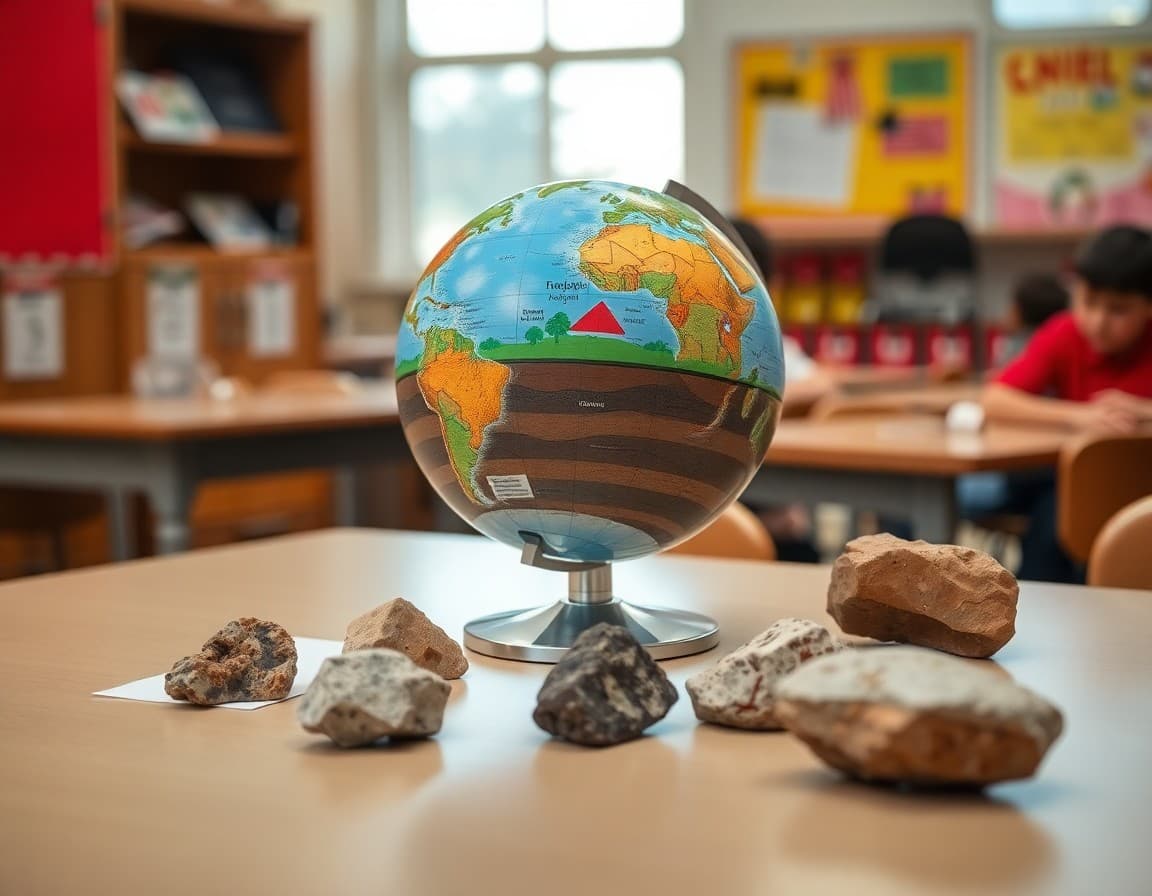
Earth science has a natural advantage over every other elementary subject: the classroom is everywhere. A well-crafted earth science newsletter turns the walk to school, the backyard, and the evening sky into extensions of what students are learning in class. All it takes is the right prompts for families.
Name the Current Unit and Its Big Question
Start with the unit topic and the central question driving it. "This month, second graders are investigating rocks and soil. Our guiding question is: where does soil come from, and why does it matter for living things?" That framing gives parents more than a topic. It gives them the intellectual thread they can pull at home. "What did you find out about where soil comes from?" is a better dinner conversation starter than "what did you do in science today?"
Describe the Hands-On Work Students Are Doing
Earth science at the elementary level should be mostly hands-on. Share what that looks like in your classroom: "Students have been sorting and classifying rocks by texture, color, and hardness. They have observed how different soils absorb water at different rates and drawn diagrams of their findings. Next week we are comparing sand, clay, and loam to understand why some soils support plant growth better than others." Parents who can picture the work feel connected to it.
Suggest an Outdoor Investigation
Earth science at home requires almost no preparation. A short, specific outdoor activity is the most valuable thing your newsletter can offer: "On your next walk, collect five different rocks and bring them home. With your child, sort them by color, by smoothness, and by weight. Can you figure out which one is the softest? Test it by scratching each rock with a fingernail. If it scratches, it is softer than the fingernail. This is exactly how geologists classify rocks in the field."
A Template to Adapt for Any Earth Science Unit
Here is a template you can use across different earth science topics:
"This month in earth science, we are investigating [TOPIC]. Our big question is [QUESTION]. In class, students are [ACTIVITIES]. To explore this at home, try [SPECIFIC OUTDOOR OR KITCHEN ACTIVITY]. You do not need any special equipment. Just [SPECIFIC MATERIALS OR NONE]. This connects directly to what we are studying because [ONE SENTENCE CONNECTION]."
Fill in the brackets for each new unit and you have a ready-to-send earth science newsletter section.
Connect Earth Science to Environmental Awareness
Elementary earth science builds the foundation for environmental literacy. A brief connection to current environmental topics is appropriate even for young students: "Understanding how soil forms over thousands of years helps students appreciate why topsoil is so valuable and why erosion prevention matters. These are not abstract concepts. They are directly relevant to the food we eat and the land we live on." That connection gives earth science a purpose that resonates with many families.
Share What Vocabulary Students Are Learning
Earth science introduces a lot of vocabulary quickly. Listing five to eight key terms with brief definitions helps parents have accurate conversations with their child: "Erosion: when wind or water moves soil or rock from one place to another. Weathering: when rocks break down into smaller pieces over time. Sediment: tiny pieces of rock or soil that settle at the bottom of water. These words will appear on homework and in classroom discussions this month." Vocabulary previews reduce frustration during homework time.
Mention Related Books and Resources
Two or three book recommendations for the current earth science unit extend learning for motivated families. Titles like Rocks and Minerals by DK Eyewitness for older readers, or I Am the Storm by Jane Yolen for younger ones, connect classroom concepts to narrative in ways that stick. Free resources like the USGS website or NASA's Kids' Club are worth linking if your newsletter format allows it.
Preview the Next Unit
A brief look ahead creates continuity between newsletter cycles: "After rocks and soil, we move into the water cycle, which connects closely to what we learned about erosion. If your child has questions about why rivers change course over time, save them for next month. That is exactly what we will be investigating." Anticipation builds engagement before the unit even starts.
Get one newsletter idea every week.
Free. For teachers. No spam.
Frequently asked questions
What should an earth science newsletter for elementary parents cover?
An earth science newsletter should describe the current unit topic (weather, rocks, soil, water cycle, landforms, or space), explain what students are doing in class to investigate it, and offer families specific outdoor or at-home activities that extend the learning. Earth science is uniquely suited to backyard and neighborhood exploration, which makes the at-home connection section especially valuable.
How can families support earth science learning at home?
Earth science is all around us. Weather observation, rock collecting, watching clouds, looking at soil in a garden, or tracking sunrise and sunset times are all genuine earth science activities. Families do not need special equipment. A weather journal with daily observations, a shoe box of interesting rocks, or a simple rain gauge from a recycled plastic bottle all work. The key is building the habit of noticing the natural world.
What earth science topics do elementary students typically study?
Kindergarteners observe weather patterns and seasons. First graders learn about sunlight and sound. Second graders study habitats and earth materials. Third graders investigate weather and climate patterns, plus forces on Earth like erosion. Fourth graders explore Earth's surface features and energy. Fifth graders work with Earth's systems: water cycle, weather, and ecosystems. The newsletter should name the specific grade-level unit in focus.
How can teachers make earth science feel relevant to urban families?
Urban environments are full of earth science. Concrete sidewalks show weathering cracks. Street trees demonstrate soil and root systems. Rain puddles and storm drains illustrate the water cycle. Air quality and temperature variation across a city illustrate climate and weather patterns. Pointing out these urban examples in the newsletter makes earth science feel accessible to every family regardless of where they live.
What tool makes earth science newsletters easy to send to elementary families?
Daystage lets teachers build a science newsletter with photos from the classroom, links to nature journals or science resources, and step-by-step home activity instructions. It is easy to include a photo of students doing a hands-on experiment alongside the parent communication, which builds excitement and connection to the classroom work.

Adi Ackerman
Author
Adi Ackerman is a former classroom teacher and curriculum writer with 8 years in K-8 schools. She writes about school communication, parent engagement, and what actually works in real classrooms.
More for Elementary
Ready to send your first newsletter?
3 newsletters free. No credit card. First one ready in under 5 minutes.
Get started free