
Elementary School Newsletter Guide for Hawaii Teachers
Hawaii has a single statewide school district, one of the most diverse student populations in the nation, specific natural disaster risks that mainland teachers never think about, and a cultural context shaped by the Native Hawaiian values of aloha and community connection. Elementary newsletter communication in Hawaii requires cultural awareness, multilingual planning, and a genuine commitment to reaching every family in a state where families come from dozens of different backgrounds. This guide covers what works.
Ground Your Communication in Aloha
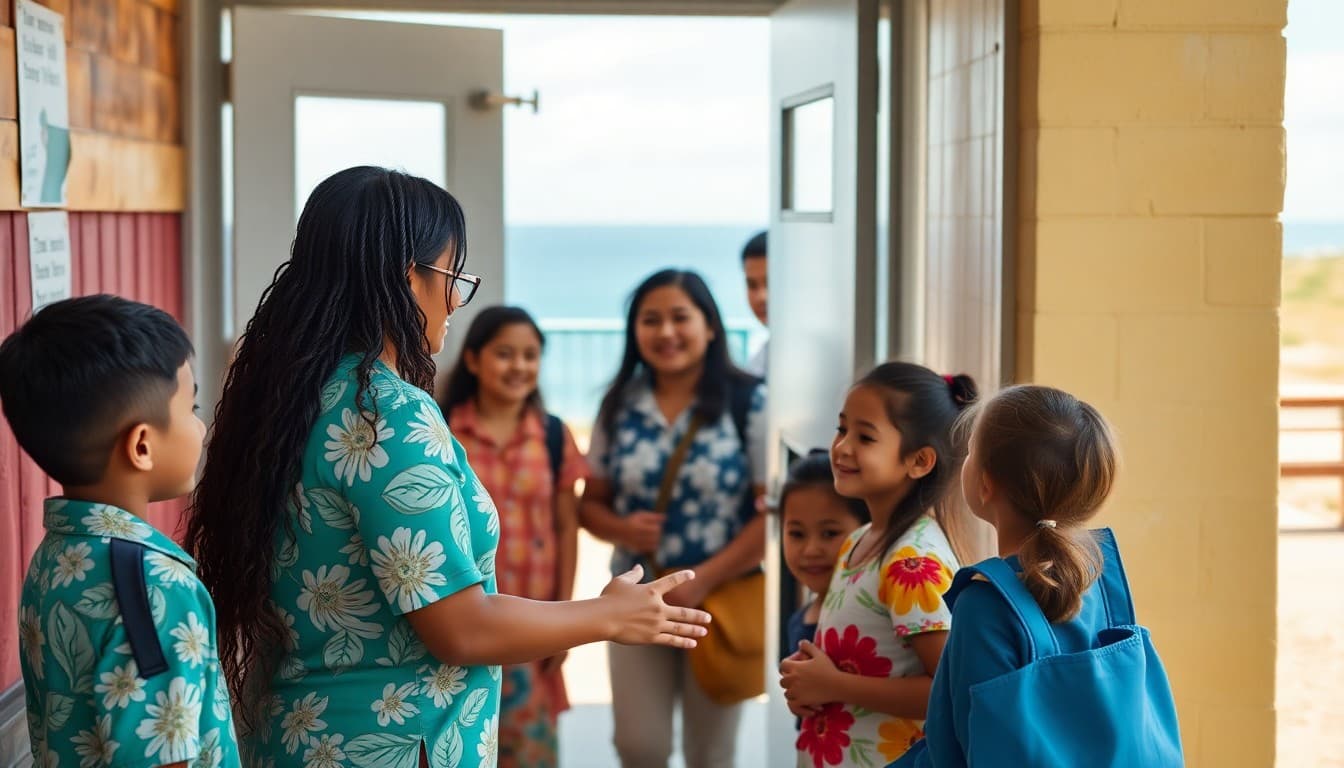
Aloha is more than a greeting; it is a cultural framework for how people engage with each other in Hawaii. Communication that embodies aloha, warmth, care, genuine connection, respect for the person you are addressing, is communication that resonates with Hawaiian families across every cultural background. A newsletter that feels like it comes from someone who genuinely cares about the children in the class, not just a teacher completing a professional obligation, reflects the aloha spirit that the community expects and values. This is not decorative language; it is how trust is built in Hawaii.
Plan for Multilingual Communication from Day One
Hawaii's elementary classrooms often include children from families who speak Ilocano, Tagalog, Japanese, Korean, Chinese, Samoan, Tongan, Spanish, and many other languages. Many Hawaii families have multiple languages operating in the home. Planning for multilingual communication from the start of the year, not as an accommodation but as the baseline approach, means identifying which two or three languages are most common among your families and working with the school's language liaisons to provide key content in those languages. Even a partial translation of the most important information makes families feel seen.
Communicate About Natural Disaster Preparedness
Hawaii faces natural disaster risks that are unique among US states: tsunami alerts generated by earthquakes across the Pacific, active volcanic eruptions on Hawai'i Island, hurricanes in summer and fall, and occasional earthquakes. Families, particularly those new to Hawaii, need to know how the school communicates during natural disaster alerts, what the evacuation and shelter-in-place protocols are, and where to find official information during an event. A beginning-of-year newsletter section on natural disaster communication prepares families before any event occurs.
A Template Newsletter Section for HI Families
Here is a template that fits Hawaii's communication culture:
"Aloha [CLASS] families! Here is what we are learning this week: [ACADEMIC FOCUS]. Coming up: [2-3 KEY DATES]. One thing to try at home: [SPECIFIC ACTIVITY]. Emergency communication reminder: [IF RELEVANT FOR SEASON]. HSA testing note: [IF APPROACHING]. Reach me at: [CONTACT]. Mahalo for your continued partnership in your child's education."
Using "Aloha" and "Mahalo" appropriately, not performatively, signals genuine engagement with the local culture and is appreciated by the community.
Cover HSA Testing Windows Clearly
Hawaii elementary students in grades 3 through 5 take the Hawaii State Assessment in English language arts and math each spring. A newsletter in March that explains the testing calendar, attendance expectations, and how results will be shared prepares families before the testing window. Include a brief explanation of how HSA scores are used and what they do and do not measure. Given Hawaii's diverse student population, framing assessment results as one data point among many, not the sole measure of a child's ability, is both accurate and culturally appropriate.
Acknowledge and Honor Native Hawaiian Cultural Practices
Many Hawaii elementary schools actively incorporate Hawaiian language, culture, and values into the curriculum. Newsletters that mention hula performances, Hawaiian language lessons, ahupua'a (traditional land and water management) science units, and traditional cultural practices communicate that the school takes Native Hawaiian cultural education seriously. For Native Hawaiian families, seeing their cultural heritage reflected in school communication, not just acknowledged in a perfunctory way but genuinely integrated into what the class is learning, builds trust and engagement.
Address the Extended Summer and Summer School
Hawaii's school year typically ends in late May or early June and does not begin again until late July or early August. That extended summer is both an opportunity for summer enrichment and a risk for learning loss. End-of-year newsletters that communicate about summer school options, public library summer reading programs, and community enrichment activities give families the tools to make the extended summer productive. The Department of Education Hawaii and many community organizations offer summer programs worth highlighting.
Build Communication That Respects the Community
Hawaii's community culture values humility, care, and genuine relationship over formality and efficiency. A newsletter that is brief but warm, specific but accessible, and consistent rather than occasional reflects the communication style that builds trust in Hawaii's school communities. Daystage helps Hawaii elementary teachers produce that kind of communication consistently each week without the time investment that might otherwise make it unsustainable in a school system that asks a great deal of its teachers.
Get one newsletter idea every week.
Free. For teachers. No spam.
Frequently asked questions
What should a Hawaii elementary school newsletter include?
Hawaii elementary school newsletters should cover Hawaii State Assessment (HSA) testing windows in the spring, tsunami and natural disaster preparedness communication, cultural sensitivity for Native Hawaiian and Pacific Islander families, multilingual communication for the state's diverse population including Ilocano, Tagalog, Japanese, and other language communities, and summer school and enrichment program information for the extended summer break.
How do Hawaii elementary teachers handle multilingual communication?
Hawaii has one of the most diverse student populations in the country. Significant communities of Filipino (Ilocano and Tagalog speaking), Japanese, Korean, Chinese, Samoan, Tongan, and Spanish-speaking families are present across the islands. The Department of Education Hawaii has language access requirements, and many schools maintain bilingual liaisons. Teachers in Hawaii should work with school family liaisons and district translation resources to provide key newsletter content in the home languages of their most common non-English families.
How should Hawaii elementary newsletters address natural disaster preparedness?
Hawaii faces specific natural disaster risks including tsunamis, volcanic eruptions (particularly on Hawai'i Island), hurricanes in late summer and fall, and occasional earthquakes. Elementary families need to know how the school communicates during natural disaster alerts, what the evacuation protocol looks like, how children are reunited with families after an emergency, and where the school's official communication channels are. This communication is particularly important for families new to Hawaii who are unfamiliar with the state's warning systems.
How should Hawaii elementary newsletters address Native Hawaiian cultural values?
Native Hawaiian cultural values, including aloha (compassion and connection), pono (righteousness), and malama (care for people and the land), are deeply embedded in many Hawaii school communities. Newsletters that acknowledge and reflect these values, rather than treating communication as a purely transactional information exchange, build trust with Native Hawaiian families and reflect the broader community culture. Mentioning school activities that connect to Hawaiian culture, history, or place-based learning signals authentic cultural engagement.
What tool do Hawaii elementary teachers use to send professional newsletters?
Daystage is used by elementary teachers in Hawaii to create and send polished newsletters to families without design skills or extra technical knowledge. Teachers can build weekly class updates with photos and event reminders and send them directly to family emails. For teachers navigating Hawaii's extraordinary cultural diversity and the logistical complexity of a one-district statewide system, it makes consistent and professional communication achievable.

Adi Ackerman
Author
Adi Ackerman is a former classroom teacher and curriculum writer with 8 years in K-8 schools. She writes about school communication, parent engagement, and what actually works in real classrooms.
More for Elementary
Ready to send your first newsletter?
3 newsletters free. No credit card. First one ready in under 5 minutes.
Get started free