
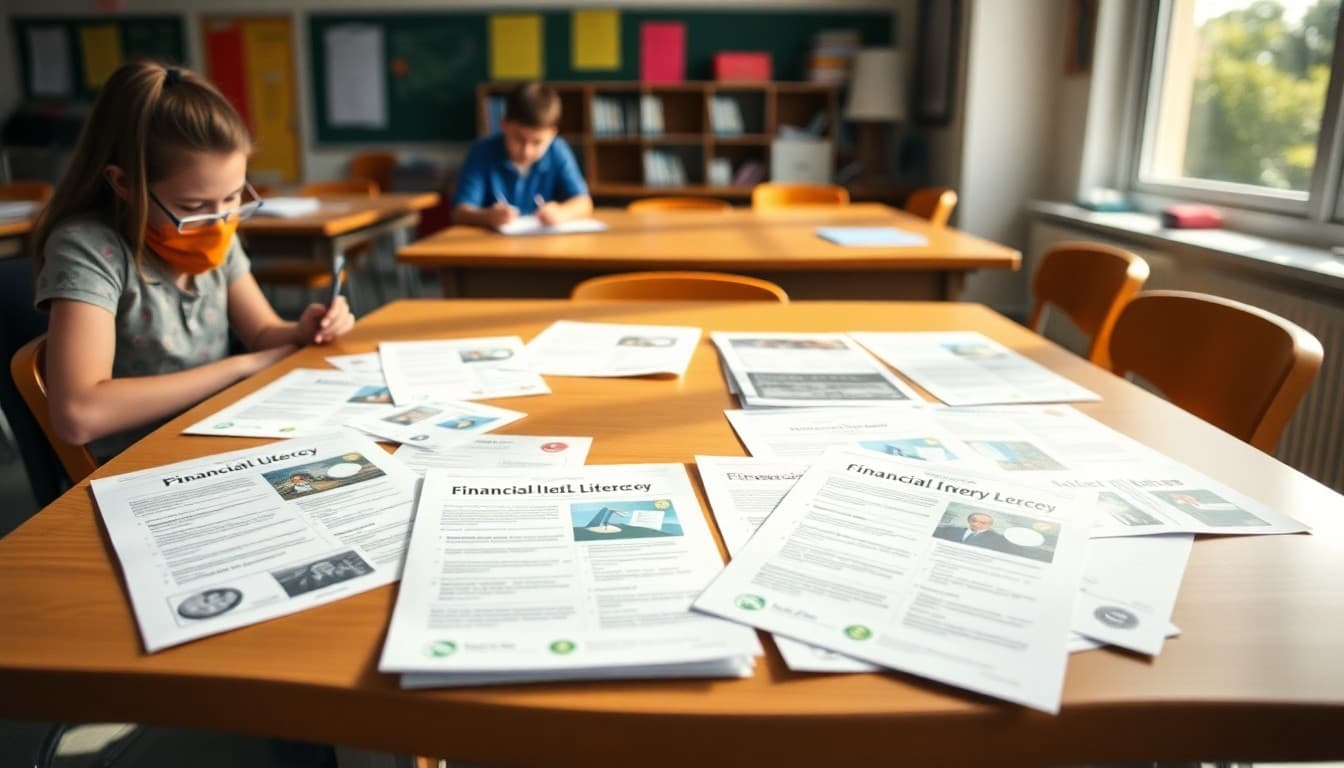
Financial Literacy Newsletter Examples That Work: Elementary Guide

The best way to improve your financial literacy newsletters for elementary parents is to see what effective ones actually look like. This guide walks through examples from each type of newsletter an elementary financial literacy teacher or classroom teacher might send, with notes on what makes each one work and what to avoid.
Example 1: Unit Introduction Newsletter
The unit introduction newsletter goes home at the start of each major financial literacy unit. Its job is to tell parents what students will be learning, why it matters, and how families can engage at home.
Here is an example from a 3rd grade needs and wants unit:
"Starting this week, our class is beginning a two-week unit on needs and wants. We will learn that needs are things we must have to survive, like food, water, shelter, and clothing, and that wants are things we would like to have but can live without. Students will sort real-world examples, write their own explanations, and work through scenarios where they have to make choices between needs and wants with a limited budget. At home, you can reinforce this by asking your child to categorize items at the grocery store as needs or wants and explain their reasoning. There are no right or wrong answers as long as they can explain their thinking."
What makes this work: it names the unit and timeframe, explains the core concept in parent-friendly language, describes the classroom activities, and gives one specific home activity. Under 150 words. Parents can read it and act on it.
Example 2: Home Activity Guide Newsletter
The home activity guide is sent once per unit or quarter. Its purpose is to give parents a set of specific, practical activities that reinforce what students are learning without requiring any special materials or financial disclosure.
Here is an example from a 4th grade saving and budgeting unit:
"This month we are studying saving and budgeting. Here are three things you can do at home. First: the next time your child wants something, ask them how long it would take to save for it if they put aside $2 per week. Work through the math together. Second: look at a store receipt together. Ask your child to identify the three most expensive items and calculate the total. Is there anything on the receipt that is a want rather than a need? Third: give your child a hypothetical budget of $20 and a list of five items priced between $3 and $12. Ask them to choose what to buy and explain why. These conversations do not require sharing your actual budget or financial situation."
Three activities, each described in one to two sentences. The income sensitivity note is included. The math connection is made. This is a newsletter that parents will actually use.
Example 3: Assessment Prep Newsletter
The assessment prep newsletter goes home a few days before a formal evaluation. Its job is to name what the assessment covers, provide a sample question type, and give parents a way to help without creating test anxiety.
Here is an example from a 5th grade end of unit assessment:
"Our financial literacy unit assessment is Thursday, October 23. It covers: distinguishing needs from wants, calculating simple budgets, understanding income and expenses, and making a spending decision with limited funds. A sample question: 'Alex earns $15 per week doing chores. Alex wants to buy a $45 game. If Alex saves $5 each week, how many weeks will it take? If Alex spends $10 each week and saves the rest, how does that change things?' The best preparation is a good night's sleep and a full breakfast. Students who participated in class activities are ready. No special studying is needed."
Concrete, specific, and reassuring. The sample question is grade-appropriate. The last paragraph normalizes the assessment without dismissing it.
Example 4: End of Unit Reflection Newsletter
The end of unit reflection tells parents what students learned and connects it to what comes next. It closes one communication thread and opens the next.
"We finished our savings and budgeting unit this week. Students practiced making spending decisions with limited budgets, learned to calculate simple totals and compare them to available funds, and discussed the tradeoff between spending now and saving for later. The most common misconception we saw was that saving always means saying no to things you want. We spent time talking about how saving is a different kind of choice, not the absence of choice. Next month, we begin our unit on income and earning. I will send a preview next week."
This newsletter tells parents what happened, names something students found genuinely difficult, and previews what is coming. Families who read this feel like genuine partners in the learning, not just recipients of school information.
What Makes Any Financial Literacy Newsletter Work
Looking across these four examples, several elements appear consistently in the ones that get read and that drive home engagement. Every newsletter is short enough to read in under three minutes. Every newsletter includes at least one specific home activity or conversation prompt. Every newsletter uses plain language with no unexplained acronyms or jargon. Every newsletter acknowledges that families have different financial circumstances without making that acknowledgment a production. And every newsletter is specific about what students are learning right now, not what the curriculum covers in general.
Using Daystage to Build and Send These Newsletters
Daystage is designed specifically for school newsletters and makes it straightforward to build the types of financial literacy communications described in this guide. You can write the newsletter, add photos of classroom activities, include home activity sections, and send to all families in one step. The platform tracks open rates so you can see which types of newsletters generate the most engagement, which helps you improve your communication strategy throughout the year.
Get one newsletter idea every week.
Free. For teachers. No spam.
Frequently asked questions
What makes a financial literacy newsletter example effective for elementary parents?
Effective examples are specific about what students are learning, avoid educational jargon, include at least one concrete home activity, and are short enough to read in under three minutes. The best elementary financial literacy newsletters treat parents as allies in the learning process rather than as an audience for teacher reporting. They invite action and offer something useful, not just information.
How long should an elementary financial literacy newsletter be?
For a unit-specific newsletter, 350 to 500 words is ideal. For a beginning of year overview, 500 to 700 words is appropriate. For a quick home activity guide or assessment prep newsletter, 300 words is often enough. Parents of elementary students are managing busy schedules. A newsletter that gets to the point quickly and offers something practical in three minutes or less will be read more consistently than one that requires careful reading.
What are the most common mistakes in elementary financial literacy newsletters?
Using too much educational jargon without explanation. Failing to connect classroom concepts to specific home activities. Writing as though all families have the same financial comfort level. Not naming the specific concepts students are learning. Sending newsletters without a clear action item or purpose. Any one of these reduces the newsletter's effectiveness. All of them together produce a newsletter that parents skim and forget.
What types of financial literacy newsletters should elementary teachers send throughout the year?
A beginning of year curriculum overview, a unit introduction newsletter at the start of each major unit, a home activity guide once per unit or quarter, an assessment prep newsletter before any formal evaluation, and a brief end of unit reflection that shares what students learned and what comes next. These five types together create a complete communication sequence that keeps families informed and engaged throughout the year.
Can I use Daystage to build and send financial literacy newsletters to elementary families?
Yes. Daystage is built for exactly this kind of school communication. Teachers can write newsletters, add photos of classroom activities, include home activity suggestions, and send to all families in one step. The platform is designed specifically for school newsletters, so there is no setup required. It also tracks open rates, which helps you understand which types of newsletters families actually read.

Adi Ackerman
Author
Adi Ackerman is a former classroom teacher and curriculum writer with 8 years in K-8 schools. She writes about school communication, parent engagement, and what actually works in real classrooms.
More for Elementary
Ready to send your first newsletter?
3 newsletters free. No credit card. First one ready in under 5 minutes.
Get started free