
Environmental Science: How Parents Can Help at Home Elementary Guide

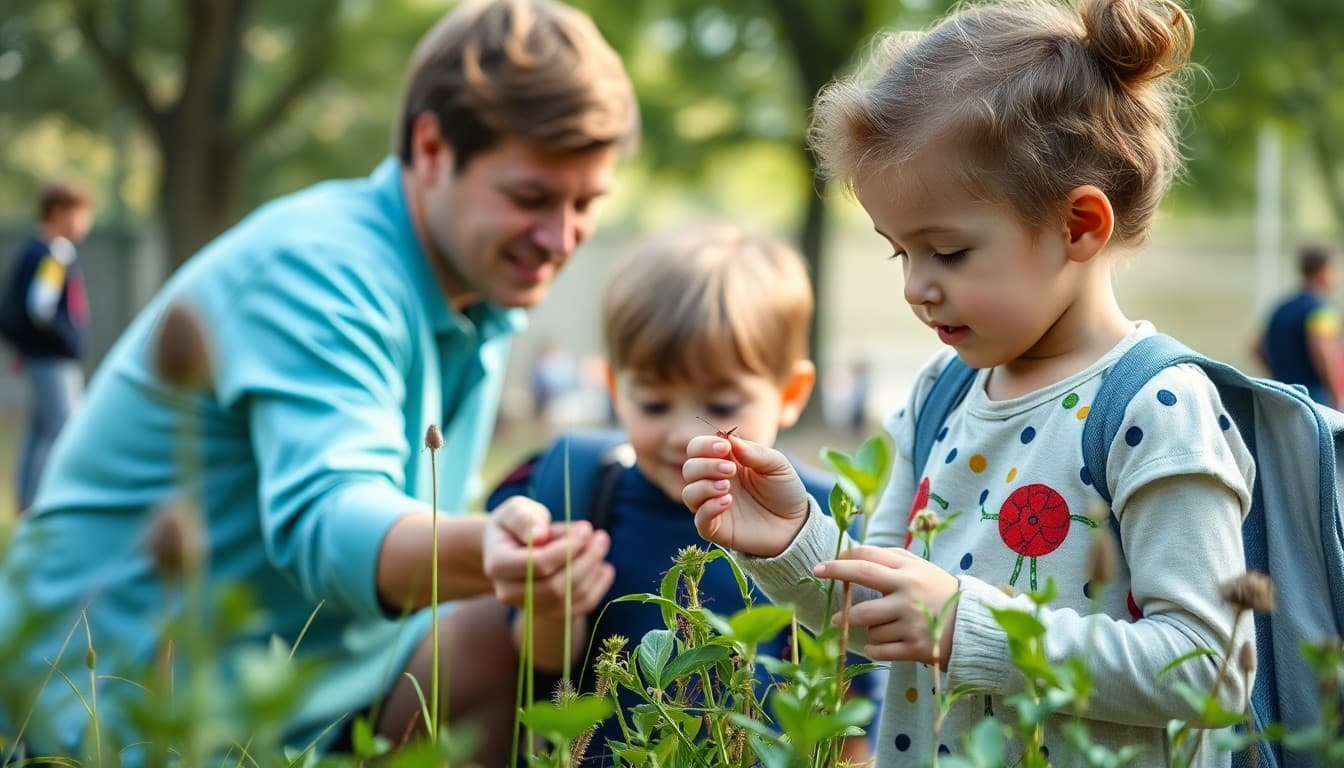
Environmental science is uniquely suited for home reinforcement because the laboratory is everywhere. Every walk outside is an opportunity to practice the observation skills your students are building in class. A parent help newsletter that gives families specific, low-effort ways to extend that learning can make a significant difference in how deeply the concepts stick.
Why Environmental Science Is Easy to Reinforce at Home
Unlike math or reading, where home support requires specific materials and often a degree of expertise, environmental science home support requires only going outside and paying attention. Parents who take their student on a 15-minute observation walk are doing exactly what the curriculum is designed to build on. The challenge isn't finding activities; it's giving families specific enough prompts that they know what to look for.
That's the job of your parent help newsletter: translate the current unit's concepts into specific outdoor questions that families can ask on any walk outside.
What to Include in the Parent Help Newsletter
Cover the current unit topic in plain language, why outdoor observation reinforces what students are learning, and two to three specific activities or observation prompts. Include a brief vocabulary list so parents can use the same terms students are learning in class. Keep the newsletter to 200 to 250 words. The activities should be the centerpiece: specific, low-prep, and tied directly to what's being taught.
Template Excerpt: Ecosystems and Food Chains
"This week we're exploring food chains and how energy moves through an ecosystem. Students are learning what producers, consumers, and decomposers are and how each depends on the others.
Try one of these outdoors this week: (1) Find a plant, an insect, and a bird in the same outdoor space. Ask your student to explain the food chain connecting them. (2) Find something decomposing (a fallen leaf, a piece of fruit, a log) and ask: 'What's happening here? What would happen if decomposers didn't exist?' (3) Ask your student to tell you everything they can about what they observe in one square foot of outdoor space. Time them for two minutes and see how much they notice."
Activities for Different Outdoor Access Levels
Families have very different access to outdoor and natural spaces. Urban families may have a city park, a windowsill planter, or street trees. Suburban families have backyards and neighborhood parks. Rural families have the widest range available. Your newsletter can offer activities that work across all three contexts.
For urban families: bird observation from a window, plant observation in a street-level planter, insect hunt in any park or grassy area. For any family: weather observation from indoors counts. The goal is observation and curiosity, not a specific type of natural environment.
Starting a Family Nature Journal
One of the best home activities for environmental science is keeping a simple observation log. Students draw or write one thing they notice outdoors each day. It doesn't need to be elaborate: a date, a drawing, and one sentence is enough. Over a unit or semester, the journal becomes a record of their observation growth and a conversation starter for classroom discussions.
Suggest this activity in the newsletter with a simple starting prompt: "Tonight, ask your student to draw one thing they noticed outside today. Label it with its name if they know it, or describe what it does if they don't. That's a science journal entry."
Questions That Build Environmental Curiosity
Close the newsletter with a short list of open-ended questions parents can ask at any time on any walk outside. "What's the smallest living thing you can see? What does that tree need to survive? What would happen here if it stopped raining for a month? Why do you think that bird is doing that?" These questions take 30 seconds to ask and generate conversations that reinforce the curriculum better than any structured activity.
Get one newsletter idea every week.
Free. For teachers. No spam.
Frequently asked questions
How can elementary parents reinforce environmental science without being scientists?
Go outside and ask questions. That's the entirety of what's needed. Parents who take their student to a park, backyard, or even a windowsill planter and ask 'what do you notice?' are practicing the core skill of environmental science. No scientific knowledge required. The parent's role is to be curious alongside their student and to use the vocabulary the class is introducing.
What are the most effective outdoor activities for elementary environmental science support?
Habitat walks (observe a small outdoor space and identify what lives there), weather journals (record weather observations for a week), nature collections (gather five different leaves, seeds, or rocks and compare them), and organism counts (count all the different types of living things visible from one spot) are all effective. Each takes 10 to 20 minutes and directly reinforces the observation habits at the center of elementary environmental science.
How do I write parent activities that work in urban environments without natural spaces?
Urban environments have more nature than parents often realize. Window boxes, street trees, birds and squirrels, insects in cracks, weeds pushing through pavement, and even rooftop gardens are all accessible observation sites. Your newsletter can explicitly name urban-specific options so families in dense neighborhoods don't feel excluded from the activities.
Can parents use environmental science activities to replace or reduce screen time?
Yes, and that framing often lands well with elementary parents. A 20-minute outdoor observation activity is a natural, engaging alternative to a screen. You can suggest this in the newsletter without being prescriptive: 'Instead of a screen break this week, try a 15-minute nature observation session in your nearest outdoor space.' That framing is appealing to parents who are already looking for engagement alternatives.
How can Daystage help environmental science teachers send timely activity suggestions?
Daystage makes it easy to send a parent activity newsletter at the start of each unit. With a template saved, you can update the unit-specific activities and send to all families in minutes. For an observation-based subject like environmental science, timely newsletters that match the current unit content are significantly more useful than generic science suggestions.

Adi Ackerman
Author
Adi Ackerman is a former classroom teacher and curriculum writer with 8 years in K-8 schools. She writes about school communication, parent engagement, and what actually works in real classrooms.
More for Elementary
Ready to send your first newsletter?
3 newsletters free. No credit card. First one ready in under 5 minutes.
Get started free