

Elementary School Parent Newsletter: School Night Sleep Schedule Tips
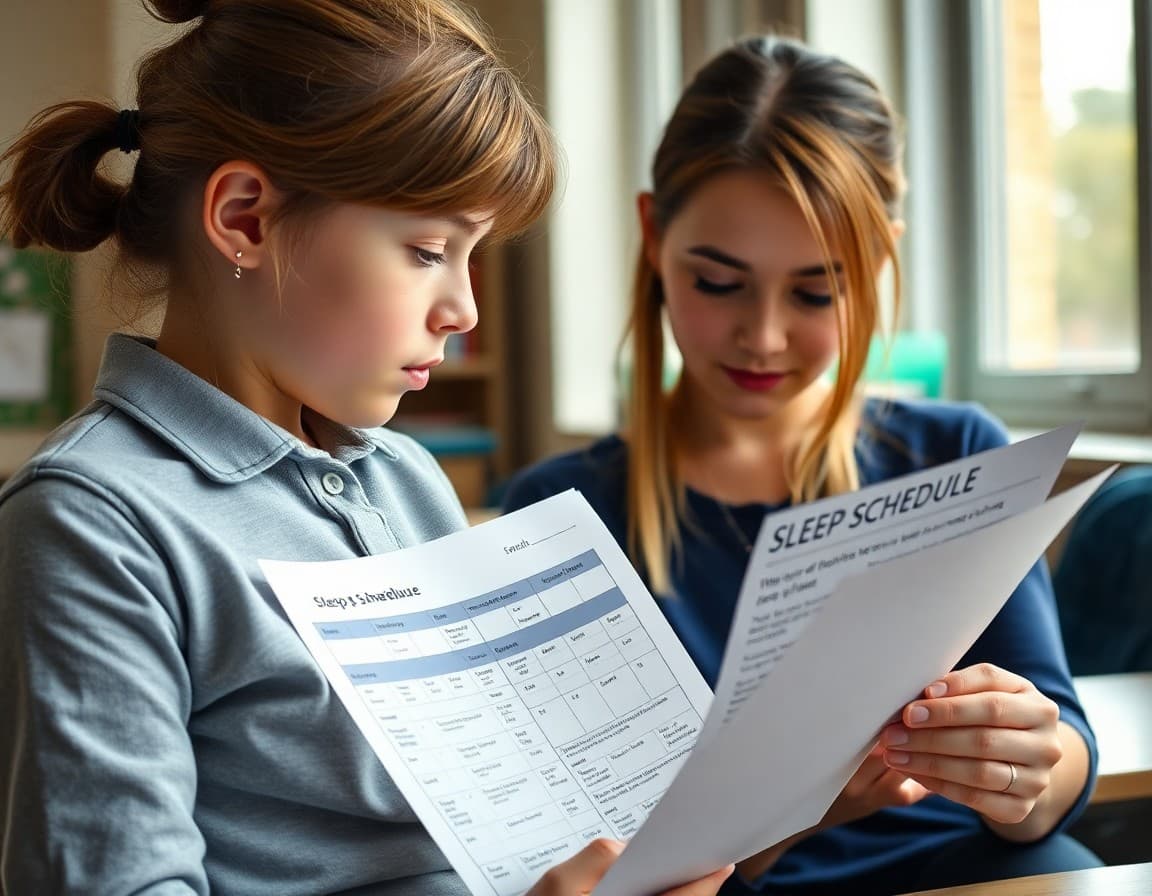
Sleep is one of the most powerful levers for improving student performance at the elementary level, and it is almost entirely managed by families rather than schools. A child who consistently gets 10 hours of sleep performs measurably better on attention, memory, emotional regulation, and learning than a child who gets seven or eight. That gap is larger than most academic interventions teachers can implement in the classroom. A well-written sleep schedule newsletter gives families the information and tools to make one of the highest-impact changes to their child's school readiness. Here is how to write it.
Lead with the Sleep-Learning Connection
Most families understand intuitively that tired children do not perform well. What many do not know is the specific mechanisms: sleep consolidates the memories formed during learning, growth hormone is released primarily during deep sleep, the prefrontal cortex that governs attention and impulse control is highly sensitive to sleep deprivation, and insufficient sleep produces emotional dysregulation that looks like behavioral problems but is physiological. Sharing two or three of these specific connections, in plain language, gives families a meaningful reason to prioritize bedtime rather than just treating it as a parenting obligation.
Give Families the Numbers
The American Academy of Sleep Medicine recommends 9 to 12 hours of sleep per night for children ages 6 through 12. Most teachers do not share this number explicitly, and most families do not know it. Including a simple age-and-bedtime table in your newsletter, showing what bedtime is necessary given various wake times, makes the recommendation concrete. A family whose child wakes at 6:45 AM for school and needs 10 hours of sleep needs a bedtime of 8:45 PM. Most families have never done that math. Doing it for them is useful.
Provide a Sample Evening Routine
The difference between a family with a good bedtime routine and one without is often not knowledge but structure. A sample evening routine, worked backward from an appropriate bedtime, gives families a concrete template rather than vague guidance. For example: 6:00 PM dinner, 6:30 PM homework, 7:15 PM bath or shower, 7:30 PM pajamas and teeth brushing, 7:45 PM reading time in bed, 8:15 PM lights out. Families can adapt the timing to their schedule. The structure is what helps, not the specific times.
A Template Sleep Newsletter Section
Here is a template for a sleep schedule newsletter section:
"Sleep and school readiness: Children in [GRADE] need between 9 and 11 hours of sleep per night. If your child wakes at [COMMON LOCAL SCHOOL START WAKE TIME], that means a bedtime of around [CALCULATED BEDTIME]. A consistent bedtime routine, even a simple one, makes a noticeable difference in morning readiness. The two changes that tend to have the biggest impact are [1] turning off screens 30 minutes before bed and [2] keeping a consistent bedtime on school nights including Sundays. If your child is regularly struggling to stay alert or regulate emotions during the school day, sleep is often the first place worth investigating."
Address Real Family Obstacles Honestly
After-school activities that run until 7:30 PM, parents working evening shifts, younger siblings who wake the household, and children who strongly resist bedtime are all real obstacles to the ideal sleep schedule. A newsletter that ignores these obstacles in favor of prescribing a perfect routine will be dismissed by the families who most need the support. Acknowledge the obstacles: "If an 8:30 PM bedtime is not always possible because of evening activities, even maintaining it four nights out of five makes a real difference compared to no consistent bedtime at all."
Connect Sleep to What Families See at Home
Families often interpret sleep deprivation symptoms, difficulty waking up, irritability before school, and resistance to starting the day, as behavioral or motivational problems rather than physiological ones. A newsletter that helps families recognize sleep deprivation symptoms at home gives them a diagnostic frame for what they are seeing. "If your child is frequently difficult to wake, melts down over small things before school, or seems fine until about 9 AM and then suddenly more regulated, insufficient sleep is very often the explanation." That framing connects the newsletter content to observations families have already made.
Acknowledge the Sunday Night Problem
Many children who maintain a reasonable bedtime on school nights stay up significantly later on Friday and Saturday nights, creating what sleep researchers call social jet lag. The Sunday night difficulty getting to sleep that many families experience is often a direct consequence of a weekend schedule that shifted the child's circadian clock. A brief note in your newsletter about why Sunday night bedtime is as important as any other school night, and how to reduce social jet lag without completely eliminating weekend flexibility, is both scientifically accurate and practically useful.
Send This Newsletter in September Before Patterns Are Set
The best time to send a sleep schedule newsletter is the first or second week of school, before sleep patterns have been established for the year. Families who receive this information in September can build it into their school year routine from the start. Families who receive it in February are being asked to change an established pattern, which is significantly harder. Daystage makes it simple to build this newsletter into your early September communication plan so it goes out at the right moment without being bumped by other priorities.
Get one newsletter idea every week.
Free. For teachers. No spam.
Frequently asked questions
What should an elementary school newsletter about sleep schedules include?
A sleep schedule newsletter should give families the recommended hours of sleep by age, explain specifically how sleep affects attention, memory, mood, and learning readiness, provide a sample evening routine that works backward from an age-appropriate bedtime, and address common obstacles like screen time, homework overload, and evening activities. The more specific and practical the content, the more likely families are to try it.
How much sleep do elementary school students need?
The American Academy of Sleep Medicine recommends 9 to 12 hours of sleep per night for children ages 6 through 12. Most elementary school children need to be asleep between 7:30 and 9:00 PM depending on their age and wake time. A newsletter that includes a simple calculation, for example 'if your child wakes at 6:30 AM and needs 10 hours of sleep, bedtime should be 8:30 PM,' makes the recommendation immediately actionable rather than abstract.
How do you communicate about sleep without making families feel judged?
Sleep communication works best when framed as practical support rather than parental critique. Many families know their child is not getting enough sleep but face real obstacles: late work schedules, after-school activities that run past 7 PM, younger siblings, housing challenges, or a child who genuinely resists bedtime. Acknowledging those obstacles, and offering strategies that work within imperfect conditions rather than prescribing an ideal routine, is both more honest and more effective.
What observable signs of insufficient sleep should elementary teachers share with parents?
Teachers can share what insufficient sleep looks like in the classroom without diagnosing individual students: difficulty staying on task for more than a few minutes, strong emotional reactions to small frustrations, difficulty remembering instructions, trouble transitioning between activities, and falling asleep during quiet work time. These observable signs give parents useful information without singling out specific children and help families connect sleep quality to what they see in their child at home.
What tool do elementary teachers use to send sleep schedule newsletters to families?
Daystage is used by K-5 teachers to send polished parent newsletters on topics like sleep schedules professionally and quickly. Teachers can include research-backed guidelines, a sample bedtime routine, and school-specific context in one clean newsletter that reaches families directly on their preferred device. The platform removes the formatting friction so teachers can focus on writing content that makes a real difference in family routines.

Adi Ackerman
Author
Adi Ackerman is a former classroom teacher and curriculum writer with 8 years in K-8 schools. She writes about school communication, parent engagement, and what actually works in real classrooms.
More for Elementary
Ready to send your first newsletter?
3 newsletters free. No credit card. First one ready in under 5 minutes.
Get started free