

Elementary School Parent Newsletter: Healthy Screen Time Tips
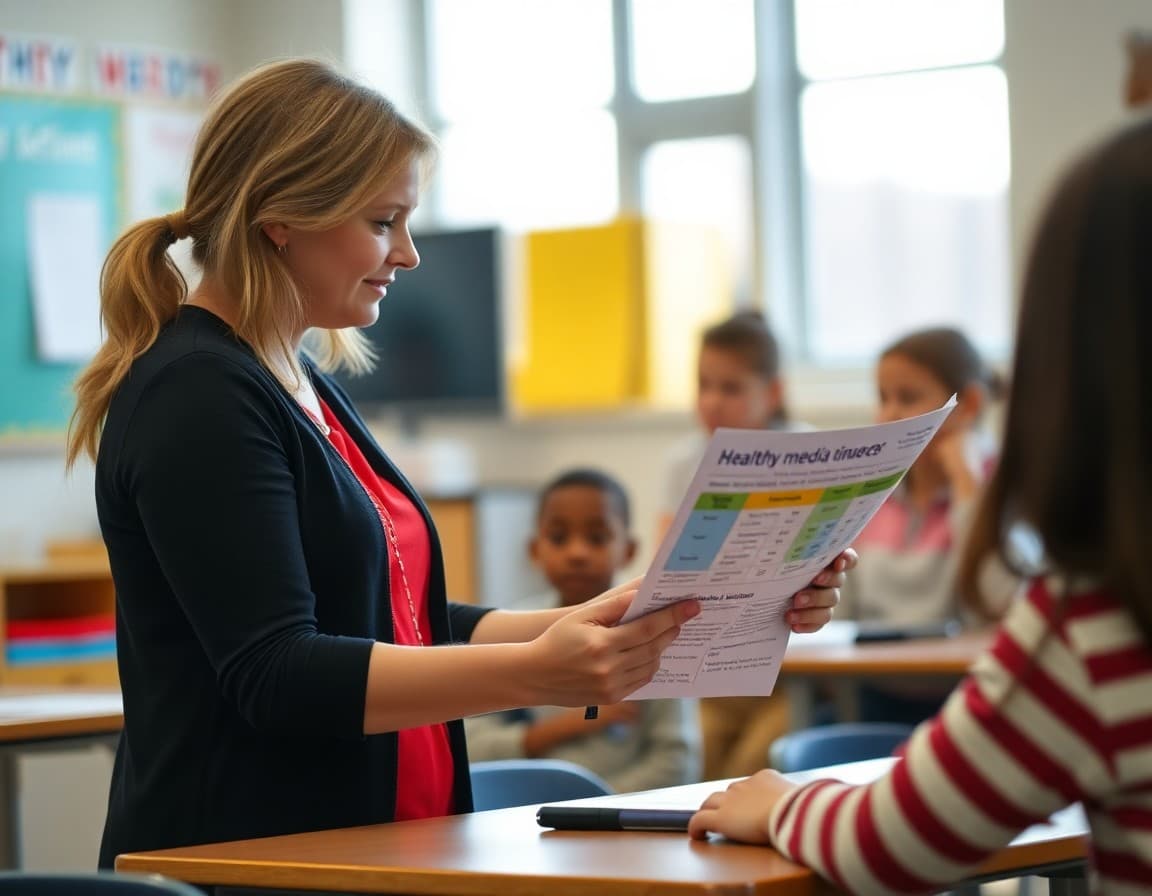
Screen time is one of the most loaded topics in elementary parent communication. Families feel judged. Research gets oversimplified. And teachers walk a narrow path between sharing useful information and sounding like they are criticizing parenting choices made under real constraints. This guide covers how to write a screen time newsletter that is actually helpful rather than one that families roll their eyes at and discard.
Start with Empathy, Not Alarm
The worst screen time newsletters start with statistics about the dangers of too much screen time, which immediately puts families on the defensive. Families know screen time is a complicated topic. They are managing it the best they can, often under conditions that make the ideal impossible. A newsletter that opens with acknowledgment, something like "managing screen time at home is genuinely challenging, and there are no perfect answers," builds the trust that makes the practical content actually land.
Give Families Actual Numbers, Not Just "Less"
The American Academy of Pediatrics recommends no more than one hour of high-quality programming per day for children ages 2 through 5, and consistent limits for children 6 and older with content that is appropriate and age-suitable. Sharing these specific guidelines, rather than just encouraging families to reduce screen time, gives them a benchmark to work with. Many families have no idea what the pediatric recommendation is. Knowing the number gives them something concrete rather than a vague directive.
Distinguish Between Screen Time Types
One of the most useful frames for families navigating screen time is the distinction between active and passive use. Watching a show passively is different from using an educational app that requires problem-solving. Video chatting with a grandparent is different from scrolling social media. Playing a game that requires creativity, like building in Minecraft, is different from watching other people play games. A newsletter that helps families see these distinctions, and suggests orienting toward active and co-viewed screen time rather than passive solo viewing, is more actionable than a total time limit alone.
A Template Screen Time Newsletter Section
Here is a template for a screen time newsletter section:
"A note on screen time at home: the American Academy of Pediatrics recommends [GUIDELINE FOR YOUR GRADE LEVEL]. In practice, what seems to matter most is not just the time but the type and context. When possible, try to watch or play together so you can talk about what your child is experiencing. Two practical changes that research supports: keeping screens out of bedrooms, and having a screen-free wind-down period of about 30 minutes before bed. These two changes tend to have the biggest impact on sleep and morning readiness."
Short, specific, non-judgmental. That is the target.
Connect Screen Time to Sleep and Learning Readiness
One of the most concrete connections between screen time and school performance is sleep quality. Blue light exposure from screens before bed disrupts melatonin production and reduces sleep quality, which directly affects attention, memory consolidation, and mood the next morning. Framing screen time limits as a sleep strategy rather than a technology restriction is often more persuasive for families. "We notice that children who have screens off 30 minutes before bed come to school more focused and ready. Even that one change makes a noticeable difference." That connection between screen time and observable school performance is practical and motivating.
Address the Reality of Educational Technology at School
Many elementary schools use tablets, Chromebooks, and educational apps as learning tools. Families may wonder how school technology use fits with screen time recommendations. Acknowledge it directly: school-directed technology use is purposeful, supervised, and bounded in time. It is different from recreational home screen use. The guidelines you share about home screen time are about recreational and passive use, not about the productive, supervised technology the class uses for learning. Drawing that distinction removes the confusion that makes some families dismiss screen time guidance as hypocritical.
Offer One Small, Doable Change
Screen time newsletters that ask families to completely restructure their technology habits get ignored. Newsletters that suggest one specific, small change that is immediately doable get tried. The two changes with the most consistent evidence behind them are: keeping screens out of bedrooms, and creating a screen-free period before bed. Pick one for the newsletter, explain briefly why it matters, and suggest a way to implement it this week. One achievable change is worth more than a comprehensive technology management plan that no family actually implements.
Follow Up in the Spring with What Families Reported
If you send a screen time newsletter in October and then ask about it in a brief conference question or spring survey, you learn what actually worked for families and what felt impossible. That information makes the next year's screen time newsletter more accurate and more useful. Daystage makes it easy to build and track the parent newsletters you send over the course of the year so you can iterate on what works for your specific school community.
Get one newsletter idea every week.
Free. For teachers. No spam.
Frequently asked questions
What should an elementary school newsletter about screen time include?
A screen time newsletter should give families clear guidelines, not just general warnings. Include the American Academy of Pediatrics screen time recommendations by age, specific suggestions for what kinds of screen time are more beneficial versus less beneficial, practical tips for creating screen-free routines, and a reassurance that the goal is not elimination but intention. Families who receive specific guidance rather than vague cautions are more likely to make real changes.
How should elementary teachers address screen time without judging families?
Screen time is a topic where families already feel judged, often by media coverage and other parents. A newsletter that acknowledges the real pressures families face, including work demands, childcare challenges, and the genuine value of some educational media, is far more effective than one that implies all screen time is a failure of parenting. Lead with empathy, follow with specific strategies, and trust families to make their own decisions with better information.
What kinds of screen time are more beneficial for elementary students?
Not all screen time is equivalent. Co-viewing with a parent and discussing what you watch together is more beneficial than passive solo viewing. Educational apps and games that require active engagement, problem-solving, or creation are more beneficial than passive scrolling. Video calling with family members supports social connection. The key distinction is active versus passive, and whether a trusted adult is involved in the experience or the child is using screens as a solo activity.
How do you connect school technology use to the family screen time conversation?
Many elementary schools use technology for learning, and families sometimes wonder how school technology use fits with the screen time guidelines teachers recommend at home. A newsletter that distinguishes between school-directed technology use, which is purposeful and supervised, and recreational home screen time gives families a useful framework. It also builds trust by showing that the school is thoughtful about the same technology questions families are navigating.
What tool do elementary teachers use to send screen time newsletters to families?
Daystage is used by K-5 teachers to build and send professional parent newsletters about topics like screen time quickly. Teachers can combine research-backed guidelines, practical tips, and school-specific context in one clean newsletter sent directly to family emails. For teachers who want to communicate on sensitive topics like technology with care and professionalism, it provides the format without the formatting work.

Adi Ackerman
Author
Adi Ackerman is a former classroom teacher and curriculum writer with 8 years in K-8 schools. She writes about school communication, parent engagement, and what actually works in real classrooms.
More for Elementary
Ready to send your first newsletter?
3 newsletters free. No credit card. First one ready in under 5 minutes.
Get started free