
Creative Writing: How Parents Can Help at Home (Elementary School)

Creative writing at home does not have to look like school. The most powerful support parents can offer is not sitting next to their student while they write. It is creating an environment where words, stories, and ideas feel welcome, interesting, and worth spending time on.
What We Are Doing in Class Right Now
Tell parents where students are in the writing unit. "This week, students are drafting their personal narratives. They have chosen a small moment from their own life, made a planning map of what happened, and are now writing the full piece. We are focusing on using specific details instead of general descriptions, and on showing what characters feel through actions rather than just naming the emotion." That update gives parents vocabulary and context they can use at home.
The Most Powerful Thing You Can Do: Tell Stories
Families that tell stories out loud are preparing writers. This does not need to be formal. At dinner, in the car, or at bedtime, telling a story from your own childhood or making up a story together is building the narrative thinking that students then transfer to the page.
Try this: on the way to school or at dinner, start a story and pass it around the table. Each person adds one sentence. The sillier it gets, the better. Students who play with story structure out loud develop a natural sense of beginnings, rising action, and endings that no worksheet can replicate.
Story Starters to Try at Home
Here are three prompts parents can offer when their student wants to write but does not know where to start. Set a five-minute timer and do not interrupt. When the timer goes, ask your student to read what they wrote out loud.
"The new kid at school had a strange habit that nobody could explain." "My student found a notebook on the sidewalk, and the first page had their own name written in unfamiliar handwriting." "Every Thursday at exactly 4pm, something impossible happened in our neighborhood, and only my student noticed."
After they read it, ask: "What happens next?" Not because they need to keep writing, but because the best stories always make you want to know what happens next.
How to Read Like a Writer Together
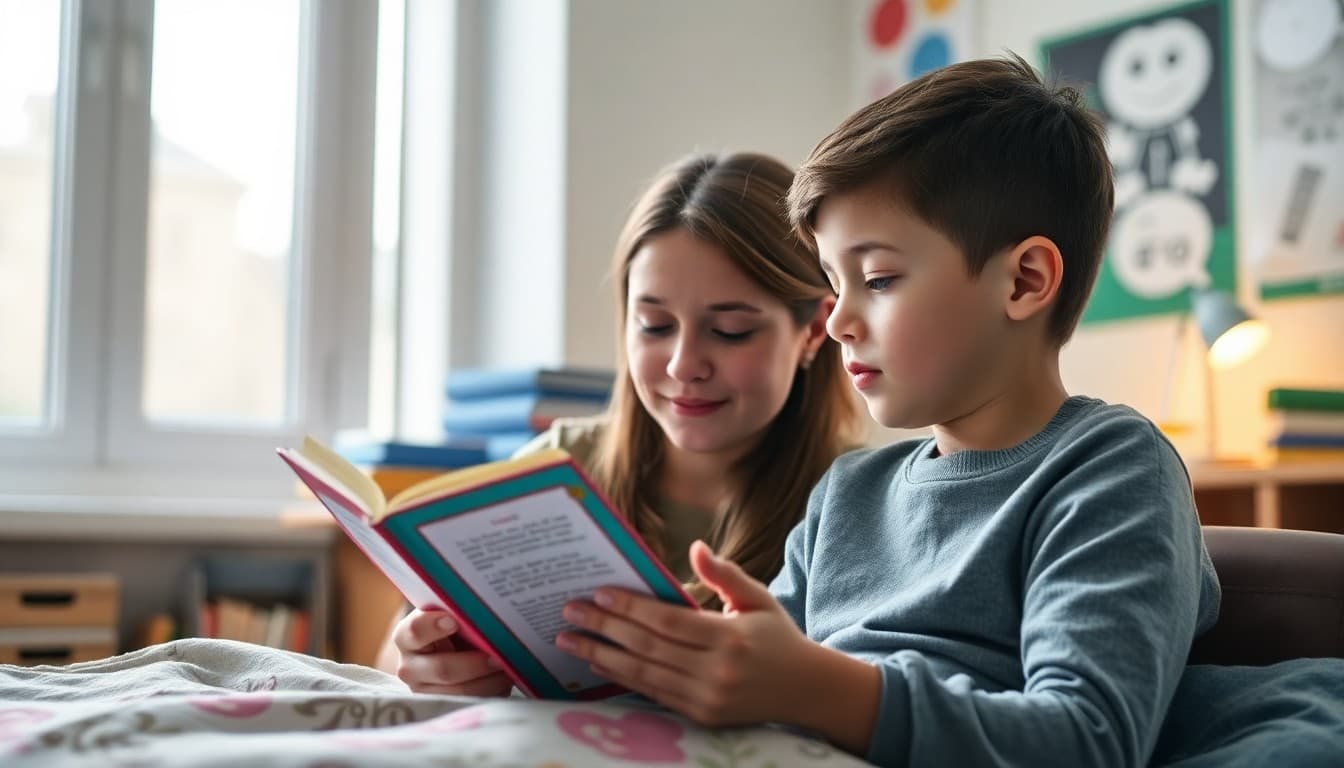
Reading together is also writing preparation. Occasionally, after a passage that you both find interesting or vivid, ask one of these questions: "How did the author make that scene feel so real?" or "What is the first sentence of this chapter? Why do you think the author chose to start that way?" or "How does the author let us know that this character is nervous without just saying 'she was nervous'?"
Students who learn to notice craft choices in other writers begin making deliberate craft choices in their own work. That noticing habit is one of the most durable writing skills a student can develop.
The Writer's Notebook Habit
If your student does not have a dedicated notebook for writing at home, consider getting one and making it entirely theirs. No parent reads it unless invited. No teacher grades it. It is not for school. It is for anything they want to write, draw, or jot down. Students who have this private space often fill it with the writing that they are least willing to show anyone, which is often also their most genuine and interesting work.
What Not to Do When Your Student Writes
Two well-meaning habits actually work against creative writing development. The first is correcting spelling and grammar while they write. Stopping to fix errors breaks the flow of creative thinking and teaches students to write carefully rather than expressively. First drafts are supposed to be messy. Revision comes later. The second is saying "that's great" to everything. Specific praise is more useful: "I like how you described the sound of the door" tells a student what is working. Generic praise tells them nothing.
How to Reach Me
If you have questions about your student's progress in creative writing or want suggestions for specific activities that would support their current piece, email me at [EMAIL]. I check email daily and am glad to suggest prompts or strategies based on where your student is in their writing right now.
Get one newsletter idea every week.
Free. For teachers. No spam.
Frequently asked questions
What is the best thing parents can do to support creative writing at home for elementary students?
The single most effective thing is storytelling. Families that tell stories out loud, whether funny things that happened during the day, made-up bedtime stories, or retelling movies they watched together, are building the narrative thinking that underlies all written storytelling. Students who have practiced telling a story out loud multiple times have a much easier time putting one on paper. No supplies, no lessons, no pressure required.
How do I get my elementary student to write at home when they resist it?
Remove the expectation that writing has to be correct or complete. A parent who says 'write anything for five minutes and stop when the timer goes' makes writing feel like a game. A parent who expects a finished, polished story makes it feel like a homework assignment. Try prompts that start with something funny, impossible, or personally relevant to your student. An engaged child will keep writing past the timer. A resistant one stops exactly when it goes off, and that is fine too.
How does reading together support creative writing?
Reading together builds a student's sense of what good writing sounds like, which directly influences what they produce when they write. When you read a book your student loves and occasionally ask 'how did the author make that character feel so real?' or 'what made that first sentence interesting?' you are building the noticing habit that strong writers use constantly. It does not need to be a discussion. One question every few chapters is enough.
What supplies help an elementary student develop a writing identity at home?
A dedicated notebook that belongs entirely to the student, with no teacher or parent reading it unless invited, is the most powerful single supply. Students who have a private space for words tend to fill it. A nice pen or set of colored pens can also make writing feel like a personal practice rather than a school task. The notebook does not have to be expensive. Dollar store composition notebooks work as well as any dedicated journal.
How does Daystage help teachers send regular creative writing support newsletters to families?
Daystage makes it easy to send a parent help newsletter for every writing unit with specific story starters, reading tips, and vocabulary families can use at home. Teachers who send these newsletters report that parents feel genuinely connected to their student's writing development throughout the year, not just during assessment time. A saved Daystage template for creative writing parent help takes about 10 minutes to update for each new unit.

Adi Ackerman
Author
Adi Ackerman is a former classroom teacher and curriculum writer with 8 years in K-8 schools. She writes about school communication, parent engagement, and what actually works in real classrooms.
More for Elementary
Ready to send your first newsletter?
3 newsletters free. No credit card. First one ready in under 5 minutes.
Get started free