
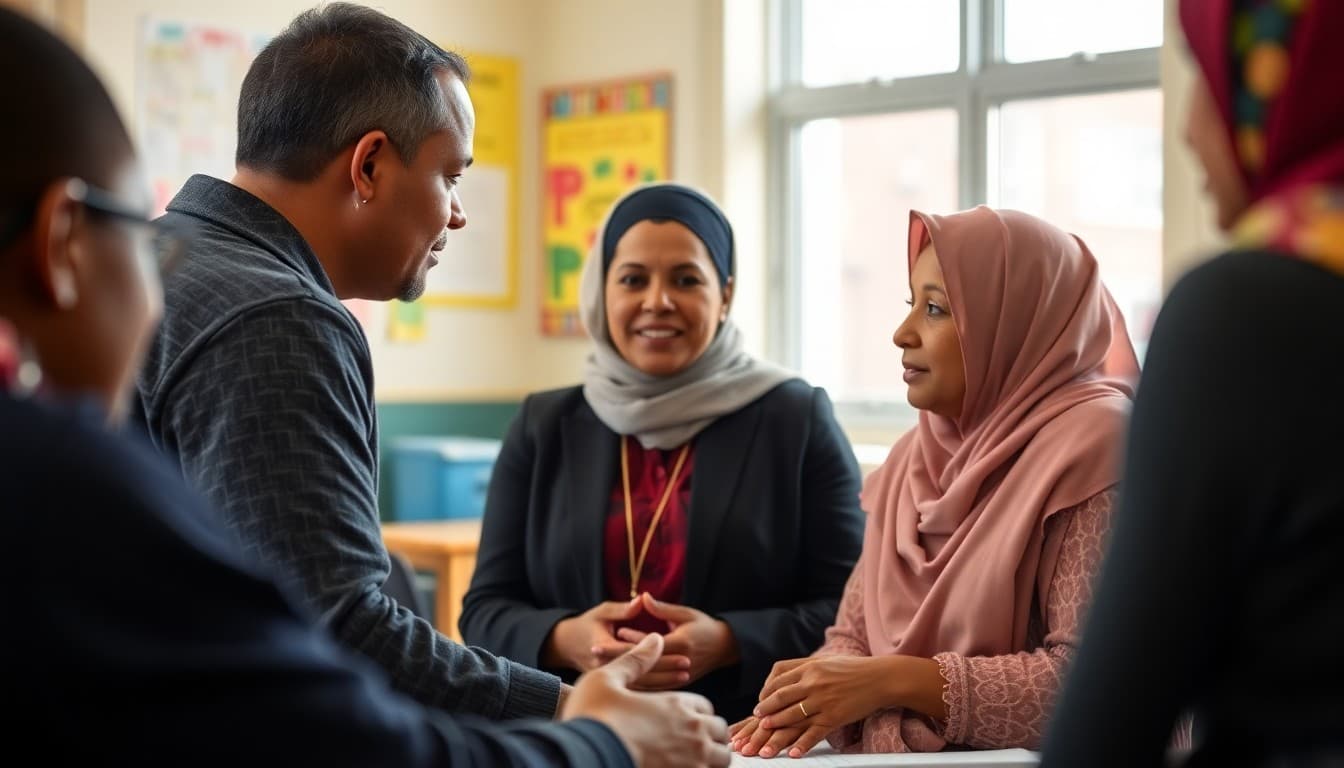
Somali Family Outreach Newsletter: Welcoming the Community
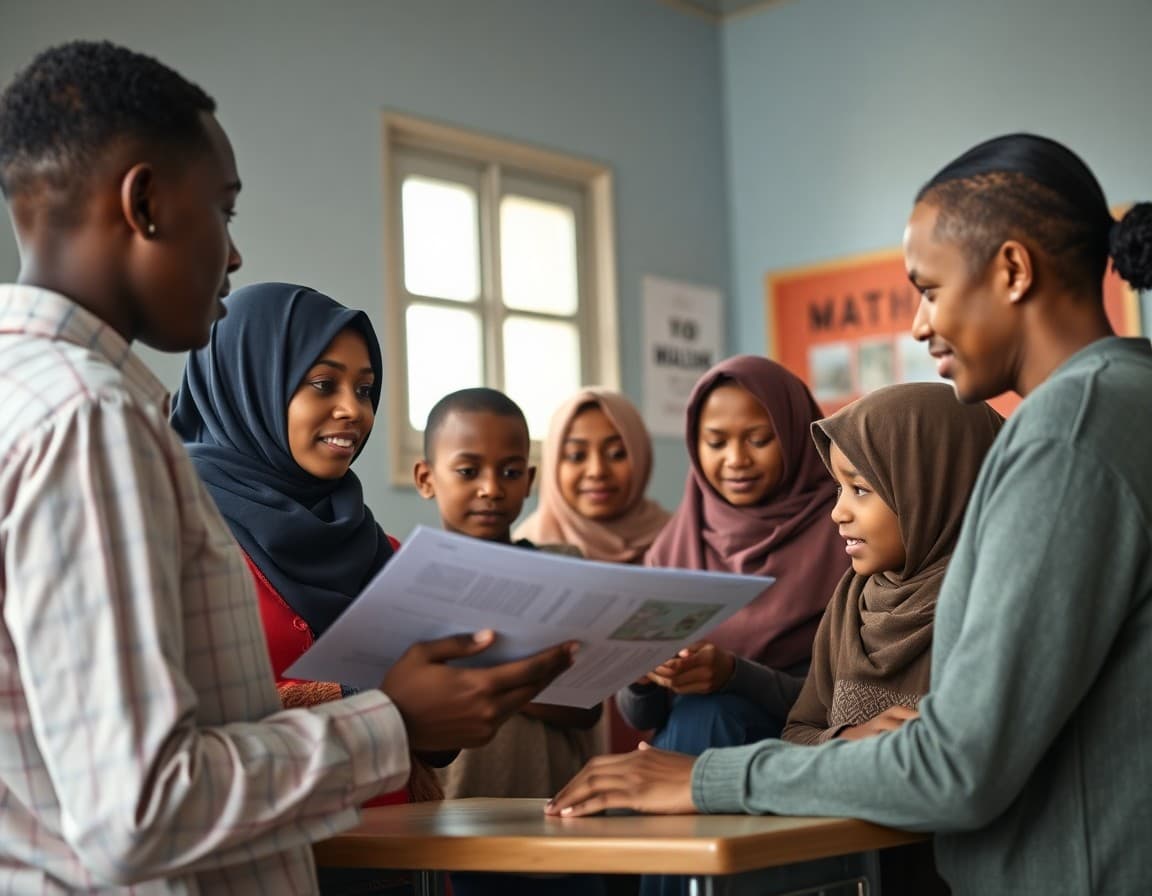
Somali families in American schools represent one of the fastest-growing and most underserved communities in many urban and mid-sized school districts. They arrive from a country that has experienced decades of civil conflict, often via years in refugee camps, frequently with interrupted schooling for students and parents alike. Building meaningful school engagement with Somali families requires more than a translated newsletter, but a well-constructed newsletter in Somali is an important and often absent first step.
Start With Translation, Not as an Afterthought
If your school serves Somali families and does not produce any communication in Somali, every other outreach effort operates at a disadvantage. Translation should not be treated as a supplementary service. It should be built into your communication budget and workflow. If your district does not have Somali translation capacity, partner with the Somali community organizations in your area. Most urban districts with significant Somali populations have established connections with organizations like the Somali Community Access Network, Somali Parent Education Board, or local refugee resettlement agencies that can support translation.
Hire or Partner With a Somali Community Liaison
A newsletter alone cannot build trust with communities that have legitimate reasons to be cautious about institutions. A Somali community liaison who works with your school part-time or full-time, attending community events, building relationships with elders and parents, and serving as a bridge between the school and the community, makes every other outreach effort more effective. In your newsletter, introduce this person by name and describe their role. "Our school's Somali community liaison is [name], who is available at [contact] and attends parent events on Tuesday evenings." That introduction makes the liaison accessible and signals the school's investment.
Cultural and Religious Context
Somali families are overwhelmingly Muslim, and Islamic practice shapes daily life including prayer times, dietary requirements, dress, and the calendar of major religious observances. Your newsletter should acknowledge the most practically significant of these. Schedule major school events with awareness that Ramadan involves daytime fasting and that evenings during Ramadan are often reserved for family religious observance. Eid al-Fitr and Eid al-Adha are major family celebrations that students commonly miss school to observe. A newsletter that acknowledges these dates signals that the school sees its Somali families as full members of the community, not exceptions to manage.
Academic Context for Somali Students
Many Somali students have experienced interrupted schooling due to displacement. Some students arrive with limited formal literacy in any language. Others arrive with strong educational backgrounds from schools in Kenya, Ethiopia, or Europe. Your newsletter should describe the range of supports available without assuming any particular student's needs. "Our school provides ELL services ranging from newcomer support for students with limited prior schooling to advanced English language development for students who are already academically strong." That range communicates that the school is prepared for the full spectrum of students it actually serves.
Family Engagement Events That Work
School events that work well for Somali family engagement share several characteristics: they are held in community spaces that families already trust (mosques, community centers, or other gathering places), they offer Somali-speaking staff or interpreters, they accommodate family members beyond just biological parents, and they address practical concerns like employment authorization, ESL resources for adults, and social services alongside academic topics. A newsletter that describes these events in terms of what families will gain, not just what the school wants from them, generates better turnout.
Addressing Immigration and Documentation Concerns
Many Somali families include members with uncertain immigration or documentation status. Schools are legally required to enroll all children regardless of documentation status (Plyler v. Doe). Your newsletter should state this explicitly, in Somali: "Every child has the right to attend school regardless of immigration status. We do not report immigration information to any government agency. Your child is welcome here." That sentence removes a barrier that keeps some families from engaging fully with school.
Building Over Time
Outreach to Somali families is a multi-year project. Trust is built through consistency, personal relationships, and demonstrated responsiveness to community concerns. A newsletter that goes out once is a data point. A newsletter that goes out consistently over months and years, that addresses real issues, that features Somali community members and celebrates Somali student achievement, becomes a genuine communication channel. Use Daystage to build that consistency: schedule the Somali-language version of every school newsletter, track whether it is being opened, and adjust your content based on what families respond to.
Get one newsletter idea every week.
Free. For teachers. No spam.
Frequently asked questions
What are the most important things a school can do to engage Somali families?
Three things matter most. First, provide information in Somali, not just through translation services, but through ongoing communication in the Somali language. Second, hire or partner with Somali community liaisons who can build trust relationships that institutional communication alone cannot build. Third, schedule key events including parent-teacher conferences, school orientation nights, and major decision-making meetings with awareness of Ramadan, Eid al-Fitr, and Eid al-Adha, which are central to Somali Muslim family life.
How do I write a newsletter that reaches Somali families who have low English literacy?
Translate the newsletter into Somali. If your district does not have translation capacity, partner with local Somali community organizations, refugee resettlement agencies, or university Somali student associations. Do not use automated translation tools for important communications without human review. Automated tools frequently make errors with Somali, which is a language with limited digital training data. A poorly translated newsletter signals carelessness more than an untranslated one.
How do I address the trust barriers that many Somali families carry?
Many Somali families have experienced government institutions as hostile or threatening, whether in Somalia, in refugee camps, or in other countries before the United States. Trust is built through consistent personal contact, not institutional communication. A community liaison who attends community gatherings, visits mosques, and builds relationships over months is more effective than any newsletter at breaking down barriers. The newsletter supports and reinforces that relationship work; it does not replace it.
What cultural considerations should I keep in mind when communicating with Somali families?
Several are important. Somali families are predominantly Muslim, so scheduling school events that conflict with Friday Jumu'ah prayers or Ramadan obligations reduces attendance. Extended family structures mean that grandparents, aunts, uncles, or older siblings may be the primary school contact for a child, not just the biological parents. Meeting in community spaces that families already trust, such as mosques and community centers, is often more effective than requiring families to come to school for the first meeting.
What newsletter platform works well for multilingual outreach like Somali family communication?
Daystage supports sending different language versions to different audience segments, which is exactly what multilingual outreach requires. You can send the Somali-language version to families in your Somali community while sending the English version to the general school community, all from the same platform. That segmentation capability is essential for genuine multilingual communication.

Adi Ackerman
Author
Adi Ackerman is a former classroom teacher and curriculum writer with 8 years in K-8 schools. She writes about school communication, parent engagement, and what actually works in real classrooms.
More for Diversity & Equity
ELL Parent Outreach Newsletter: Reaching Multilingual Families
Diversity & Equity · 7 min read
Refugee Student Welcome Newsletter: Building a Welcoming School
Diversity & Equity · 6 min read
Multilingual Learner Equity Newsletter: Communicating Language Support and Inclusion to Families
Diversity & Equity · 6 min read
Ready to send your first newsletter?
3 newsletters free. No credit card. First one ready in under 5 minutes.
Get started free