

School Newsletter: Respecting Religious Diversity in Our School
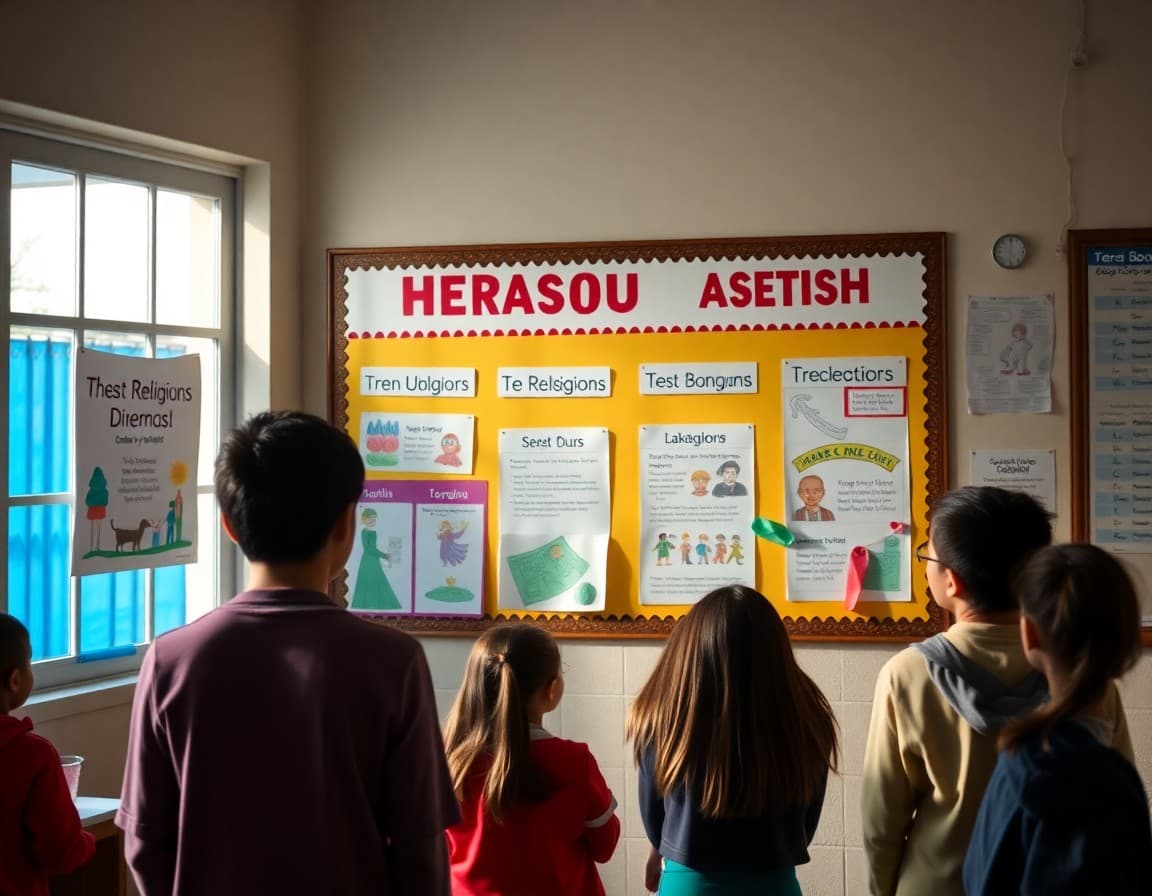
Religious diversity in American schools is significant and often undercommunicated. A school whose newsletters acknowledge only Christmas and Easter is sending a signal about which families' traditions are recognized. A school that communicates religious diversity honestly, acknowledging multiple faith traditions and making accommodation policies clear for all, builds more trust across all of its communities.
Start with the accommodation policy
The most practically useful thing a school can communicate about religious diversity is its absence accommodation policy. Students have the right to observe religious holidays without academic penalty, and families across all faith traditions benefit from knowing this clearly at the start of the year.
Include the policy language in the back-to-school newsletter: students will be excused for religious observances and will have the opportunity to make up any missed work. State this once, clearly, and include the process for requesting the accommodation.
Acknowledge the full calendar
Most school newsletters mention Christmas and Thanksgiving and perhaps Easter. A newsletter that also acknowledges Eid al-Fitr, Eid al-Adha, Rosh Hashanah, Yom Kippur, Diwali, Hanukkah, and other major religious observances communicates that the school is aware of and respectful of its full community.
Acknowledgment does not require celebration or religious content. A brief note that says "we recognize that many of our families will be observing Eid next week and we wish those families a meaningful observance" is appropriate and appreciated.
Calendar conflicts: review and plan
Schools that schedule major tests, important assemblies, or high-stakes events on dates that conflict with major religious observances create an equity problem. Review the calendar annually for conflicts with significant dates across the religious traditions represented in the school community. Communicate the policy for rescheduling or accommodating students who cannot attend due to a religious observance.

Cover religious diversity educationally
Newsletter coverage of religious traditions as part of the school's learning is appropriate and valuable. An article about what the social studies class is learning about world religions, a feature on how different cultural and religious traditions approach a shared theme, or a preview of an interfaith dialogue event are all legitimate educational content.
Language that includes rather than defaults
Defaulting to "Merry Christmas" in December newsletters assumes a single religious tradition. "Happy holidays" is more inclusive but still assumes the season has holiday significance for everyone. When in doubt, simply acknowledge the season, wish families a restful break, and note that those observing religious holidays during this period are in the school's thoughts.
Get one newsletter idea every week.
Free. For teachers. No spam.
Frequently asked questions
How should public schools handle religious diversity in communications?
By acknowledging the full range of religious traditions represented in the school community, explaining accommodation policies for religious observances, and avoiding the assumption that any single religious calendar is the default. Public schools are constitutionally required to be neutral on religion, which means neither promoting nor disparaging any faith tradition and making accommodations equally available to all.
How should schools handle religious holidays in the academic calendar?
By acknowledging major holidays across multiple faith traditions in the newsletter, communicating the school's absence excuse policy for religious observances clearly and equally, and avoiding scheduling major tests or events on dates that conflict with well-known religious observances. The school calendar should be reviewed annually for conflicts with significant religious holidays.
What does religious accommodation mean for students in public schools?
Students have the right to observe their religious holidays without academic penalty. Schools are required to excuse absences for religious observances and to allow students to make up missed work. Communicating this policy clearly in the newsletter, at the beginning of the year, prevents the individual family from having to request accommodation in isolation.
How do schools respectfully acknowledge religious diversity without violating church-state separation?
By covering religious observances educationally rather than devotionally, by including multiple traditions rather than only Christian holidays, and by framing religious events as part of the cultural diversity of the school community. Wishing families a happy holiday is inclusive; organizing school-wide religious celebrations crosses into promotion.
How does Daystage help schools communicate religious diversity and accommodation to families?
Daystage makes it easy to send targeted newsletters to specific family groups, which is useful for reaching families observing specific religious traditions with relevant information about accommodation policies. A school that communicates its religious accommodation policies clearly and equally through consistent newsletters reduces the number of families who feel they have to advocate individually for something they are entitled to.

Adi Ackerman
Author
Adi Ackerman is a former classroom teacher and curriculum writer with 8 years in K-8 schools. She writes about school communication, parent engagement, and what actually works in real classrooms.
More for Diversity & Equity
Ready to send your first newsletter?
3 newsletters free. No credit card. First one ready in under 5 minutes.
Get started free