
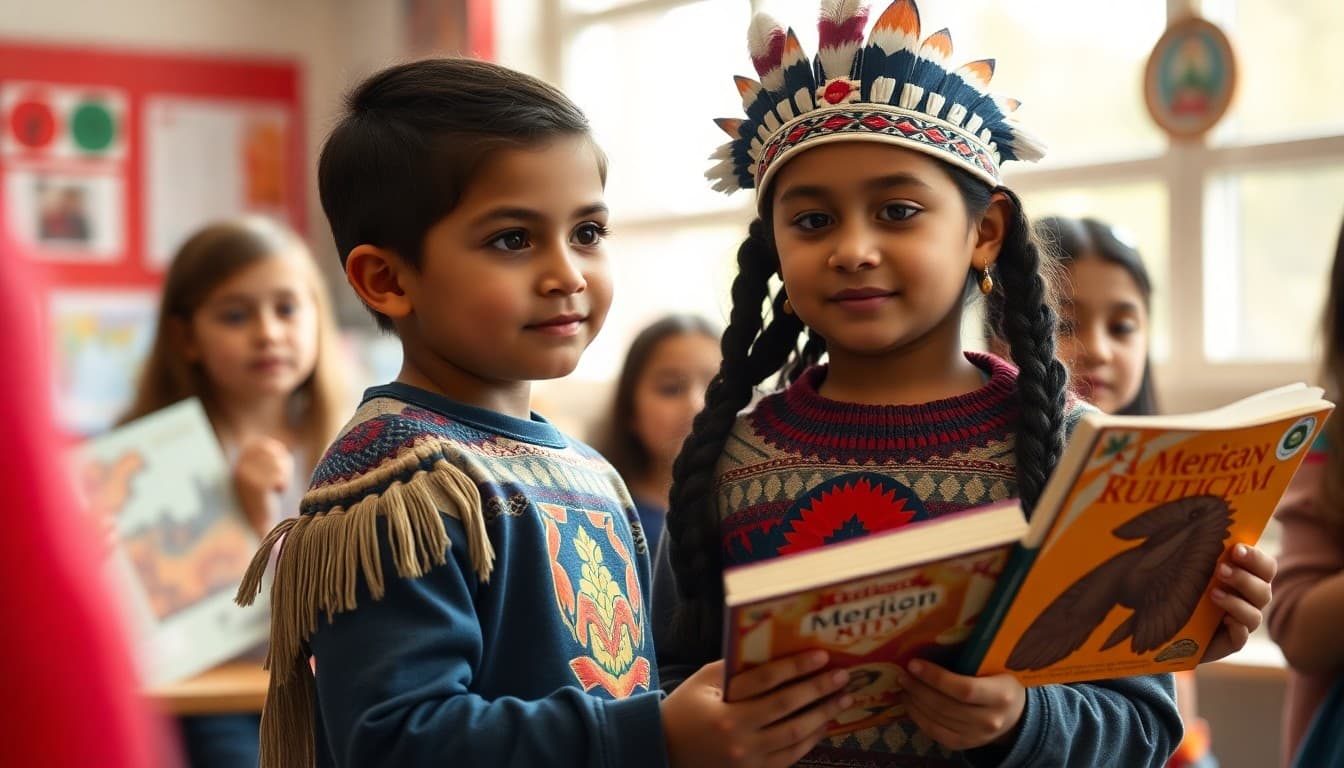
School Newsletter for Native American Heritage Day: Ideas and Template

Native American Heritage Day on the Friday after Thanksgiving sits at the end of Native American Heritage Month and arrives at a moment when schools are already communicating heavily about the Thanksgiving holiday. The juxtaposition is not accidental and not comfortable -- Thanksgiving's traditional narrative sits in direct tension with the history of European colonization of Indigenous lands. A newsletter that handles Native American Heritage Day thoughtfully gives schools an opportunity to add necessary historical context to the holiday season.
Native American Heritage Month: The Broader Context
November is Native American Heritage Month, established by President George H.W. Bush in 1990. Native American Heritage Day specifically was designated by Congress in 2009. The month and day are opportunities to learn about the histories, cultures, and contemporary lives of the 574 federally recognized tribal nations in the United States, as well as Alaska Native and Native Hawaiian communities. The newsletter can cover Heritage Day as a single occasion or frame it as the culmination of a month-long focus that the classroom has been building toward.
The Importance of Tribal Specificity
The most common mistake in Native American Heritage newsletters is treating all Indigenous peoples as a single culture. There is no generic "Native American" culture -- there are hundreds of distinct nations with different languages, governance structures, religious traditions, artistic traditions, and histories. A newsletter that says "Native Americans wore feathered headdresses and lived in teepees" is wrong about most Native nations and harmful in its erasure of that diversity. Instead, name specific nations: "This week we learned about the Lakota Sioux and their oral storytelling traditions" or "We researched the governance structure of the Haudenosaunee Confederacy, which influenced the U.S. Constitution."
Native Americans as Contemporary People
Perhaps the most important framing correction for any Heritage Day newsletter is the insistence that Native Americans are contemporary people, not historical artifacts. There are 9.7 million people who identify as Native American or Alaska Native in the United States today. Native nations operate schools, hospitals, courts, and businesses. Native artists, writers, politicians, and scientists work across every field. A newsletter that covers only historical content -- the Trail of Tears, Wounded Knee, the colonial period -- presents Indigenous people as belonging to the past. Include at least one reference to a living Native American figure, contemporary tribal governance, or current Native art or literature.
Template Section: Native American Heritage Day
Here is a newsletter section that is historically grounded and contemporary:
"Native American Heritage Day -- November 28: This week marks the end of Native American Heritage Month. We have been learning about the 574 federally recognized tribal nations in the United States -- each with distinct languages, histories, and cultures. Our class focused on the [specific nation] people, whose ancestral territory includes the land our school sits on. We read a book by a contemporary Native author and discussed how Native nations function as sovereign governments today. For family learning over the long weekend, visit the Smithsonian's National Museum of the American Indian at americanindian.si.edu."
Land Acknowledgment: How to Include One
A land acknowledgment is a formal statement recognizing the Indigenous peoples who originally inhabited and cared for a specific geographic area. Many schools and districts have adopted official land acknowledgments for formal communications. If your district has one, include it in the newsletter. If it does not, check Native-Land.ca to identify the ancestral territory and consider adding a brief acknowledgment: "Our school stands on the ancestral territory of the [Nation name] people, who have cared for this land for generations. We acknowledge their continued presence and sovereignty." Consult with your equity coordinator before adding a land acknowledgment independently.
Recommended Resources for Families
Give families three specific resources. The Smithsonian's National Museum of the American Indian (americanindian.si.edu) has free online resources including virtual tours, educator guides, and family activities. Native-Land.ca shows which Indigenous territories any address sits on. For reading, "When We Were Alone" by David A. Robertson and "Not Your Princess" edited by Mary Beth Leatherdale are strong options at different reading levels. For older students, "Braiding Sweetgrass" by Robin Wall Kimmerer is a celebrated work by an Indigenous scientist and writer that connects ecology to Indigenous knowledge systems.
Get one newsletter idea every week.
Free. For teachers. No spam.
Frequently asked questions
When is Native American Heritage Day?
Native American Heritage Day is the Friday following Thanksgiving, officially designated as such by federal law in 2009. It caps Native American Heritage Month, which is observed throughout November. A newsletter covering Native American Heritage Day should ideally be sent the week of Thanksgiving so families can engage with it over the long weekend, but a November newsletter covering Heritage Month is also appropriate.
What should a Native American Heritage Day newsletter avoid?
Avoid pan-Indian stereotyping -- treating all Indigenous peoples as a single culture with shared dress, language, and traditions. There are 574 federally recognized tribal nations in the United States, each with distinct languages, histories, arts, and governance. Avoid romanticized or historical-only framing that treats Native Americans as a people of the past. Native nations are contemporary, sovereign governments with living cultures and active political life today.
What classroom activities are appropriate for Native American Heritage Day?
Reading books by Native American authors, researching the tribal nation whose ancestral land the school sits on, studying contemporary Native American artists and leaders, learning about the Indian Child Welfare Act or the Indian Self-Determination and Education Assistance Act, and hearing directly from Native community members (if possible) are all substantive approaches. The Smithsonian's National Museum of the American Indian has excellent teacher resources.
How do I identify the tribal nation whose land my school occupies?
The website Native-Land.ca has an interactive map where you can enter any U.S. address and see which Indigenous peoples originally inhabited that land. Many schools use this as a starting point for a land acknowledgment. Before including a land acknowledgment in the newsletter, check whether your district has an official one, and if not, consult with Indigenous community members or your district's equity coordinator.
Can Daystage help send a Native American Heritage Day newsletter with high-quality links to Indigenous resources?
Yes. Daystage lets teachers embed multiple links to external resources -- the Smithsonian NMAI website, Native-Land.ca, recommended books by Native authors, and local tribal nation websites -- in one organized newsletter. This makes it easy to send a newsletter that goes beyond awareness to actual learning resources families can use.

Adi Ackerman
Author
Adi Ackerman is a former classroom teacher and curriculum writer with 8 years in K-8 schools. She writes about school communication, parent engagement, and what actually works in real classrooms.
More for Diversity & Equity
Ready to send your first newsletter?
3 newsletters free. No credit card. First one ready in under 5 minutes.
Get started free