
School Newsletter for Columbus Day: Ideas and Template
Columbus Day is one of the most complex federal holidays on the school calendar. Depending on your district, community, and state, the holiday may be observed as Columbus Day, Indigenous Peoples Day, or both. For school newsletters, complexity is not a reason to avoid the topic -- it is a reason to approach it thoughtfully and with factual grounding.
Understanding the Evolving Holiday
Columbus Day became a federal holiday in 1937, following decades of lobbying by Italian American communities who viewed Columbus as a symbol of immigrant contribution. Over the past three decades, the holiday has faced significant reconsideration. At least 14 states and dozens of cities have formally renamed it Indigenous Peoples Day. Schools in those jurisdictions observe the renamed holiday. Schools in states where the change has not been officially adopted may still use Columbus Day. Check your district's official calendar before writing the newsletter.
What Students Are Learning: Framing It for Families
The newsletter should reflect what students actually discuss in class. For K-2 students, this might be a simple introduction to exploration and Native American culture. For grades 3-5, it likely includes the Columbian Exchange, the impact of European contact on Indigenous peoples, and a first encounter with multiple historical perspectives. For middle and high school students, the curriculum may include primary source analysis, the history of the holiday itself, and current debates about renaming and recognition. Tell parents what their student is studying in those specific terms.
Template Section: What We're Learning This Week
Here is a newsletter section for a fifth-grade classroom covering this topic:
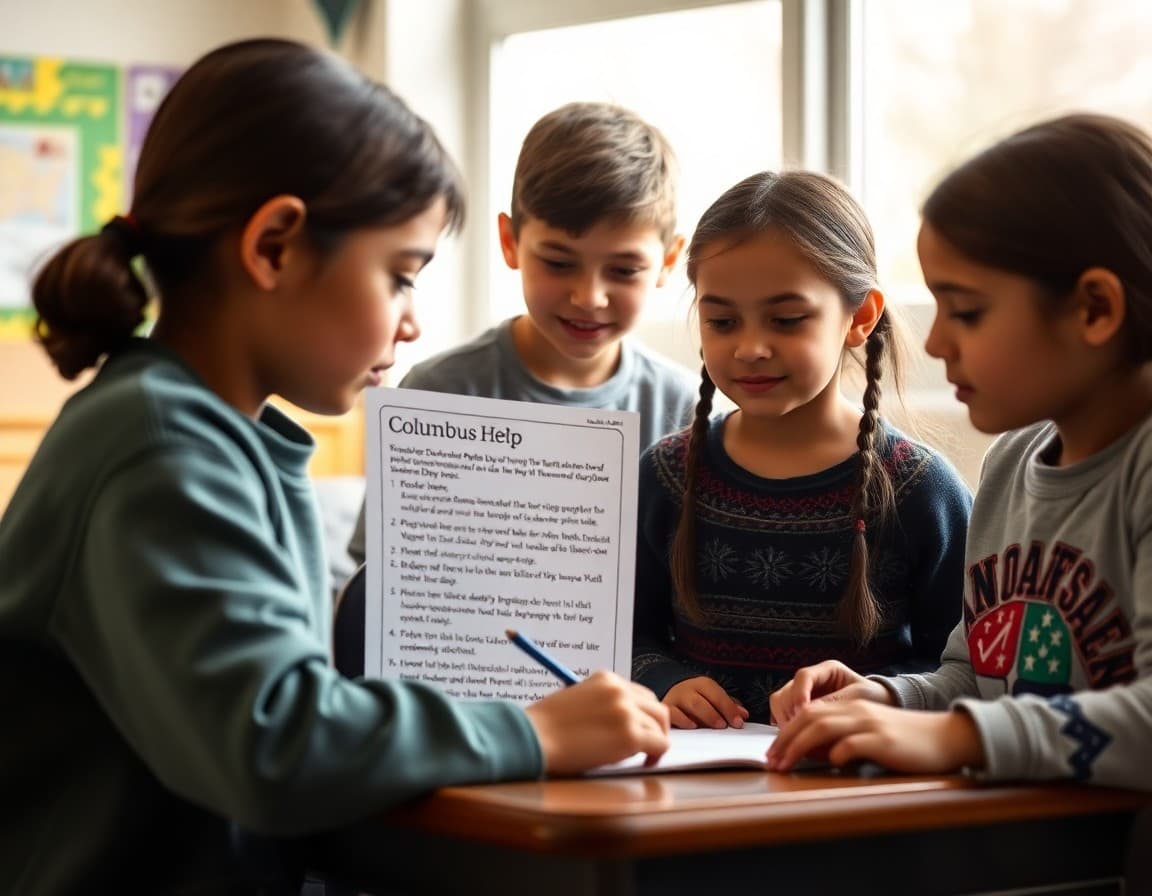
"This week, we are exploring the history of Columbus Day and why it means different things to different people. We will read accounts from European explorers and from Indigenous historians who describe the same events from a different perspective. Students will write a short paragraph explaining what they think the holiday should celebrate and why. Families: ask your student what they think should be on the Columbus Day postage stamp and see what they say."
That framing is factual, respects multiple perspectives, and gives families a conversation starter without telling them what to think.
Resources to Share with Families
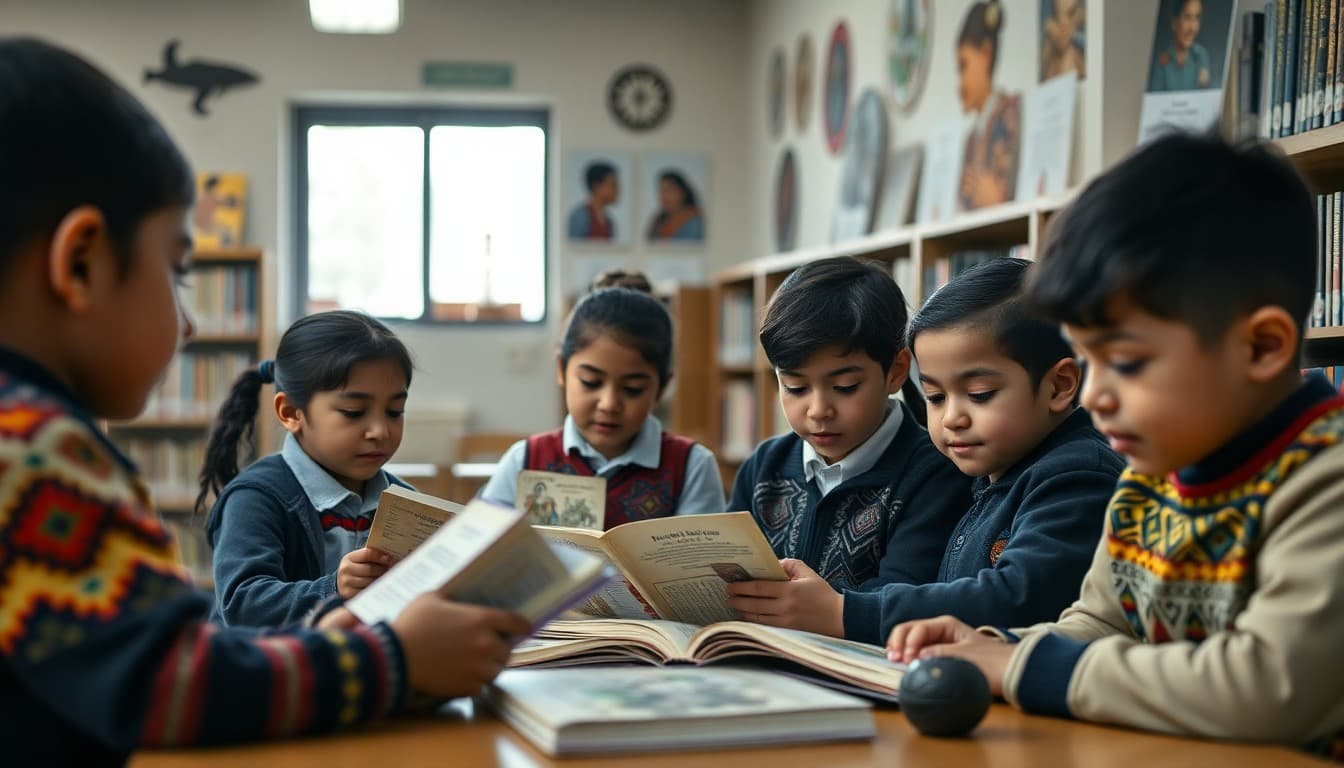
Give families three or four concrete resources they can use over the long weekend. The Smithsonian's National Museum of the American Indian (americanindian.si.edu) has free educator and family resources. Many states have tribal nations with official websites that include history and cultural education sections. Your school library may have a list of age-appropriate books by Indigenous authors -- ask the librarian to suggest three titles for your grade level and include them in the newsletter. A simple reading list sends a clear signal that the school takes this history seriously.
Navigating Disagreement in Your Community
Some families in your school may have strong feelings about renaming Columbus Day -- in either direction. The newsletter is not the place to resolve that debate. Stay close to what students are learning and the factual historical record. If a parent contacts you with objections, have a brief conversation by phone or in person rather than responding publicly in the newsletter. When the community is divided, the newsletter's job is to communicate clearly about school learning, not to take a side in a political argument.
Acknowledging the Local Tribal History
Every region of the United States was originally inhabited by Indigenous peoples. Your school's land has a specific tribal history. Including one sentence in the newsletter that acknowledges the Indigenous peoples of your region -- "Our school sits on the traditional territory of the [Nation name] people" -- is a practice called a land acknowledgment. Many districts have adopted formal land acknowledgments for official communications. If your district has one, include it. If it does not, check with your principal before adding one independently.
Making the Newsletter Useful for All Families
Whatever the holiday is called in your district, the newsletter should give families something useful: what their student is learning, when school resumes, and how they can support learning at home over the long weekend. The holiday context enriches the newsletter -- it should not replace the practical information families need. Keep the historical and cultural content to two sections and the rest of the newsletter focused on the coming weeks of school.
Get one newsletter idea every week.
Free. For teachers. No spam.
Frequently asked questions
Should a school newsletter say 'Columbus Day' or 'Indigenous Peoples Day'?
Use whatever language your school or district officially uses. Many districts have formally renamed the holiday Indigenous Peoples Day. Others still use Columbus Day. Some use both. Check your district calendar for the official name and use that. If the name is contested in your community, a brief acknowledgment that both names exist and why can be appropriate in older grades.
How do I discuss Columbus Day in a newsletter in a way that is historically accurate and respectful?
Acknowledge both the traditional narrative and the critical historical view. For younger students, a simple framing works: 'This holiday has different meanings for different people. We will learn about European exploration and also about the Indigenous peoples who were living in the Americas long before Columbus arrived.' For older students, engage with primary sources, timelines, and the history of the holiday itself.
What family activities connect to Indigenous Peoples Day?
Families can visit a local tribal museum or cultural center if one exists nearby. They can read books by Indigenous authors, watch documentaries about Native American history and contemporary life, or research the history of the Native nations that originally inhabited their region. The Smithsonian National Museum of the American Indian has a free website with age-appropriate resources.
How do I handle this topic if families in my school have strong opposing views?
Stick to factual, historically grounded language. Avoid political framing. Focus on what students are learning in class and provide resources for families who want to learn more. Acknowledge that this holiday has a complex history without editorializing. If your school has a formal policy on how to approach the holiday, reference that in the newsletter.
Can Daystage help me send a newsletter that includes links to Indigenous history resources?
Yes. Daystage lets you embed links to external resources directly in the newsletter body, making it easy to include a link to the Smithsonian's Indigenous history materials, a local tribal website, or a district-approved reading list. Teachers use it to add context to holiday newsletters without making them overly long.

Adi Ackerman
Author
Adi Ackerman is a former classroom teacher and curriculum writer with 8 years in K-8 schools. She writes about school communication, parent engagement, and what actually works in real classrooms.
More for Diversity & Equity
Ready to send your first newsletter?
3 newsletters free. No credit card. First one ready in under 5 minutes.
Get started free