
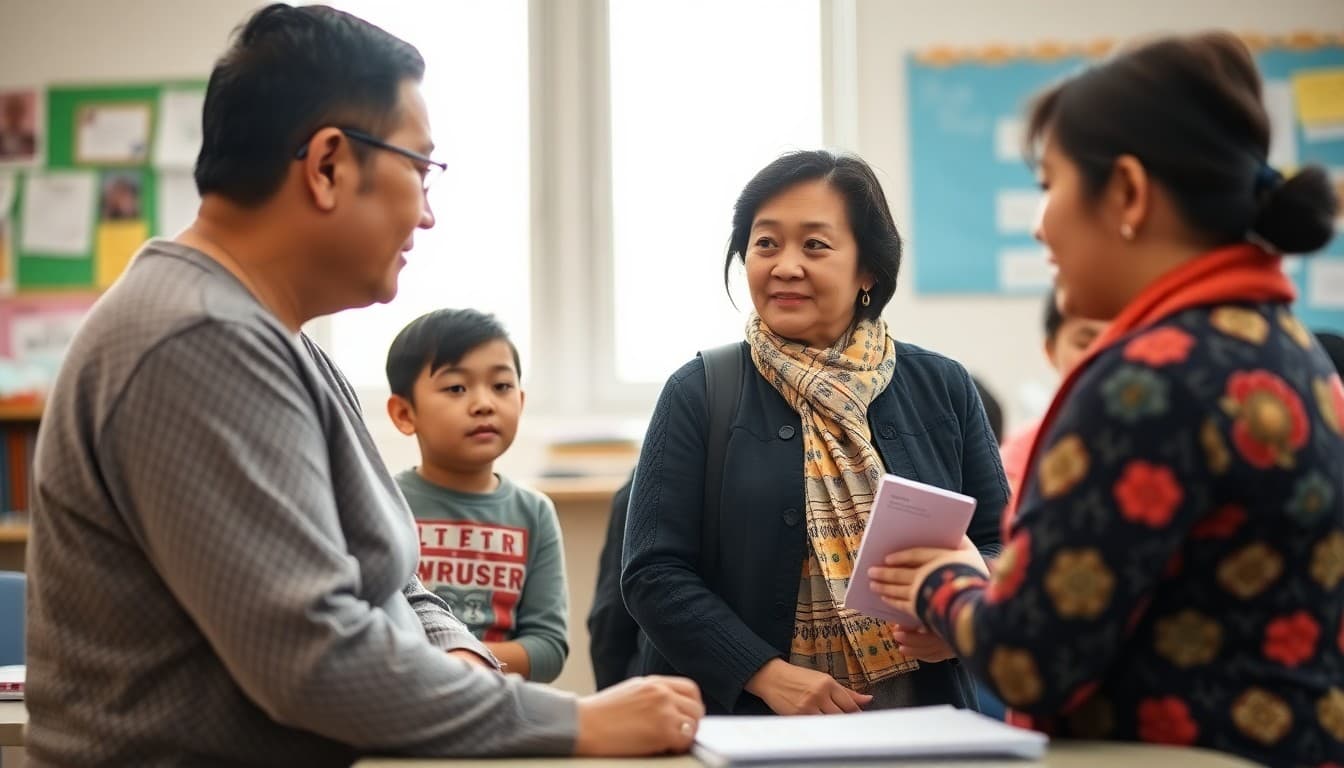
Hmong Family School Newsletter: Building Family Engagement

Hmong families represent one of the most geographically concentrated refugee communities in American education. Minnesota, California, and Wisconsin have significant Hmong populations, and schools in these states often serve students whose families arrived from Laos and Thailand over four decades of resettlement. Building genuine family engagement with Hmong communities requires communication strategies that go well beyond translated newsletters, but a thoughtful written outreach program is an important part of the foundation.
Understanding the Hmong Community's Context
The Hmong are an indigenous people from mountainous regions of China, Vietnam, Laos, and Thailand. In the United States, most Hmong Americans trace their immigration to the aftermath of the Secret War in Laos, during which Hmong fighters allied with the CIA against the Pathet Lao and North Vietnamese forces. Following the US withdrawal from Southeast Asia in 1975, Hmong families fled to refugee camps in Thailand and were eventually resettled in the United States from the late 1970s onward.
This history shapes the Hmong community's relationship with institutions. Many families experienced government authorities in Laos as hostile. Trust in American institutions has been built gradually and unevenly over generations. Schools that acknowledge this history with respect and engage community leaders through appropriate channels earn trust that schools treating Hmong families as generic ELL cases never achieve.
Written Hmong Communication
Hmong is written using the Romanized Popular Alphabet, which most Hmong Americans in the United States can read to some degree. However, literacy rates vary significantly by generation and by how much formal education individuals received. Many first-generation Hmong American parents, particularly those who spent years in refugee camps before resettlement, have limited formal literacy. For these families, written newsletters should be supplemented with phone calls from bilingual staff, community meetings with oral presentation, and audio or video messages shared through trusted community networks.
The Clan Structure and Family Decision-Making
Hmong family structure is organized around approximately 18 major clans, with clan membership inherited patrilineally. Clan leaders and elders hold genuine authority in family decision-making, including decisions about education. A school that only communicates with the parents listed on the enrollment form may be missing the people whose input actually shapes a student's educational opportunities. Building relationships with Hmong clan leaders and community elders, through formal introductions at appropriate settings, is one of the most effective investments a school can make.
Scheduling With Community Awareness
Hmong community life includes significant obligations: clan celebrations, shamanic ceremonies (txiv neeb), funerals (which can last multiple days), and agricultural or seasonal observances in communities that maintain traditional connections. Schools that schedule major parent events without awareness of these obligations see lower Hmong family attendance and mistakenly interpret it as disengagement. Consulting community liaisons about the local calendar before setting major event dates demonstrates respect and produces better turnout.
Girls' Education and Family Expectations
Hmong cultural tradition has historically placed different expectations on girls' and boys' educational trajectories. Many Hmong girls in the United States have navigated family expectations that prioritize early marriage and family formation over higher education. While these patterns have shifted significantly across generations, school counselors and teachers working with Hmong girls should be aware of these dynamics and ready to support students who are navigating between family expectations and their own educational goals. A newsletter that describes the school's college counseling and advising resources, in Hmong, helps families understand the range of options available.
Partnering With Community Organizations
Most cities with significant Hmong populations have established community organizations, cultural centers, and mutual assistance associations. Partnering with these organizations to distribute school newsletters, host family information nights in community spaces, and recruit community liaisons is far more effective than expecting Hmong families to come to the school building uninvited. Name your community partners in your newsletter. "This newsletter is distributed in partnership with [Hmong community organization]. If you have questions, you can also contact them at [number]."
Celebrating Hmong Student Achievement
Hmong students in American schools have achieved at extraordinary levels across generations. The community that arrived with minimal formal education in the 1970s has produced generations of doctors, lawyers, scientists, artists, and public servants. Celebrating these achievements in your newsletter, both alumni who have gone on to notable careers and current students who are doing excellent work, reinforces that the school sees and values Hmong excellence. That visibility matters for younger Hmong students who need to see themselves reflected in successful outcomes.
Get one newsletter idea every week.
Free. For teachers. No spam.
Frequently asked questions
What do schools get wrong most often when communicating with Hmong families?
Three things: relying on students to interpret for their parents, assuming all Hmong families are the same, and scheduling school events without awareness of how Hmong community and clan structures affect family availability. Hmong families have significant internal diversity across clans, immigration waves, and regional communities in the US. Communication that treats Hmong families as a monolithic group misses the actual community.
Is there a written form of Hmong that a school newsletter can use?
Yes. Hmong is written using the Romanized Popular Alphabet (RPA), developed in the 1950s by missionary linguists. Both White Hmong (Hmoob Dawb) and Green Hmong (Mong Leng) dialects have written forms. Most Hmong written resources in the US use White Hmong. Note that many older Hmong adults, particularly those who spent years in refugee camps, have limited literacy in any language, including written Hmong. For these families, audio or video messages, delivered through trusted community members, may be more accessible than written newsletters.
How do Hmong cultural values affect school engagement?
Hmong culture is organized around clan structures, with clan leaders holding significant authority. Decisions about education, particularly for girls, may be made by extended family members rather than just parents. Schools that engage clan leaders and community elders, not just parents listed on enrollment forms, reach the actual decision-makers in a family. Respectful engagement with community leaders through formal introductions is more effective than expecting families to navigate school bureaucracy alone.
How do I address the history of Hmong refugee experience in a culturally sensitive newsletter?
The Hmong experience in America is rooted in the Secret War in Laos, during which Hmong soldiers fought alongside American forces. When the US withdrew from Southeast Asia, Hmong families fled and were eventually resettled in the United States, primarily in Minnesota, California, and Wisconsin. Many families carry the trauma of this history. A newsletter that acknowledges the courage and resilience of the Hmong community, without reducing families to their refugee status, is respectful and accurate.
What newsletter platform works well for Hmong community outreach?
Daystage supports audience segmentation, which is valuable when you need to send Hmong-language content to one group and English content to another. For families with limited written literacy, supplementing newsletter communication with phone calls or community meetings remains important, but Daystage handles the written communication side effectively.

Adi Ackerman
Author
Adi Ackerman is a former classroom teacher and curriculum writer with 8 years in K-8 schools. She writes about school communication, parent engagement, and what actually works in real classrooms.
More for Diversity & Equity
ELL Parent Outreach Newsletter: Reaching Multilingual Families
Diversity & Equity · 7 min read
Refugee Student Welcome Newsletter: Building a Welcoming School
Diversity & Equity · 6 min read
Multilingual Learner Equity Newsletter: Communicating Language Support and Inclusion to Families
Diversity & Equity · 6 min read
Ready to send your first newsletter?
3 newsletters free. No credit card. First one ready in under 5 minutes.
Get started free