
Culturally Responsive Newsletter Communication: Writing School Newsletters That Reach Every Family
A school newsletter that only some families can fully access is not a school newsletter. It is communication for the families the school already reaches most easily. Culturally responsive newsletter communication is the practice of designing and writing newsletters so that they genuinely serve every family in the school community, regardless of language, cultural background, family structure, or digital access. It is not a special initiative. It is a design standard.
This guide covers the specific choices that make a newsletter culturally responsive, from language and translation to image selection to the assumptions embedded in how you structure content.
Language choices that include rather than exclude
Plain language is the foundation of culturally responsive writing. Jargon, idioms, and education terminology that are second nature to educators are barriers for families who did not grow up in American schools, whose education was interrupted, or who are reading in their second language. Write the way you would speak to a family you respect and want to inform. Concrete nouns, short sentences, and active voice work across cultures and reading levels in ways that institutional language does not.
Avoid idioms that assume a particular cultural frame. Phrases like "drop the ball" or "hit a home run" may not mean anything to a family whose cultural background does not include baseball. When you use a term with a specific school meaning, like "progress monitoring" or "IEP," define it briefly. The extra five words of definition cost you nothing and include a family who would otherwise have had to ask.
Translation and multilingual communication
Translation is the most visible commitment a school can make to language equity. Identify the top three to five home languages in your school community and develop a process for translating the key sections of each newsletter. Professional translation is ideal. Reviewed machine translation is a practical alternative for schools without translation resources. Even a translated subject line and a brief summary in the home language communicates to families that the school sees them and has made an effort to reach them.
Document your translation process and commit to it consistently. A school that translates some newsletters and not others creates confusion and implies that some communications are more worth the effort than others.
Avoiding cultural assumptions in content
Review each newsletter draft for embedded cultural assumptions. Does your newsletter assume two parents at home, or does it address caregivers? Does it assume families have a printer at home, or does it offer a digital alternative to every paper form? Does it assume all families celebrate the same holidays? Does it assume all families have broadband internet access?
None of these are assumptions you make maliciously. They are defaults you inherit from writing for the modal family rather than the full range of families in your community. Each small adjustment, "caregiver" instead of "mom and dad," a QR code alternative to a paper form, a neutral "winter break" rather than "Christmas break," signals to a wider range of families that they are included.
Representation in images and examples
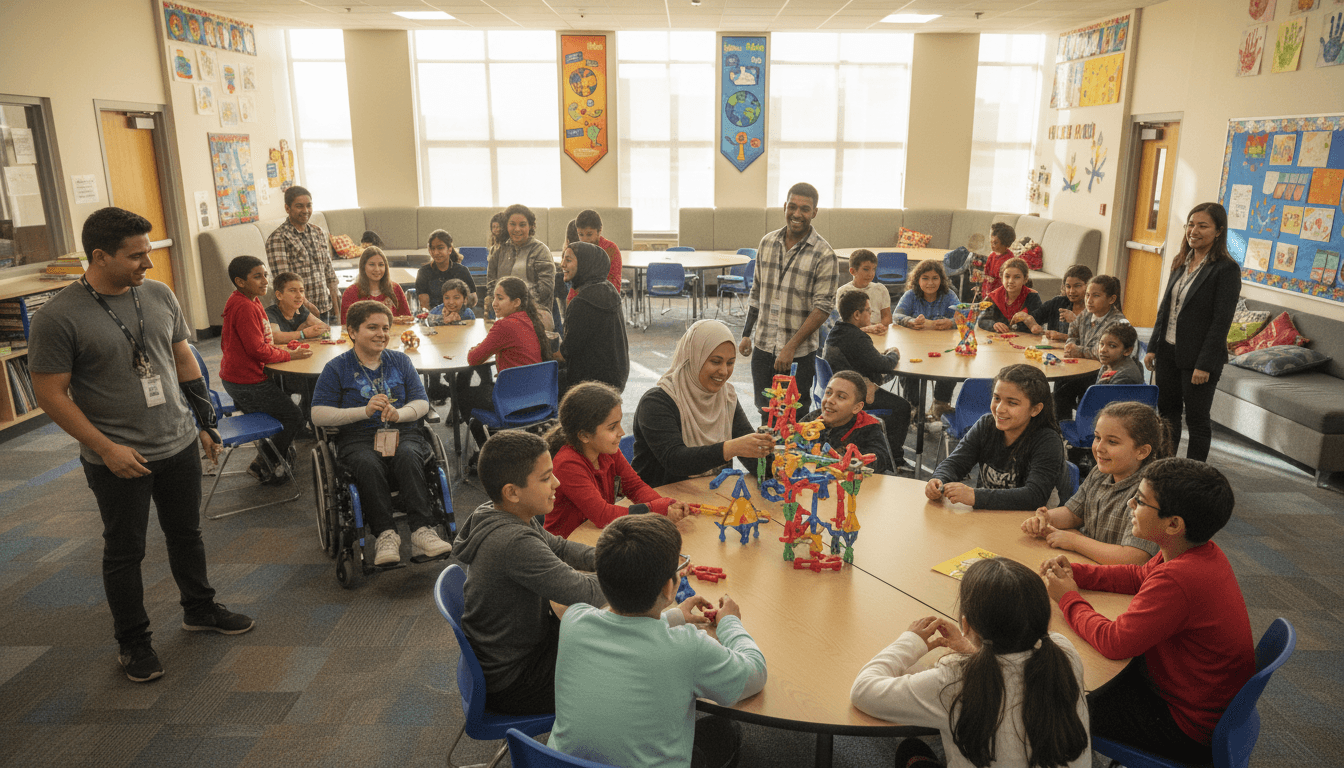
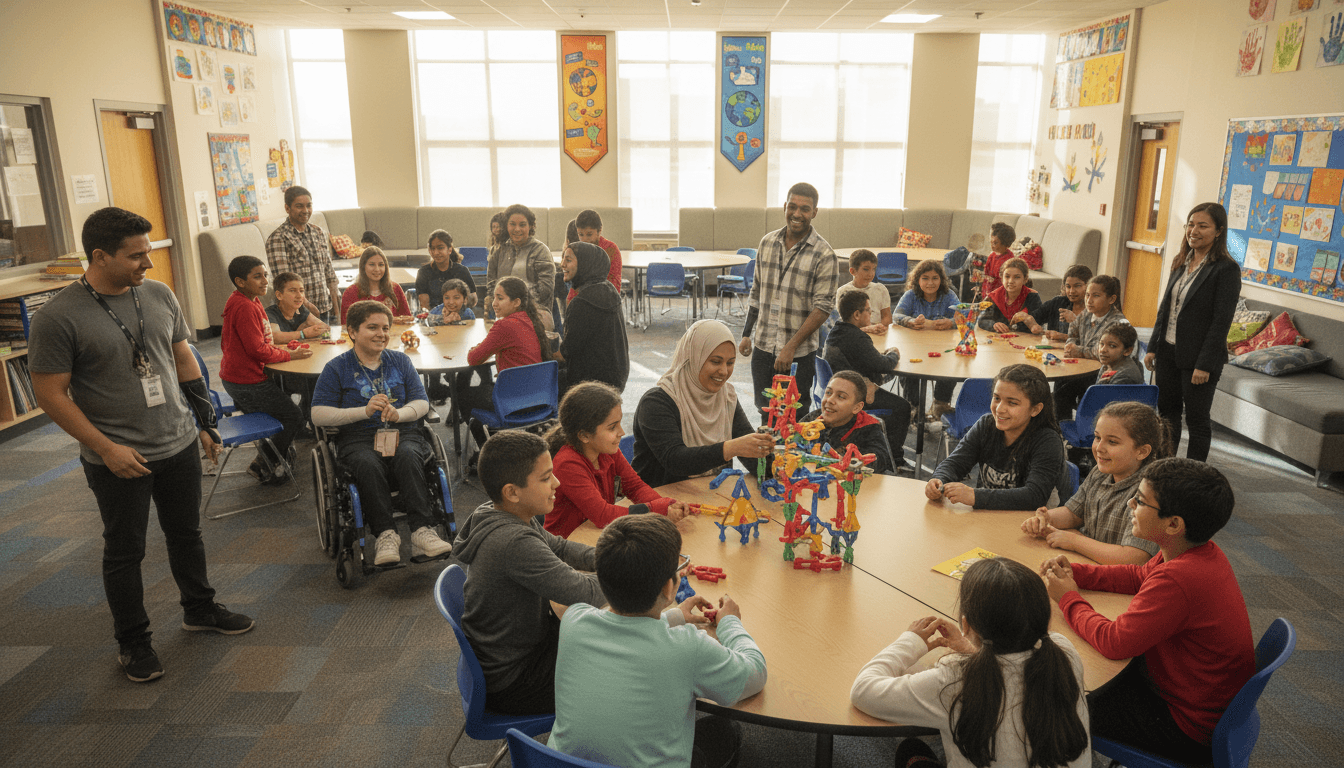
The images in your newsletter communicate who the school community is. Stock imagery that depicts only one demographic tells families from other groups that the newsletter was not written with them in mind. Review your newsletter images periodically. Over time, are you featuring students, families, and staff who reflect the actual diversity of your school? Consistency matters more than any single image. A school that features diverse families in every newsletter communicates inclusion in a way that a single Black History Month feature does not.
Digital access and mobile-first design
Many families from lower-income backgrounds access digital content primarily or exclusively on mobile phones rather than computers. A newsletter that only renders well on a desktop excludes those families from the digital communication they have a right to receive. Mobile-first design, short sections, readable fonts at mobile scale, and minimal images that load quickly on slower connections are all culturally responsive design choices that serve equity goals.
Using Daystage for culturally responsive newsletters
Daystage delivers mobile-optimized newsletters by email, which supports the access patterns of families across socioeconomic backgrounds. Subscriber lists organized by home language allow you to send translated versions to appropriate families. The block editor makes it fast to maintain a consistent, clean design that renders well on any device. Starting with a tool that handles the technical side of inclusive delivery means you can focus your energy on the content choices that make each newsletter genuinely useful to every family.
Get one newsletter idea every week.
Free. For teachers. No spam.
Frequently asked questions
What does a culturally responsive newsletter look like?
It uses plain language free of idioms that do not translate well, reflects the diversity of the school community in its images and examples, avoids assumptions about family structure or background, and is available in translation for families whose home language is not English. The newsletter signals, in every design and content choice, that all families belong here.
How do I write a newsletter that reaches families from different cultural backgrounds?
Avoid cultural assumptions in your examples and scenarios. A newsletter that assumes every family celebrates Christmas, has two parents at home, or has internet access at home will lose a portion of your community on the first read. Concrete, specific language that does not presuppose a particular family structure or cultural context is more universally accessible.
How important is translation in culturally responsive newsletter communication?
Translation is one of the most concrete equity commitments a school can demonstrate. Families who receive important school information in their home language are better partners in their child's education. Translation does not have to mean professional translation for every issue. Machine translation with light editing is a practical starting point for many schools.
What visual choices make a newsletter more culturally responsive?
Use images and illustrations that reflect the diversity of your actual school community. Avoid stock imagery that depicts only one demographic. When you feature students or families in newsletters, ensure that representation across race, disability, family structure, and cultural background is consistent over time, not just in a February diversity issue.
How does Daystage support culturally responsive newsletter distribution?
Daystage subscriber lists let you segment by home language and send translated versions to the appropriate families. The platform's email delivery works on mobile devices, which is how many families from underserved communities most commonly access digital content. A mobile-friendly newsletter reaches more of your community than one that only renders well on a desktop.

Adi Ackerman
Author
Adi Ackerman is a former classroom teacher and curriculum writer with 8 years in K-8 schools. She writes about school communication, parent engagement, and what actually works in real classrooms.
More for Diversity & Equity
DEI Task Force Newsletter: Communicating Committee Work, Progress, and Community Input Opportunities
Diversity & Equity · 6 min read
Food Equity School Lunch Newsletter: Communicating School Nutrition and Lunch Debt Policy to Families
Diversity & Equity · 6 min read
Latino and Hispanic Heritage Curriculum Newsletter: Communicating Inclusive History and Literature to Families
Diversity & Equity · 6 min read
Ready to send your first newsletter?
3 newsletters free. No credit card. First one ready in under 5 minutes.
Get started free