

March Enrollment Report Newsletter: Sharing Kindergarten Registration Data and Next-Year Projections
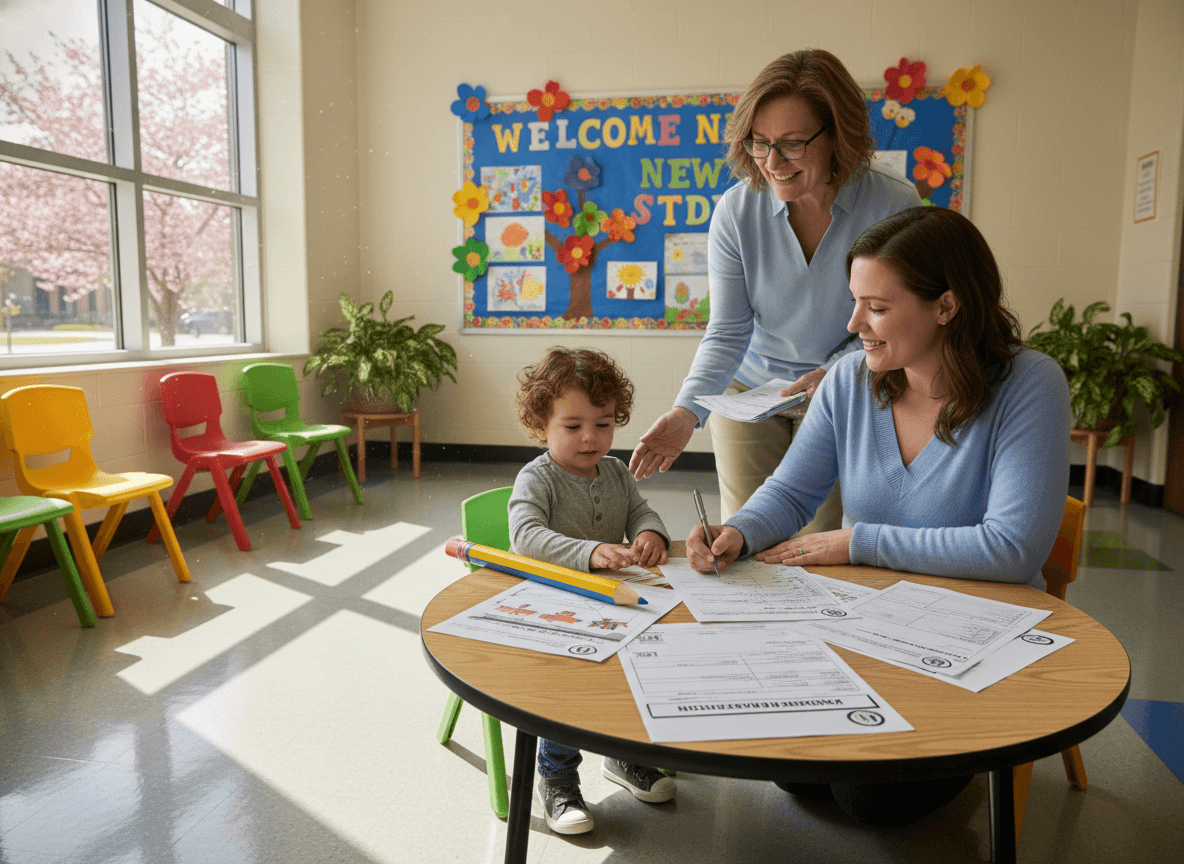
March is the enrollment planning month. Kindergarten registration is open and the data is beginning to show what next year's incoming class will look like. Transfer application results have been communicated and families are finalizing their plans. The district's budget development team is using preliminary enrollment projections to build next-year financial models. And school principals are beginning to plan class sections and staffing for the fall.
A March enrollment report newsletter ties all of these threads together for families. It gives them current enrollment data, updates on the incoming class, and a preview of the enrollment picture the district is planning around. This guide covers what to include and how to present it in a way that serves families at every stage of the enrollment process.
Current year enrollment snapshot
Begin the March report with a brief update on current year enrollment. By March, the year's enrollment is stable and the district has a reliable end-of-year projection. Share total district enrollment as of the most recent count, compare it to the prior year's final enrollment figure, and note whether the district is tracking above or below the enrollment assumption used in the current year's budget.
If the current year's actual enrollment has differed materially from the budget projection, explain what that means for the district's financial position. A significant enrollment shortfall affects state aid revenue and may be contributing to the budget pressures families are hearing about in the parallel March budget communication. Connecting the enrollment picture to the financial picture helps families understand both more clearly.
Kindergarten registration update
Kindergarten registration data is one of the most forward-looking enrollment indicators the district has. The number of families who have registered by mid-March, compared to the same point in prior years, gives a strong early signal about the size of the incoming kindergarten class.
Share the current registration count clearly. "As of March 10, 348 families have registered incoming kindergartners for the coming school year, compared to 312 at the same date last year and 329 two years ago" gives families a useful trend line. If registration is tracking significantly above projection, describe the capacity implications: which elementary schools will have larger kindergarten sections, whether additional sections are being planned, and how the district is preparing for the incoming class.
If registration is below projection, explain the outreach steps the district is taking. Some families of kindergarten-age children are simply unaware of the registration window or the cutoff date. A newsletter that invites current district families to share kindergarten registration information with neighbors can meaningfully increase early registration rates, which in turn improves the district's planning accuracy.
Open enrollment and transfer results
By March, most districts have communicated open enrollment decisions to families who applied. The March enrollment newsletter should summarize the results for the broader community: how many families applied for transfers, how many were approved at each school, and what the net enrollment effect is across buildings.
If some schools received more transfer applications than available spots, report on how selections were made. Families who applied and were not approved deserve to understand the process, and families who did not apply deserve to understand that transfer options exist and what the process looks like for future cycles.
The transfer summary also tells a story about which schools families find most attractive and which are facing retention challenges. That story is relevant context for families thinking about school choice decisions for their own children.
Next-year enrollment projections by school
The March projections are more refined than the preliminary February figures because they incorporate actual kindergarten registration data, finalized transfer decisions, and updated cohort survival modeling. Share school-level projections alongside current-year enrollment figures so families can see how their school is expected to change.
Present the projections as ranges rather than single numbers. "Washington Elementary is projected to enroll between 290 and 320 students next year, compared to its current enrollment of 305 students" communicates the level of uncertainty that is appropriate at this stage of the planning cycle. Families who understand that projections have uncertainty ranges do not feel misled when actual enrollment differs from the March projection.
Connect school-level projections to staffing and class-size planning. "If enrollment at Lincoln Middle School comes in at the lower end of our projection, the school would likely organize its incoming sixth grade into four sections rather than five. If enrollment comes in at the upper end, five sections remain the plan." This kind of specificity helps families understand the practical implications of enrollment projections without requiring them to interpret raw numbers on their own.
Boundary review update
If the district is conducting or planning a boundary review for the following year, the March enrollment newsletter is the right place to provide a substantive update. Explain what data is driving the review, which attendance areas are under consideration, and what the process will look like for community input.
Boundary reviews are among the most emotionally charged processes a district undertakes. Families are deeply invested in their child's school, and any suggestion that a child might need to change schools generates significant anxiety. A clear, calm, specific explanation of why the review is happening and what the process involves does not eliminate that anxiety, but it replaces uncertainty with information, which is a more manageable starting point for families.
Registration reminders for current families
March enrollment communication should also include reminders for families with students at current grade-transition points. Families of eighth graders choosing high school courses of study, families of fifth graders preparing for middle school, and families of preschool students transitioning to kindergarten all need specific, timely information in March about the processes and deadlines relevant to their child.
Include specific dates and contacts for each transition category. A newsletter that helps families navigate the transition processes relevant to them builds genuine utility and increases the likelihood that families will read future district communications attentively. Close with an invitation to reach out to the district's enrollment office with questions and include the direct contact information that will actually get families a fast, helpful response.
Get one newsletter idea every week.
Free. For teachers. No spam.
Frequently asked questions
What enrollment information should districts share in March?
March enrollment communication should cover current year enrollment status, kindergarten registration progress and how it compares to prior years, next-year enrollment projections by school and grade, any boundary or capacity planning decisions that are under consideration, and reminders for families who have not yet registered for the coming year. March is a pivotal planning month, and families benefit from seeing the current state of enrollment alongside the preliminary picture for next year.
How should districts communicate about kindergarten registration in a March newsletter?
Share current kindergarten registration numbers and compare them to the same point in prior years. If registration is tracking above projection, note the capacity implications for elementary buildings and explain how the district is planning to accommodate the incoming class. If registration is below projection, explain what outreach the district is doing to reach unregistered families and invite current families to share registration information with neighbors who may have kindergarten-age children.
How accurate are March next-year enrollment projections?
March projections are more reliable than January projections because they incorporate actual kindergarten registration data, updated transfer application results, and more complete demographic data from the current year. They are still projections with meaningful uncertainty ranges, particularly for grades beyond kindergarten. Districts should present projections with a range rather than a single number and explain what factors would push actual enrollment toward either end of that range.
How should a district communicate about boundary adjustments in a March enrollment newsletter?
If boundary adjustment recommendations are coming in the spring, use the March newsletter to explain the process. Describe why the district is reviewing boundaries, what data is informing the review, and what the timeline is for community input and board decision-making. Families who are informed about a boundary review in progress are better prepared to engage when specific recommendations are announced than families who learn about boundary changes for the first time at a board vote.
How does Daystage support district enrollment communication in March?
Daystage allows districts to send March enrollment newsletters to every family simultaneously, with organized sections for current enrollment data, kindergarten registration information and links, and next-year planning updates. Because Daystage delivers directly to family inboxes, time-sensitive information like kindergarten registration deadlines reaches families before they pass, which is especially important in March when many registration windows are closing.

Adi Ackerman
Author
Adi Ackerman is a former classroom teacher and curriculum writer with 8 years in K-8 schools. She writes about school communication, parent engagement, and what actually works in real classrooms.
More for District
February Enrollment Report Newsletter: Communicating Mid-Year Enrollment Trends and Next-Year Projections
District · 6 min read
March Budget Update Newsletter: How Districts Communicate the Proposed Budget Season to Families
District · 6 min read
April Enrollment Report Newsletter: Final Projections, Boundary Decisions, and Next-Year Planning
District · 6 min read
Ready to send your first newsletter?
3 newsletters free. No credit card. First one ready in under 5 minutes.
Get started free