

February Enrollment Report Newsletter: Communicating Mid-Year Enrollment Trends and Next-Year Projections
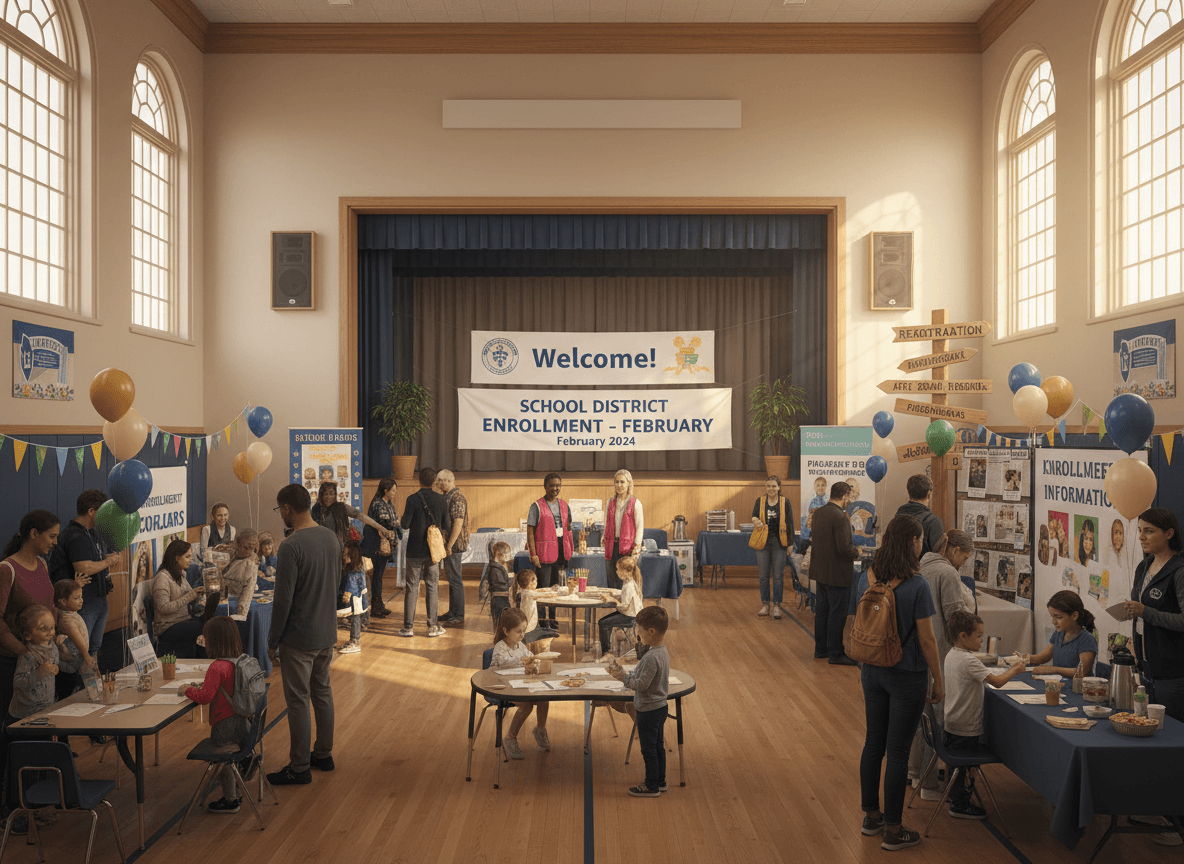
February is one of the most enrollment-intensive months on the district calendar. Open enrollment applications are closing. Kindergarten registration is opening or about to open. The finance and planning teams are building next-year budget models that depend on enrollment projections. And administrators at individual schools are beginning to plan class sections and staffing for the following year based on the enrollment trends they are seeing.
A February enrollment report newsletter serves families at every stage of the enrollment cycle: current families who want to understand their child's school capacity, families with incoming kindergartners who need to know when and how to register, and families considering open enrollment transfers for the following year. This guide covers what to include and how to present it clearly.
Current year enrollment status
Start the February report with the most current enrollment snapshot. How many students is the district serving as of the most recent count, and how does that compare to the second-semester start count in January and the beginning-of-year count in September? Three data points across the school year show the enrollment trajectory clearly.
At the school level, share current enrollment alongside building capacity. Families whose school is running above 100 percent of designed capacity are already feeling the crowding and deserve to see that the district is tracking it. Families at significantly under-enrolled schools are often curious whether their school is at risk of programmatic changes, and a capacity figure that is honest about the situation respects that concern.
Grade-level data adds another useful dimension. If a district's third-grade cohort is notably small and a fifth-grade cohort is large, those differences will drive different class-size and staffing pressures at different grade levels for the next two to three years. Families who understand the cohort picture can follow along when the district makes staffing decisions that reflect those demographic differences.
Open enrollment update
If the district's open enrollment window has recently closed, the February newsletter should provide an update on the results. How many families applied for inter-school or inter-district transfers? How many were granted? At which schools were there more applicants than available spots, and how were selections made?
Families who applied for open enrollment and are waiting for decisions need to know when to expect a response. A clear statement like "Families who submitted open enrollment applications will receive a decision by March 15" removes ambiguity and reduces the volume of individual inquiries the enrollment office receives. If capacity constraints prevented the district from approving all applications, acknowledge that directly and explain the prioritization process.
Kindergarten registration: what families need to know
February or March is when most districts open kindergarten registration for the following school year. A February enrollment newsletter that devotes a dedicated section to kindergarten registration reaches families with young children at exactly the moment they need the information.
Include the specific registration dates and window, the location or online process for registration, the list of required documents, and the district's cutoff date for kindergarten eligibility. If the district offers kindergarten screening or readiness events in the spring, include those dates as well. Families who register early give the district better planning data. A newsletter that explains what is needed and makes registration feel accessible tends to increase early registration rates.
Share early kindergarten registration numbers if you have them. "As of February 1, 312 families have registered incoming kindergartners, compared to 287 at the same point last year" is a meaningful data point for families, school staff, and the community. If early registration is tracking significantly above or below projection, explain what the district is doing in response.
Next-year enrollment projections
February is when the district's planning team begins building preliminary next-year enrollment projections to support budget development. Sharing those projections with families, with appropriate uncertainty ranges, builds transparency and invites the community feedback that can improve projection accuracy.
Explain how projections are built: cohort survival rates, kindergarten registration data, historical patterns, known housing development in attendance areas, and demographic trends. This explanation gives families context for the uncertainty ranges the district presents and helps them understand why projections sometimes differ from actual enrollment when the year begins.
Connect the enrollment projection to its budget implications. "If enrollment comes in at the lower end of our projected range, the district would receive approximately $X less in state aid than our current budget assumption. If enrollment comes in at the upper end, we would receive approximately $Y more. The budget proposal we present to the board in March will include contingency planning for both scenarios" gives families a concrete picture of the financial stakes.
Addressing demographic shifts and long-term trends
February is also a good time to address longer-term enrollment trends that are shaping the district's planning. If the district has experienced a multi-year enrollment decline driven by demographic shifts, the February newsletter can present that trend with context and explain what the district is doing to respond.
Demographic shifts are facts, not failures. A district that has lost 8 percent of its enrollment over five years due to an aging community and lower birth rates can communicate that context clearly and explain the planning steps it is taking. Boundary reviews, program consolidations, and facility planning decisions all make more sense to families when they understand the demographic reality driving them.
Preparing families for spring enrollment decisions
Close the February enrollment report with a clear description of the enrollment-related decisions and announcements families can expect in the spring. If boundary adjustment recommendations are expected in April, say so. If the district plans to announce next-year school assignments for transfer students in March, note that date. Families who have a clear calendar of enrollment milestones can plan their spring schedules accordingly and are more likely to participate in the community input processes the district offers.
Get one newsletter idea every week.
Free. For teachers. No spam.
Frequently asked questions
Why do districts publish enrollment reports in February?
February is a key planning month for enrollment. Open enrollment windows are closing or have recently closed in many districts. Next-year class and section planning is beginning. Kindergarten registration campaigns are launching. Districts that share a February enrollment report give families current data about school capacity and trends while also connecting them to the registration and enrollment decisions they need to make for the following year.
What should a February enrollment report newsletter include?
The February report should include current year enrollment by school and grade, a comparison to the start of the year, early next-year enrollment projections, the status of the open enrollment or transfer application process, kindergarten registration information and timelines, and any boundary or capacity issues the district is managing. Families benefit from seeing the full enrollment picture at this planning-intensive time of year.
How should districts communicate early next-year enrollment projections?
Present projections with appropriate uncertainty language. Early projections in February are based on current enrollment trends, cohort survival rates, and kindergarten registration data, all of which are still developing. A range rather than a single number is more honest: 'Based on current registration data and historical patterns, the district projects enrollment of between 4,400 and 4,600 students for the coming year, compared to the current year's enrollment of 4,587.' Explain what factors could push the number toward either end of the range.
How should a district communicate about kindergarten registration in a February newsletter?
Include the registration dates, what families need to bring, where to register, and what the incoming kindergarten class is expected to look like based on early registration data. If early registration is significantly below projections, say so and explain what the district is doing to encourage registration. If early registration is ahead of projections, note the capacity implications for elementary buildings. Families who have children approaching kindergarten age need specific, actionable information in February.
How does Daystage help districts with February enrollment communication?
Daystage lets districts send February enrollment newsletters directly to every family in the district with organized sections for current enrollment data, next-year projections, and kindergarten registration information with direct links to registration forms. The platform's direct-to-inbox delivery ensures that time-sensitive enrollment deadlines reach families before they pass.

Adi Ackerman
Author
Adi Ackerman is a former classroom teacher and curriculum writer with 8 years in K-8 schools. She writes about school communication, parent engagement, and what actually works in real classrooms.
More for District
January Enrollment Report Newsletter: Communicating Second-Semester Enrollment to District Families
District · 6 min read
February Budget Update Newsletter: Communicating Mid-Year Budget Pressures and Next-Year Planning
District · 6 min read
March Enrollment Report Newsletter: Sharing Kindergarten Registration Data and Next-Year Projections
District · 6 min read
Ready to send your first newsletter?
3 newsletters free. No credit card. First one ready in under 5 minutes.
Get started free