

March Budget Update Newsletter: How Districts Communicate the Proposed Budget Season to Families
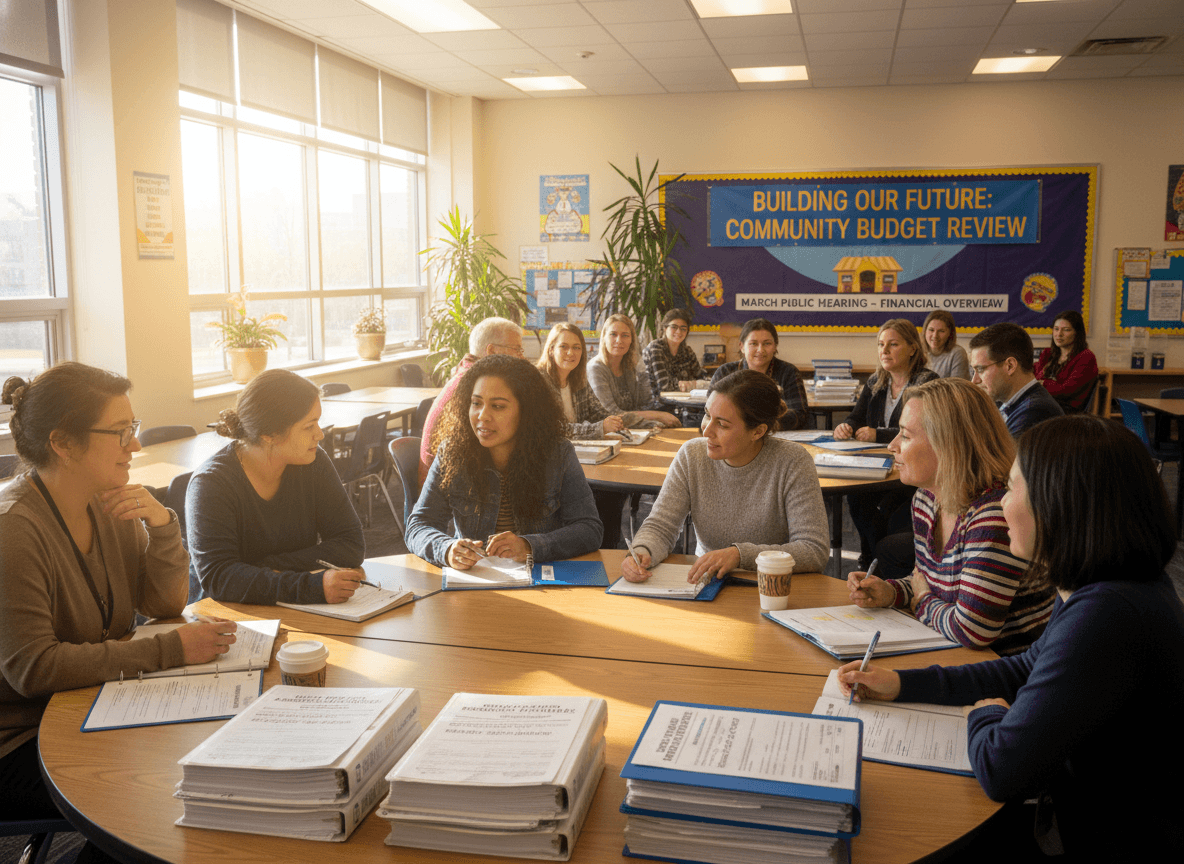
March is the most high-stakes month for district budget communication. The proposed next-year budget is ready for public presentation. The board and community will see for the first time what the district is planning to spend, where the money is coming from, and what changes from the current year families should expect. A clear, direct March budget update newsletter is the most effective tool a district has for making that presentation work for families rather than against them.
This guide covers how to present the proposed budget in family-friendly language, how to communicate about proposed reductions honestly, and how to use the March newsletter to drive meaningful community engagement in the public hearing process.
Why proposed budget communication needs to happen before the public hearing
Many districts wait until the public hearing itself to present budget details to families. That approach guarantees that families arrive at the hearing without the context they need to engage constructively, and it practically ensures that the hearing will be dominated by reactive questions and emotional responses rather than substantive input.
A newsletter sent before the public hearing changes the dynamic. Families who have already read a clear summary of the proposed budget arrive at the hearing with specific questions, informed opinions, and the ability to provide input that the district can actually use. They are still likely to object to things they disagree with, but they will do so from a foundation of understanding rather than surprise.
Presenting the total budget: size and change
Lead the March budget update with the total proposed budget for the coming year and the change from the current year in both dollar and percentage terms. "The district's proposed budget for the coming year is $X, an increase of $Y, or Z percent, over the current year's adopted budget" gives families an immediate baseline.
Explain the primary drivers of the change. Most budget increases in school districts are driven by negotiated salary and benefit cost increases, enrollment changes, and state and federal program requirements. Most budget decreases are driven by enrollment decline, reductions in state aid, or deliberate program changes. Families deserve a plain-language explanation of the factors behind the number.
Present per-pupil expenditure alongside the total budget. Many families find per-pupil spending more relatable than a multi-million-dollar total budget figure. "The proposed budget represents a per-pupil expenditure of approximately $X, compared to $Y this year" connects the budget to individual student experience.
Proposed program additions and reductions
If the proposed budget includes new programs or expanded services, describe them specifically and connect them to student outcomes. "The proposed budget adds a district-wide reading specialist at each elementary school, funded through a three-year federal literacy grant, to provide intensive reading support for students reading below grade level" tells families what they are getting and where the money is coming from.
Proposed reductions require the same specificity. Name the programs, positions, or services proposed for reduction. Describe the impact on students. Explain the alternatives the district considered and why the proposed approach was chosen. "The proposed budget eliminates two instructional aide positions at the secondary level, representing a reduction of $X. The district evaluated reducing two other categories before selecting this option because those categories had a more direct impact on student instruction" is honest and specific.
Do not present reductions as inevitable or as the only possible approach. Families who understand that the district made a choice, rather than simply responding to forces beyond its control, are more likely to engage with the reasoning and provide useful input about the tradeoffs they prefer.
Revenue assumptions: state, local, and federal
The proposed budget is only as sound as its revenue assumptions. Share the revenue picture alongside the expenditure picture in the March newsletter. Explain the state aid projection the budget is based on, the status of the state legislative process, and the local property tax revenue the district expects to receive.
If the district is managing revenue uncertainty, be honest about it. "The proposed budget is built on state aid projections based on the governor's proposal. The legislature has not yet passed a final budget, and the district's actual state revenue may be higher or lower than our projection. If state aid comes in below our assumption, we have identified approximately $X in contingency reductions the district could implement without returning to the board for a full budget amendment." Families who understand that the district has contingency planning in place feel more confident than families who assume the district is flying blind.
The public hearing: what families need to know
Include the public hearing date, time, and location prominently in the March newsletter. Explain what the public hearing is, what happens at it, and how families can participate. Many families have never attended a school board budget hearing and do not know that it is a formal opportunity for public comment that legally precedes the board's vote to adopt the budget.
If the district offers additional community input mechanisms, such as online comment forms, budget advisory committees, or community meetings at individual schools, include that information as well. Multiple paths to input increase the breadth of community voices the district hears and give families who cannot attend an evening hearing a way to participate.
Connecting to the current year's financial performance
The March budget newsletter is also a natural place to update families on where the current year's budget stands as it enters its final quarter. A brief note on year-to-date spending, the projected year-end balance, and any significant developments since the January or February update maintains the communication cadence and keeps families engaged with the current year's financial picture even as the next year's budget takes center stage.
Close the March newsletter with a clear calendar of the remaining steps in the budget adoption process: the public hearing date, any additional community input sessions, the board's scheduled vote to adopt the final budget, and when families will be notified of the final outcome. A clear process calendar signals that the district is organized and that community input has a meaningful place in the timeline.
Get one newsletter idea every week.
Free. For teachers. No spam.
Frequently asked questions
What makes March the most critical month for district budget communication?
March is when most districts formally present their proposed next-year budget to the school board and community. This is the moment families first see what educational programs, staffing levels, and services are planned for the year their child will spend in school. A March budget update newsletter that explains the proposed budget in plain language gives families the foundation they need to engage with public hearings and board meetings in an informed, constructive way.
What should a March budget newsletter include?
The March newsletter should cover the total proposed budget for the coming year, the change from the current year and the primary drivers of that change, per-pupil expenditure projected for the coming year, any proposed program reductions or additions, the state and local revenue assumptions underlying the proposal, and the public hearing schedule. Include a direct link to the full proposed budget document and make it easy for families to find the information most relevant to their child's school.
How should districts present proposed program reductions to families?
Name the specific programs or positions proposed for reduction and explain the reasoning clearly. Do not bury reductions in bureaucratic language or present them as technical line-item adjustments. Families whose children participate in affected programs deserve to know what is being proposed, why, and what alternatives the district evaluated. A direct, specific explanation does not guarantee family acceptance, but it is far more respectful of families than vague communication that leaves them to find out from their child's teacher.
How do districts handle community opposition to proposed budget cuts?
Expect opposition to any significant reduction and prepare for it. Communicate the constraints clearly and consistently: the gap the district is managing, the options it evaluated, and why the proposed reductions were chosen over alternatives. Hold the scheduled public hearings and genuinely consider community input. If community input causes the district to revise its proposal, acknowledge that the input made a difference. Families who feel their voice matters in the process are more likely to support the district's decisions, even when they disagree with specific choices.
How does Daystage support district budget communication in March?
Daystage lets districts send March budget updates directly to every family in the district with links to the full proposed budget, public hearing dates, and ways to submit public comment. Districts that use Daystage during budget season consistently see stronger family participation at public hearings because families receive budget information in their inbox and can act on it immediately rather than hoping they happen to visit the district website.

Adi Ackerman
Author
Adi Ackerman is a former classroom teacher and curriculum writer with 8 years in K-8 schools. She writes about school communication, parent engagement, and what actually works in real classrooms.
More for District
February Budget Update Newsletter: Communicating Mid-Year Budget Pressures and Next-Year Planning
District · 6 min read
March Enrollment Report Newsletter: Sharing Kindergarten Registration Data and Next-Year Projections
District · 6 min read
April Budget Update Newsletter: How Districts Communicate the Final Budget Before Adoption
District · 6 min read
Ready to send your first newsletter?
3 newsletters free. No credit card. First one ready in under 5 minutes.
Get started free