
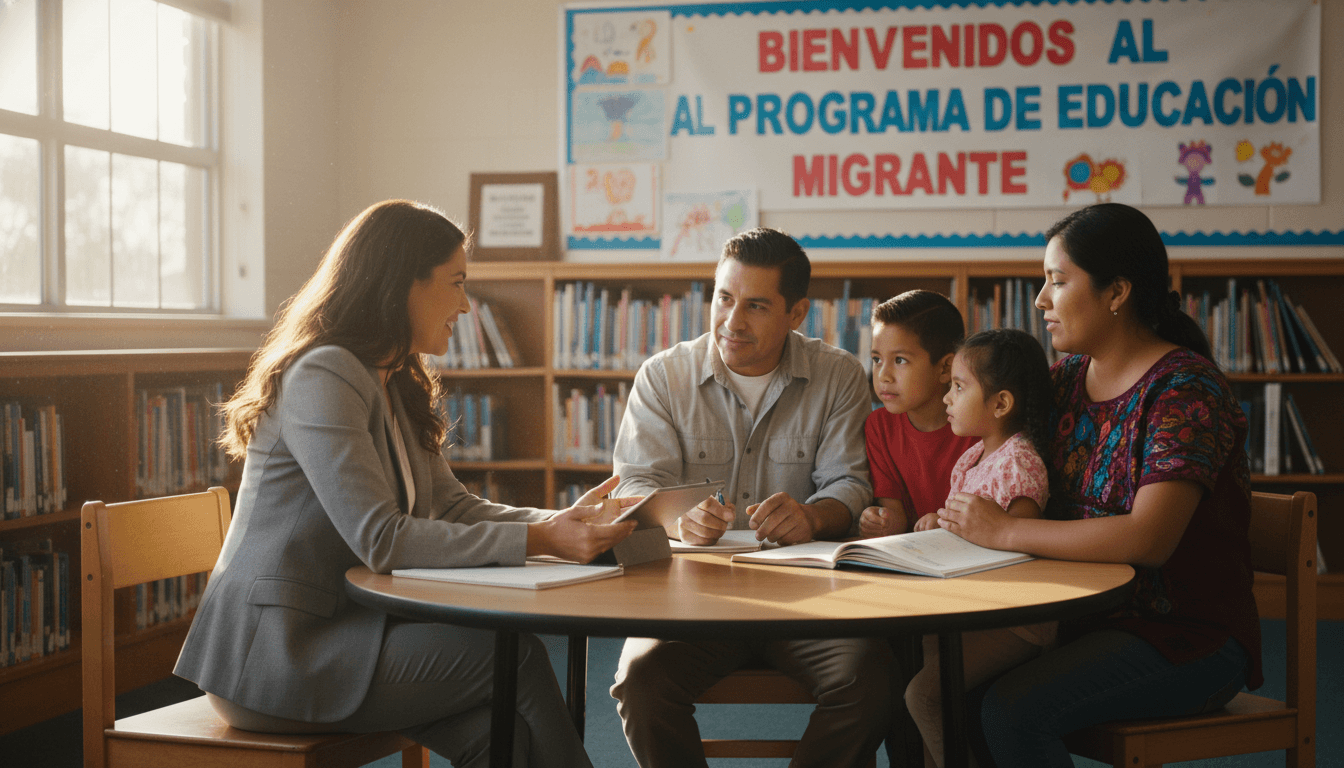
How School Districts With Migrant Education Programs Communicate With Migrant Families

Migrant education programs exist because children of seasonal agricultural workers face educational challenges that the standard school system is not designed to address. Moving two or three times a year between school districts, sometimes between states, these students are at elevated risk of losing ground academically, falling through gaps in special services, and aging out of eligibility before completing their education.
Communicating effectively with migrant families requires more than translating a standard district newsletter into Spanish. It requires understanding the work patterns that shape when families are reachable, the communication channels that work for mobile populations, and the specific information migrant families need that most district newsletters never include.
Understanding Title I Part C communication requirements
Title I Part C of the ESEA requires districts with migrant education programs to involve parents meaningfully in program planning and operation. Meaningful involvement goes beyond informing parents of program services. It requires collecting parent input on the program's priorities through a formal needs assessment, establishing a parent advisory council that meets regularly, and ensuring parents receive information about program decisions and their children's progress in language they can understand.
These requirements are frequently met on paper but not in practice. A needs assessment conducted in English only, or a parent advisory council that meets at times inaccessible to families doing agricultural work, does not constitute meaningful involvement. The communication plan for a migrant education program should be built around when and how migrant families are actually available, not around when and how district staff find it most convenient to reach them.
Reaching families with seasonal work patterns
The biggest communication challenge in migrant education is reaching families whose physical location and daily schedule change with the agricultural calendar. Families following crop cycles may be in California's Central Valley in the summer, Texas in the fall, and Florida in the winter. Postal mail is largely useless for this population. Robocalls work only when a family has had time to update their contact information with the school.
Text message and email reach people regardless of where they are physically located. Collect mobile contact information for every migrant family and verify it is current at each point of contact. Build relationships with farm labor housing coordinators, who often have up-to-date contact information for families living in the housing they manage. Connect with the community liaisons and advocates organizations that work with agricultural workers in your area, because these organizations often have contact relationships with families that the school district does not.
Multilingual communication requirements
A majority of migrant education program families speak Spanish as their primary language. A significant portion speak indigenous languages, including Mixtec, Zapotec, and other languages from southern Mexico and Central America, that are not covered by standard Spanish translation.
Federal law under Title VI requires meaningful communication with families who are not English proficient. For migrant program communications, this means translating all materials related to program eligibility, services, rights, and student progress into the languages families speak. For communities with speakers of indigenous languages, this may require working with community interpreters who are fluent in both the indigenous language and Spanish, since machine translation is unavailable for most of these languages.
Identify the specific languages spoken in your migrant family population, not just the general categories, and build a translation and interpretation strategy that actually reaches those families.
Explaining educational continuity to families who move frequently
One of the most valuable things a migrant education newsletter can do is explain to families exactly how the system is supposed to protect their child's educational continuity when they move. This means explaining the migrant student identification number that connects a student's records across state lines through the Migrant Student Information Exchange, what information travels with the student when they transfer, and how to ensure a receiving school accesses that record promptly.
Include a practical checklist for families who are about to move: what documents to carry, what to ask for from the current school before leaving, and who to contact if the new school does not have the student's records or is trying to re-test for services the student already qualified for. Families who understand the system are better advocates for their children when the system does not work as it should.
Health and nutrition program communication
Migrant students are eligible for a range of health, nutrition, and support services that many families do not know about. Summer food service programs, school health clinics, dental screening programs, and immunization catch-up services are all part of the extended migrant education support system in many districts.
The newsletter is an effective place to communicate about these services because many migrant families have limited access to the health care providers who would otherwise make these referrals. Include program names, eligibility criteria, how to access services, and contact information in plain language. Families who are unfamiliar with the US health and social services system often do not pursue services they are entitled to because they did not know the services existed.
Communicating rights and protections clearly
Migrant families include many who have had negative experiences with institutions and may be cautious about sharing information with schools. Communicating the rights and protections that apply to migrant students, including the right to immediate enrollment without complete documentation, the right to services in a language they understand, and the protections that apply to their student records, helps build the trust that makes every other communication more effective.
Include a rights and protections summary in at least one newsletter per year. Keep it plain and practical. What can the family expect when they enroll in a new school? What should they do if they encounter problems? Who can they contact for help? Making this information easily accessible removes one more barrier for families who are already navigating significant challenges.
Building relationships with community liaisons
No newsletter strategy reaches every migrant family without the support of trusted community intermediaries. Farm worker advocacy organizations, faith communities with ties to migrant populations, and health promoters who work in agricultural labor housing are often more trusted by migrant families than any official school communication.
Build formal partnerships with these organizations so that district communications can flow through their networks. Provide them with print versions of key communications and digital versions they can share through their own channels. Relationships built before a crisis or an enrollment deadline are far more valuable than outreach attempted at the moment families need the information most.
Get one newsletter idea every week.
Free. For teachers. No spam.
Frequently asked questions
What are Title I Part C requirements for parent communication in migrant education programs?
Title I Part C of the Elementary and Secondary Education Act requires districts with migrant education programs to involve parents meaningfully in the planning and operation of the program. This includes conducting a formal needs assessment that incorporates parent input, establishing a parent advisory council, and ensuring that migrant parents receive information about program services and their children's educational progress in a language they can understand. The communication requirements go beyond informing parents: they require genuine participation in program decisions.
How do you reach migrant families who may move multiple times during the school year?
Mobile communication channels, primarily text message and email rather than postal mail, are most effective for families with seasonal work patterns. Districts should collect multiple contact points for each migrant family, including the contacts of family members or advocates who remain in a stable location. The migrant student data maintained in state systems can help districts coordinate communication across state lines for students who move between districts following agricultural work cycles. Building relationships with community liaisons and farm labor housing coordinators also creates communication pathways that persist even when a family's address changes.
What multilingual communication requirements apply to districts with migrant education programs?
Title VI of the Civil Rights Act requires meaningful communication with families who are not English proficient, and this obligation is heightened in migrant education programs where the majority of families often speak Spanish or indigenous languages as their primary language. Communications about program eligibility, services available, rights and protections, and children's educational progress must be translated into the languages families speak. Using machine translation without review by a qualified human translator for important communications creates legal and communication quality risks.
How should a district explain educational continuity to families whose children move frequently between schools?
Explain the specific systems your district uses to transfer student records promptly, how the migrant student ID connects a student's records across state lines, and what a family should do when they arrive at a new school to ensure their child's history of services and progress is recognized. Families who understand these systems are better positioned to advocate for their children when they enroll in a new school mid-year. Include a simple checklist of what to bring when enrolling in a new school and who to contact if the transfer process creates problems.
How can Daystage help districts communicate with migrant education program families?
Daystage supports multilingual newsletter delivery, which is essential for migrant education communication. Districts can build a newsletter in Spanish or other languages their migrant families speak and send it directly to the mobile-friendly inboxes where families are most reachable. For migrant program coordinators who need to communicate services, health program information, and educational continuity resources to families who may not always have a stable mailing address, direct digital delivery through a platform like Daystage is far more reliable than printed materials.

Adi Ackerman
Author
Adi Ackerman is a former classroom teacher and curriculum writer with 8 years in K-8 schools. She writes about school communication, parent engagement, and what actually works in real classrooms.
More for District
Ready to send your first newsletter?
3 newsletters free. No credit card. First one ready in under 5 minutes.
Get started free