

How School Districts Communicate Enrollment Information and Deadlines to Families
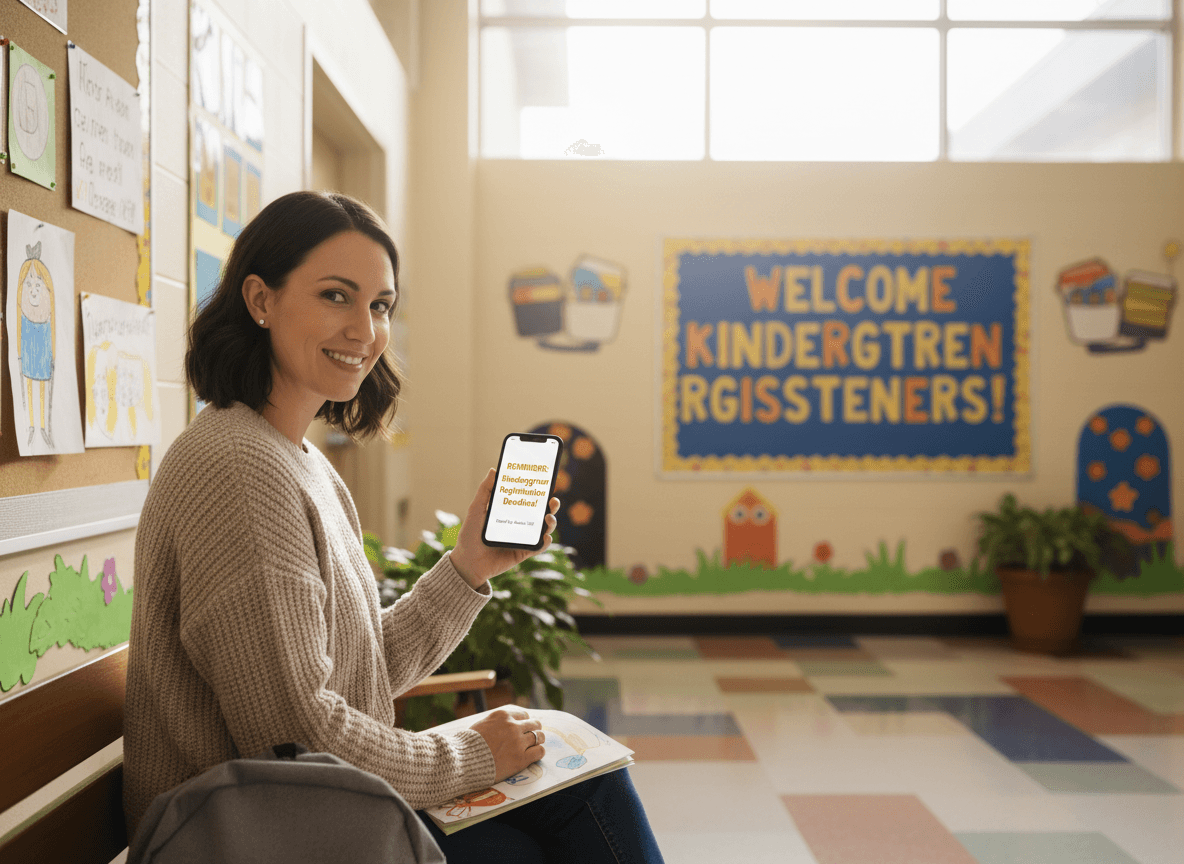
Every year, families miss enrollment deadlines for reasons that have nothing to do with their interest in the school. They did not know when the window opened. They did not know what documents to bring. They thought someone else in the family had handled it. They received one communication in October and did not think about it again until March.
Districts that communicate enrollment early, often, and through direct channels have higher registration rates, better planning data, and fewer families arriving at the start of school without a placement. None of that requires complicated outreach. It requires a consistent, well-timed newsletter strategy that treats enrollment communication as a campaign, not a single announcement.
The enrollment communication calendar
Enrollment communication should run as a coordinated campaign, not a series of one-off announcements. Map out the full enrollment season for your district, including every deadline that matters: kindergarten registration, open enrollment window open and close dates, magnet school lottery deadlines, preschool enrollment, and transfer request deadlines.
For each deadline, plan at least three communications: an early announcement six to eight weeks out that explains what the process is and when it opens, a mid-window reminder that covers what families need to have ready, and a final-week reminder that focuses exclusively on the deadline date and how to complete the enrollment. Families who miss a deadline usually saw one of these three communications. They almost always miss the one you only sent once.
Kindergarten registration drives
Kindergarten registration is the entry point for a family's entire relationship with the district. A family that has a smooth, well-communicated registration experience is more likely to engage with the district throughout their child's school years. A family that felt confused, missed a step, or almost did not make it starts the relationship with a negative impression that takes years to repair.
Send the first kindergarten registration communication in November or December, well before the typical spring registration window. The goal is to get the date on families' radar early. Include a clear checklist of the documents families will need: birth certificate, immunization records, proof of residency, and any district-specific requirements. Many families assume they can walk in without documents and are surprised when they cannot.
Follow up in February with a full explanation of the registration process and a link to the online portal or in-person appointment scheduling. Send a reminder in the two weeks before the deadline. If registration rates are below target as the deadline approaches, send an additional push specifically mentioning the deadline date and what happens if families miss it.
Open enrollment and school choice communication
Open enrollment and school choice programs give families options, but only if they know the options exist and how to access them. Many families who would benefit from school choice programs do not participate because they were not aware of the process or did not realize the window had opened.
School choice communication should explain the options clearly: what schools or programs are available through the choice process, what the selection criteria are, what transportation is available, and what the timeline looks like from application through notification. Families who have never navigated a school choice process need significantly more explanation than families who have done it before.
Preschool enrollment
Preschool enrollment is often the earliest and most competitive enrollment process in a district. Programs fill quickly and families who do not know the deadline miss out on spots that could meaningfully affect their child's kindergarten readiness.
Preschool enrollment communication needs to reach families who may have no prior relationship with the district. Partnerships with pediatricians, child care centers, and WIC offices are essential for reaching families with children under five. Include in your newsletter what the income eligibility requirements are for subsidized preschool, what a typical preschool day looks like, and what the research says about the long-term academic benefits of high-quality preschool.
Reaching families who have never enrolled in the district
Your newsletter list only contains families you already know. Families who are new to the district, recent immigrants, or have been relying on informal or private care arrangements for their young children are not on that list. Reaching them requires active outreach through community partners.
Build a list of community organizations that serve families with school-age or preschool-age children: pediatric clinics, libraries, faith communities, immigrant services organizations, food pantries, and child care providers. Provide these partners with simple, shareable enrollment information they can distribute through their own networks. When a family makes first contact with the district as a result of this outreach, have a clear onboarding communication ready that welcomes them and walks through the enrollment process step by step.
Transfer student communication
Families who want to transfer their child to a different school within the district face a process that is often opaque. Transfer policies, timelines, and approval criteria vary by district and school. A newsletter that explains the transfer process clearly, including the timeline, how decisions are made, and what families can do if a transfer is not approved, prevents a significant volume of confused phone calls to the district office.
Send transfer process information at the same time as other enrollment communications so families who are considering a transfer know to start the process early. Many families who would benefit from an intra-district transfer do not pursue it because they assumed the process was too complicated or that approvals were rare.
What to do when enrollment numbers are low
If enrollment or registration numbers are below projection as a deadline approaches, do not assume the problem is lack of interest. Usually the problem is lack of awareness or a specific barrier in the process. Survey families who started but did not complete enrollment to find out where they got stuck. Send a targeted communication to families in the zip codes or schools with the lowest registration rates. Consider extending hours for in-person registration or adding a virtual option if one does not exist.
The families who are hardest to reach for enrollment purposes are usually the ones for whom the schools would make the most difference. Treating low enrollment numbers as a communication problem, not a family apathy problem, gets you closer to a solution.
Get one newsletter idea every week.
Free. For teachers. No spam.
Frequently asked questions
When should a school district start communicating about open enrollment?
Enrollment communication should start earlier than most districts think necessary. For kindergarten registration, send a first communication in November or December for the following fall, when families are starting to think about what school looks like for their rising five-year-old. For open enrollment and school choice windows, begin communication at least six weeks before the deadline opens, not the deadline closes. Families who are new to the district or unfamiliar with the process need time to research options, attend information sessions, and gather documents before they can complete an enrollment.
How do you reach families who have never enrolled in the district before?
Families who have never interacted with the district do not receive your newsletters. Reaching them requires partnerships with organizations that already have their trust: pediatric clinics, WIC offices, libraries, faith communities, and child care centers. Provide these partners with printed materials or shareable digital content they can distribute in their networks. Once a family makes first contact with the district, follow up immediately with a welcome communication that explains the enrollment process clearly.
What information should a kindergarten registration newsletter include?
A kindergarten registration newsletter should include the registration deadline, the required documents families need to bring, how to register (online portal, in-person, or both), information about kindergarten readiness resources the district offers, what a kindergarten day looks like at a district school, and who to contact with questions. If the district offers transitional kindergarten or preschool programs, include information about those pathways too. Most families are navigating this process for the first time and need more information than experienced parents expect.
How should a district communicate lottery and waitlist processes for school choice programs?
Lottery and waitlist communications need to be explicit about the process because families who are unfamiliar with it often assume results are based on merit or first-come-first-served. Explain that the lottery is random, how the waitlist works, when families on the waitlist will be notified, and what their options are if they are not selected in the first round. Transparency about a process that feels arbitrary to families who do not understand it goes a long way toward preventing complaints and distrust.
How can Daystage help districts run enrollment communication campaigns?
Daystage lets district teams send targeted enrollment newsletters with deadline reminders, required document checklists, and registration links directly to family inboxes. Districts can time a series of communications across the enrollment window, starting with an overview, following with deadline reminders, and closing with a final-week push. For kindergarten registration and magnet school lotteries where missing a deadline has real consequences for families, having a reliable direct-to-inbox communication system makes a measurable difference in registration rates.

Adi Ackerman
Author
Adi Ackerman is a former classroom teacher and curriculum writer with 8 years in K-8 schools. She writes about school communication, parent engagement, and what actually works in real classrooms.
More for District
Ready to send your first newsletter?
3 newsletters free. No credit card. First one ready in under 5 minutes.
Get started free