
How to Build a District-Wide School Communication Plan (With a Template)
Most school districts do not have a written communication plan. They have a loose set of habits: the superintendent sends a letter in August, the district sends something when there is news, and individual schools figure out the rest on their own. This is not a plan. It is reactive communication, and it shows.
A written district communication plan does three things: it ensures nothing important falls through the cracks, it creates consistency across schools and departments, and it makes the entire communication function less dependent on whoever happens to be in the communications role at any given time.
This guide walks through how to build one, along with a practical template your district can adapt.
Start with audiences, not channels
Most districts start building a communication plan by asking what channels to use: email, text, social media, website. That is the wrong starting point. Start with audiences.
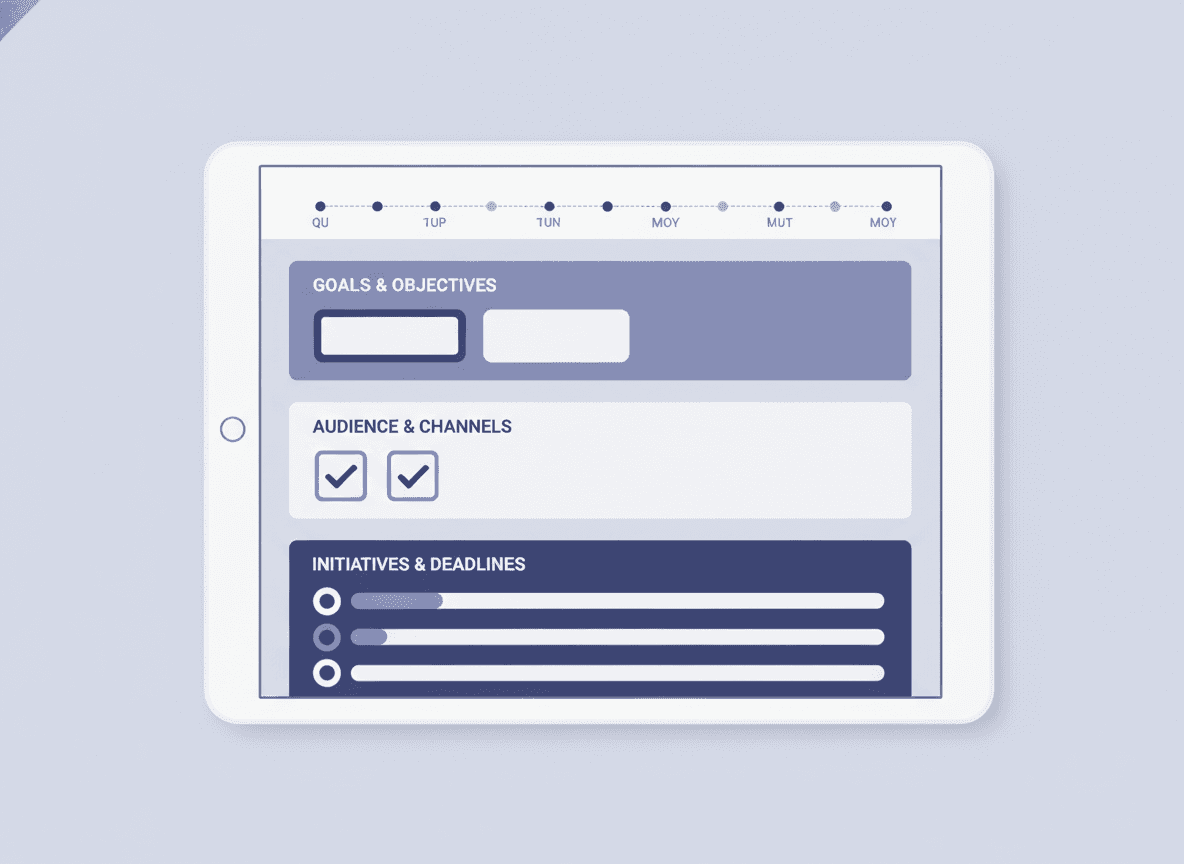
Map out every distinct audience the district needs to communicate with:
- Families with children currently enrolled (further segmented by school level)
- Prospective families considering enrollment
- District staff and teachers
- School board members
- Community members without children in the district
- Local media
- Business and community partners
Each audience has different information needs, different preferred channels, and different levels of communication frequency that feel appropriate versus excessive.
Define communication goals for each audience
Once you have your audience map, define what you want each group to know, believe, and do as a result of your communications.
For enrolled families, the goal is usually: feel informed about what affects their children, trust that the district is competent and transparent, and know how to act when they need to.
For community members without children, the goal might be: understand what the district does with public funding, feel that the schools are a positive community asset, and be inclined to support bond measures and operational levies.
These goals should be explicit in your plan. They become the test for every piece of communication you produce. Does this message move these audiences toward these goals? If not, it probably does not need to exist.
Map channels to audiences
With your audiences and goals defined, channels are easy to assign:
- Email newsletters: Primary channel for enrolled families. Works well for monthly district updates, back-to-school communications, enrollment season, budget transparency, and policy changes.
- Text/SMS alerts: Best for time-sensitive operational information. School closures, emergency notifications, enrollment deadline reminders.
- Website: Reference channel for detailed policy documents, board meeting archives, staff directories, and information that families need to find on demand rather than receive proactively.
- Social media: Works for community engagement, celebrating student and school achievements, and reaching community members who are not on your email list.
- Direct mail: Useful for reaching families who may not have consistent email access. Typically reserved for enrollment materials and legally required notices.
Build the communication calendar
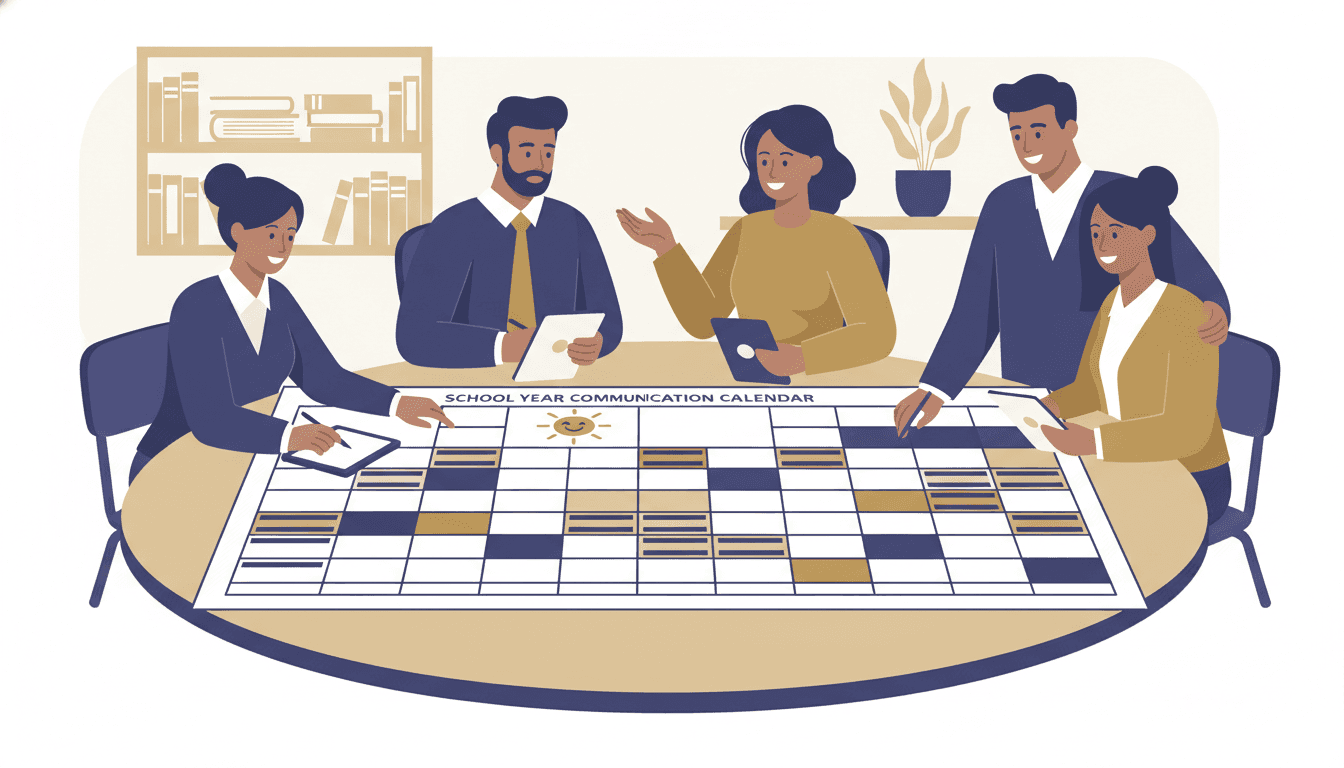
The calendar is the core of the plan. It maps out every significant communication for the year, the audience it targets, the channel it uses, and who owns it.
Here is a template structure for a district communication calendar:
- July: Staff back-to-school communication (channel: email, owner: HR/Superintendent)
- Early August: Family back-to-school newsletter, district-wide (channel: email newsletter, owner: Communications office)
- Late August: First-week family update (channel: email newsletter, owner: Communications office)
- September: Monthly district family newsletter (channel: email, owner: Communications)
- October: Monthly district newsletter, Board meeting announcement (channel: email, owner: Communications)
- November: Budget preview or financial update (channel: email, owner: Finance/Communications)
- December: Year-in-review newsletter, winter break schedule (channel: email, owner: Communications)
- January: Enrollment season launch communication (channel: email + text, owner: Enrollment/Communications)
- February: Enrollment deadline reminder sequence (channel: email + text, owner: Enrollment/Communications)
- March: Budget community engagement communication (channel: email + social, owner: Finance/Communications)
- April: Strategic plan update (channel: email newsletter, owner: Superintendent/Communications)
- May: End-of-year family communication, summer program information (channel: email, owner: Communications)
- June: Graduation, promotion, and year-end celebration communication (channel: email, owner: Communications)
Fill in the dates that are specific to your district's calendar. Add district-specific events like bond elections, strategic plan presentations, or state accountability reporting releases.
Define ownership clearly
The most common reason communication plans fail is unclear ownership. Who writes the monthly newsletter? Who approves it before it goes out? Who updates the subscriber list? Who handles replies?
Every item in the communication calendar needs a named owner, not a department. "Communications office" is not an owner. "Communications coordinator Maria Hernandez" is an owner.
Also define the approval chain. Most district communications should go through one review before sending, not five. A five-step approval chain is a guarantee that newsletters go out late or get neutered into vagueness by the time everyone has weighed in.
Set communication standards
The communication plan should also include writing and formatting standards. These do not need to be elaborate. A one-page style guide is enough:
- Maximum length for different communication types (district newsletter: 600 words; text alert: two sentences)
- Required elements (district logo, superintendent signature on district newsletters, unsubscribe link on all emails)
- Tone guidance (plain language, no acronyms without spelling them out, no jargon)
- Brand colors and fonts if the district has them
Using tools to execute the plan
A communication plan is only as good as the tools that execute it. Platforms like Daystage support district-level newsletter programs by providing consistent branding, subscriber list management, scheduling, and analytics in one place.
When the communication plan calls for a monthly newsletter to enrolled families, Daystage makes it easy to draft, preview, and schedule that newsletter without rebuilding the template each time or manually managing who is on the list.
Review the plan annually
Build in a formal review of the communication plan each May or June. Look at what performed well, what was consistently skipped or delayed, and what families or staff said they needed that was not being provided. Update the calendar and standards accordingly.
A communication plan that gets reviewed and updated each year compounds. The districts that do this consistently are the ones that build strong community trust over time, not because they have some magic communication formula, but because they show up reliably year after year.
Get one newsletter idea every week.
Free. For teachers. No spam.
Frequently asked questions
When should school districts create or update their communication plan?
Build a written communication plan before the school year starts and review it each May or June. Districts that update the plan annually based on what performed well and what was skipped compound their communication effectiveness year over year.
What should a district communication plan template include?
Start with audiences, not channels. Map every distinct group the district must reach, define communication goals for each, then assign channels and build a calendar with named owners, send dates, and approval chains. The calendar should cover at least 12 months and include every major communication type from back-to-school to budget adoption.
How should districts manage communication ownership across multiple departments?
Every calendar entry needs a named person, not a department. Assign a single reviewer per communication to prevent five-step approval chains that send newsletters out late or strip them of anything useful. When HR, curriculum, and communications all contribute content to the same newsletter, one person must own final output.
What are common challenges in district-level communication planning?
The most common reason communication plans fail is unclear ownership, followed by no formal review process. Districts end up with reactive communication habits, sending something when there is news and going quiet otherwise. Without a written plan, the entire communication function depends on whoever is in the role at any given time.
How do tools like Daystage support a district communication plan?
Platforms like Daystage support district-level newsletter programs by providing consistent branding, subscriber list management, scheduling, and analytics in one place. When the plan calls for a monthly newsletter to enrolled families, you can draft, preview, and schedule it without rebuilding the template each time.

Adi Ackerman
Author
Adi Ackerman is a former classroom teacher and curriculum writer with 8 years in K-8 schools. She writes about school communication, parent engagement, and what actually works in real classrooms.
More for District
Ready to send your first newsletter?
3 newsletters free. No credit card. First one ready in under 5 minutes.
Get started free