
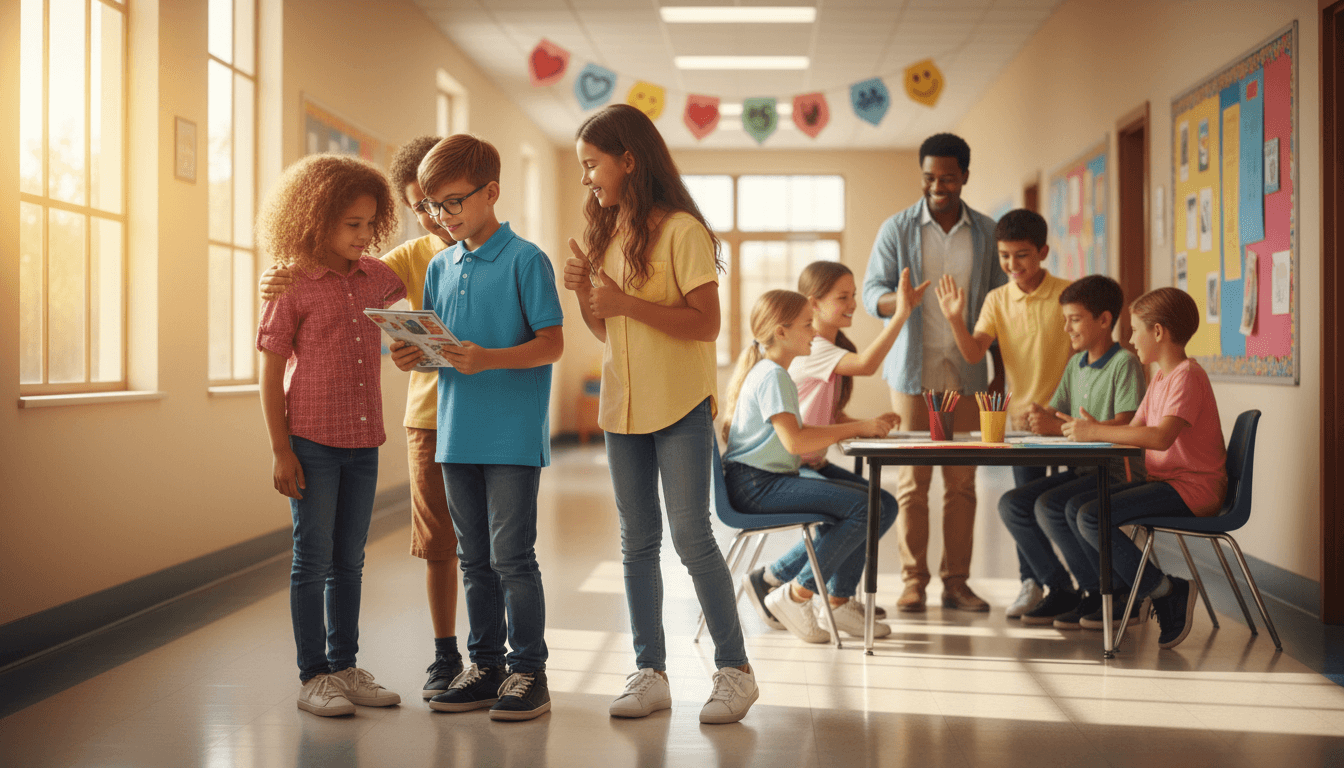
How to Write a School Newsletter About Conflict Resolution Programs
Conflict is a normal part of school life. The question is not whether students will experience conflict but whether they have the skills to work through it without it escalating or causing lasting damage to relationships.
When schools teach conflict resolution systematically and communicate that work to families, the skills stick better and travel further than when conflict resolution stays inside the building.
Describe the Program in September
Before the first conflict of the year requires a newsletter mention, explain proactively how your school handles conflict. Describe the skills you teach, the vocabulary students use, and the structures in place, like peer mediation or restorative circles.
Families who receive this information in September read every subsequent conflict- related communication with useful context. They know the school has a system rather than reacting to each incident as an isolated crisis.
Teach the Steps to Families
If your school uses a specific conflict resolution model, share the steps in the newsletter. Not a full training, but the basic sequence. "We teach students to stop and breathe, describe the problem without blame, share how they feel, and propose a solution" is enough for a parent to use the same framework at home.
When families use the same language as the school, students hear a consistent message from the adults in their lives. That consistency is what makes conflict resolution skills durable.
Report on Peer Mediation or Student Leadership Roles
If your school has a peer mediation program, use the newsletter to explain how it works, who the mediators are, and what cases they handle. Families often do not know peer mediation programs exist, and when their child is either a mediator or a participant, context matters.
Highlighting peer mediators by name in the newsletter also gives those students community recognition for a meaningful contribution.
Show Progress Over the Year
Once per semester, include a brief data note. Fewer office referrals for interpersonal conflict. More conflicts resolved at the classroom level before they reach an administrator. Students requesting peer mediation voluntarily. These numbers tell a story families care about.
Keep the data contextual. "Since beginning our formal peer mediation program in October, teacher-reported unresolved conflicts have dropped by 30%. That is not because students are having fewer disagreements. It is because they have better tools." That interpretation makes the number meaningful.
Address Big Conflict Events Transparently
When a significant conflict or safety event happens at school, families often hear pieces of the story from their children before the school communicates. A clear, calm newsletter note that acknowledges the event, describes how the school responded, and explains what comes next builds trust even when the event was difficult.
The note does not need to include details. It needs to signal that the school is in control, that students are safe, and that the response is intentional.
Get one newsletter idea every week.
Free. For teachers. No spam.
Frequently asked questions
What should a conflict resolution newsletter include?
A plain-language description of how the school teaches conflict resolution, examples of the skills students are practicing, any peer mediation programs in place, and a home conversation prompt that reinforces the same vocabulary. Families who understand the school's approach can support it at home rather than inadvertently undermining it.
How do you report on conflict resolution without disclosing sensitive information?
Report on the program and the skills, not on individual incidents. Describe what students are learning and practicing, not who was involved in a specific conflict. 'Our fifth graders practiced the three-step de-escalation process this month and teachers report fewer recurring conflicts on the playground' is informative without exposing any student.
Should the newsletter mention that the school had a conflict that required intervention?
Only in general terms when it is relevant to what families are hearing from their children. A brief acknowledgment that a difficult situation occurred, that it was addressed, and that it informed current instruction is appropriate. Details about who was involved, what was said, or what consequences were given are never appropriate in a newsletter.
How can families reinforce conflict resolution skills at home?
By using the same vocabulary the school uses and asking similar reflection questions. If the school teaches students to name the problem, explain how it made them feel, and propose a solution, parents can use the same structure when a sibling conflict arises. The newsletter is where you give families those specific steps.
How does Daystage help with conflict resolution communication?
Daystage makes it easy to include structured, recurring content about social-emotional programs like conflict resolution in regular newsletters without requiring each teacher or counselor to write the section from scratch. Schools use it to keep program communication consistent throughout the year.

Adi Ackerman
Author
Adi Ackerman is a former classroom teacher and curriculum writer with 8 years in K-8 schools. She writes about school communication, parent engagement, and what actually works in real classrooms.
More for School Culture
Ready to send your first newsletter?
3 newsletters free. No credit card. First one ready in under 5 minutes.
Get started free