

School Newsletter: National Preparedness Month and School Safety
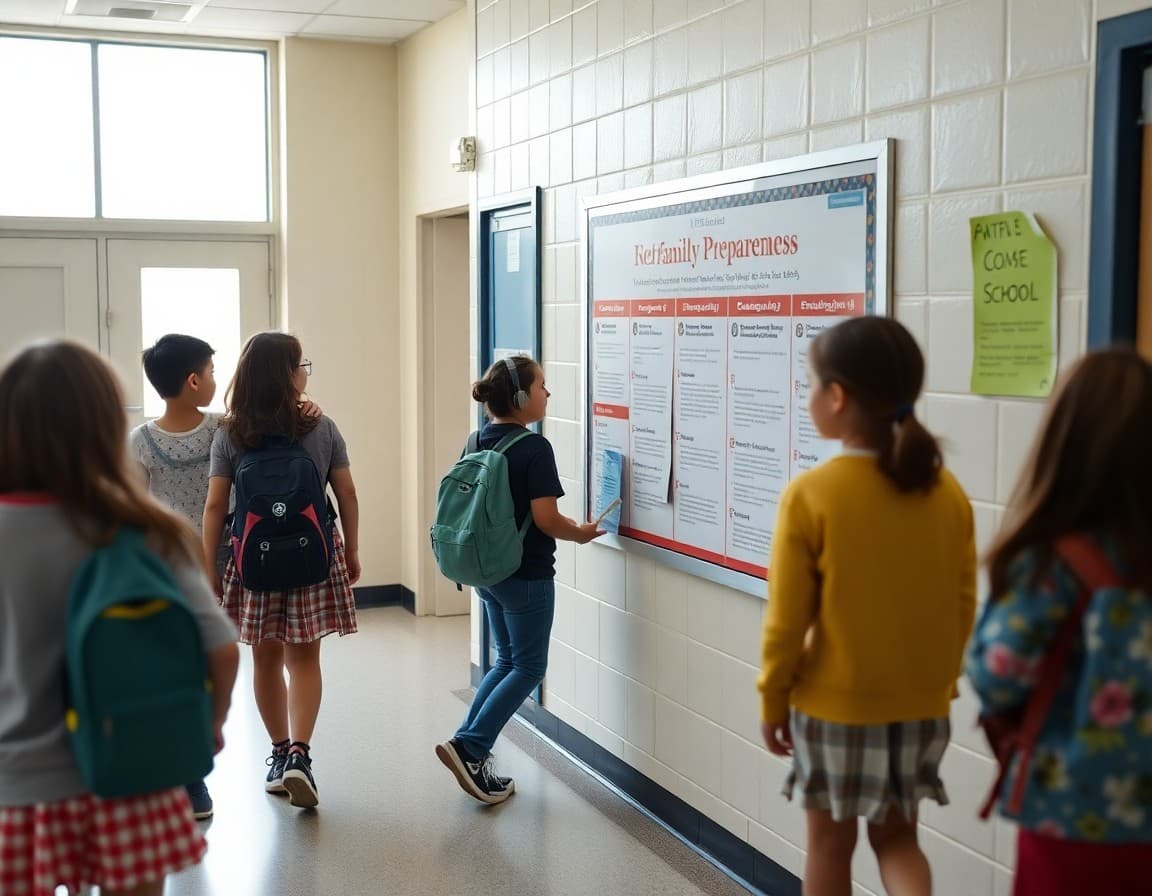
September is National Preparedness Month, and it coincides with the start of the school year -- a natural moment to review emergency procedures with families and give students the confidence that comes from knowing what to do when something unexpected happens. A preparedness newsletter that covers drills, family plans, and school safety procedures builds confidence rather than fear.
What Drills Students Will Practice This Year
Describe the emergency drills your school will conduct this year: fire drills, tornado or severe weather drills, lockdown drills, and any other safety protocols required by your district or state. Give families a brief description of what each drill involves so they can prepare their children with accurate information rather than leaving children to fill in gaps with anxiety. Children who know what a drill involves before it happens are significantly less frightened when it occurs.
How to Talk to Children About Safety Drills
Give families specific guidance on how to discuss safety drills at home. Use age-appropriate, factual language. Avoid language that emphasizes unlikely worst-case scenarios. Reassure children that adults at school are trained to keep them safe. Answer questions honestly and briefly. A child who asks 'what is the lockdown drill for?' deserves an honest, calm answer -- not a deflection that increases anxiety about what is not being said.
The Family Emergency Plan
Share a brief template or guide for creating a family emergency plan at home. Who to call. Where to meet. What to do if a family member cannot be reached. This is one of the most practical contributions a school can make to community safety: connecting the school's preparedness work to the family's home plan. Include local emergency resources and a reminder to update emergency contact information at school.
School Safety Improvements This Year
Note any specific safety improvements made at the school since last year: new door hardware, updated communication systems, additional trained staff, revised protocols. Families who know the school is actively working on safety are more confident about their children's security than families who assume nothing has changed.
How the School Communicates During Emergencies
Describe specifically how the school communicates with families during an emergency: what system is used to send alerts, what information families will receive, and what families should do (and should not do -- such as coming to the school building during an active emergency). Clear, advance communication about the emergency communication process prevents the panic that comes from family uncertainty during a real event.
Community Preparedness Resources
Include links to local and national preparedness resources: Ready.gov, the local emergency management agency, the Red Cross preparedness guides. For families who want to go deeper than the school newsletter covers, specific resource links are more useful than generic suggestions to 'be prepared.'
Preparedness as Confidence, Not Fear
Close with a reframe: emergency preparedness is not about living in fear of unlikely events. It is about building the knowledge and habits that give students and families confidence that they know what to do. Schools that practice drills and communicate clearly about safety are not creating an atmosphere of danger -- they are creating an atmosphere of competence. Families who receive this message trust the school's safety program rather than being destabilized by it.
Get one newsletter idea every week.
Free. For teachers. No spam.
Frequently asked questions
What should this newsletter cover?
Lead with what your school is specifically doing this month or week. Connect it to family action at home, community resources, and a direct contact for more information. Specificity is what makes a newsletter useful rather than forgettable.
When should the school send it?
The week before or the first week of the observance. Families need lead time to participate in events or prepare for activities. A newsletter that arrives after the observance started is contextual but misses the participation window.
How do you keep this newsletter from feeling generic?
Connect the theme to something specific happening in your school building this week. A classroom activity in progress. A community partner the school is working with. A specific student or staff member doing something worth recognizing. Specificity drives readership and sharing.
Should it include community resources?
Yes, briefly. One or two relevant organizations, helplines, or local resources. Families who find a useful resource in a school newsletter trust the school as a community hub, not just an educational institution.
How does Daystage support this newsletter?
Daystage lets school staff create and send a formatted newsletter directly to every family's inbox. You write the content, Daystage handles formatting and delivery. Templates can be reused and adapted each year for recurring observances.

Adi Ackerman
Author
Adi Ackerman is a former classroom teacher and curriculum writer with 8 years in K-8 schools. She writes about school communication, parent engagement, and what actually works in real classrooms.
More for Community Outreach
School-Community Emergency Preparedness Newsletter: Building Neighborhood Readiness Alongside School Safety
Community Outreach · 5 min read
Back-to-School Safety Procedures Newsletter for Families
Back to School · 6 min read
School Newsletter: Fire Prevention Week Activities and Safety
Community Outreach · 6 min read
Ready to send your first newsletter?
3 newsletters free. No credit card. First one ready in under 5 minutes.
Get started free