
School Newsletter: Fire Prevention Week Activities and Safety

Fire Prevention Week in October gives schools a structured opportunity to connect fire safety education at school to family fire safety plans at home. A newsletter that shares what students are learning, gives families practical home safety tips, and celebrates the community partnership with local firefighters turns a safety week into a genuine community engagement moment.
What Students Are Learning This Week
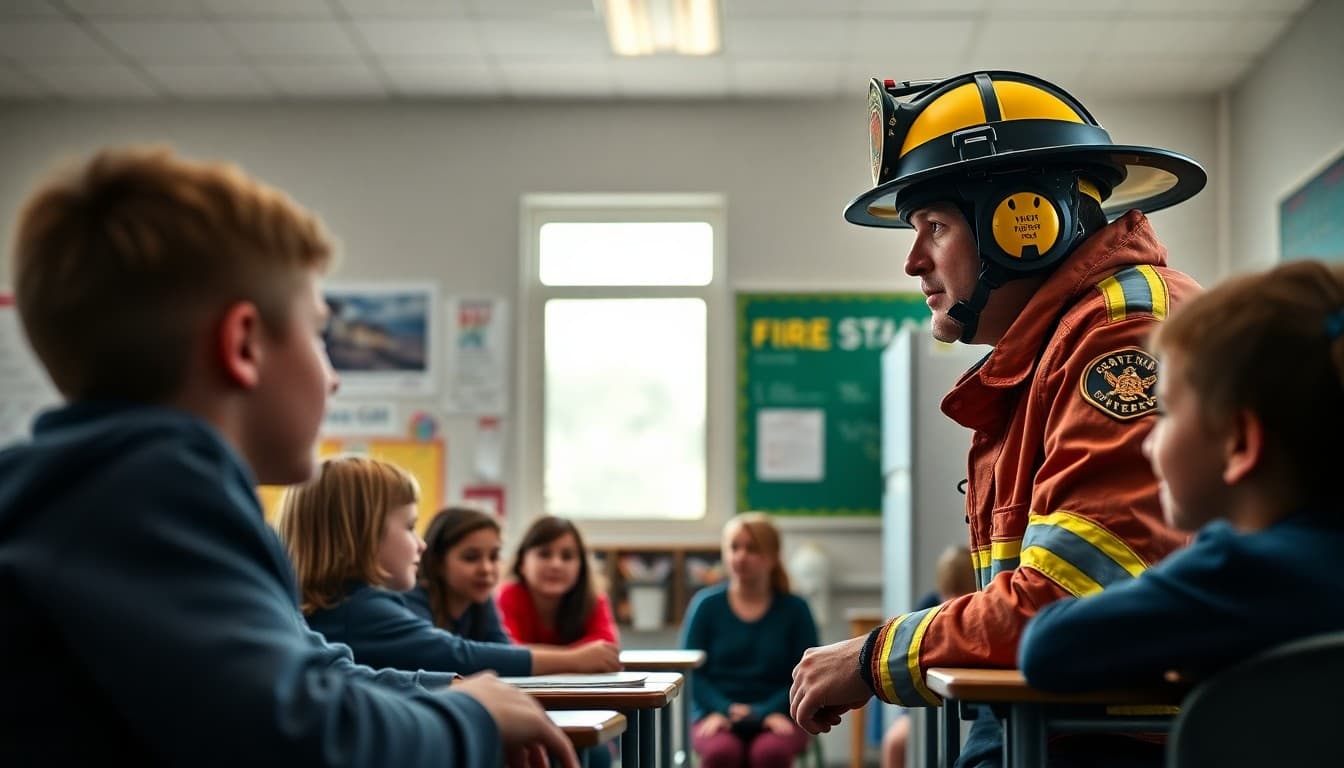
Describe the fire prevention education happening at each grade level during Fire Prevention Week. Kindergartners learning stop, drop, and roll. Elementary students practicing family escape plans. Middle schoolers learning about common fire causes and prevention. A school visit from local firefighters. Specific descriptions give families a way to reinforce the learning at home and to continue the conversation about what their child practiced at school.
The Home Fire Escape Plan
Give families a simple template for a home fire escape plan: two exits from every room, a family meeting place outside, and who is responsible for each family member in an emergency. Research consistently shows that families with a practiced home fire escape plan have significantly better outcomes in fires than those without one. A brief, specific guide in the newsletter is one of the most practically valuable safety communications a school can provide.
Smoke Alarm and Carbon Monoxide Detector Maintenance
A brief reminder about smoke alarm maintenance -- testing monthly, replacing batteries annually or when they chirp, replacing the unit every 10 years -- is useful practical safety content for any family. Note that carbon monoxide detectors are also essential in homes with gas appliances or attached garages. Simple maintenance information in the newsletter reaches families who would not otherwise receive it through their fire department.
Partnership With the Local Fire Department
If the school has a partnership with the local fire department -- school visits, fire station field trips, community education events -- describe it in the newsletter. Community partnerships that involve uniformed first responders give students a positive relationship with the professionals who respond to emergencies and help build the community trust that improves emergency response outcomes for everyone.
The History and Purpose of Fire Prevention Week
A brief note about the history of Fire Prevention Week -- established in 1925 by President Coolidge to commemorate the Great Chicago Fire of 1871 -- gives the observance context and connects it to a specific historical event. Students and families who understand why the week exists engage with it as more than a calendar compliance item.
Student Fire Safety Projects
If students are completing fire safety projects this week -- drawings, family escape plan worksheets, fire prevention posters -- note that in the newsletter and encourage families to complete any take-home components with their children. A family fire safety conversation that starts with a child's school project is the most natural and effective way to get families engaged with the content.
Year-Round Fire Safety Habits
Close with a reminder that fire safety awareness belongs in every season, not just October. Keep fire exit paths clear year-round. Replace smoke alarm batteries when you change your clocks. Review the family escape plan annually. These brief reminders reinforce that Fire Prevention Week is a launch point for habits, not an annual checkbox. A school that communicates this way positions itself as a year-round community safety partner.
Get one newsletter idea every week.
Free. For teachers. No spam.
Frequently asked questions
What should this newsletter cover?
Lead with what your school is specifically doing this month or week. Connect it to family action at home, community resources, and a direct contact for more information. Specificity is what makes a newsletter useful rather than forgettable.
When should the school send it?
The week before or the first week of the observance. Families need lead time to participate in events or prepare for activities. A newsletter that arrives after the observance started is contextual but misses the participation window.
How do you keep this newsletter from feeling generic?
Connect the theme to something specific happening in your school building this week. A classroom activity in progress. A community partner the school is working with. A specific student or staff member doing something worth recognizing. Specificity drives readership and sharing.
Should it include community resources?
Yes, briefly. One or two relevant organizations, helplines, or local resources. Families who find a useful resource in a school newsletter trust the school as a community hub, not just an educational institution.
How does Daystage support this newsletter?
Daystage lets school staff create and send a formatted newsletter directly to every family's inbox. You write the content, Daystage handles formatting and delivery. Templates can be reused and adapted each year for recurring observances.

Adi Ackerman
Author
Adi Ackerman is a former classroom teacher and curriculum writer with 8 years in K-8 schools. She writes about school communication, parent engagement, and what actually works in real classrooms.
More for Community Outreach
School Newsletter: National Preparedness Month and School Safety
Community Outreach · 6 min read
Back-to-School Safety Procedures Newsletter for Families
Back to School · 6 min read
Community Safety Program Newsletter: How Schools Can Communicate Neighborhood Safety Partnerships
Community Outreach · 5 min read
Ready to send your first newsletter?
3 newsletters free. No credit card. First one ready in under 5 minutes.
Get started free