

School Newsletter: Pi Day Fun and Math Across the School
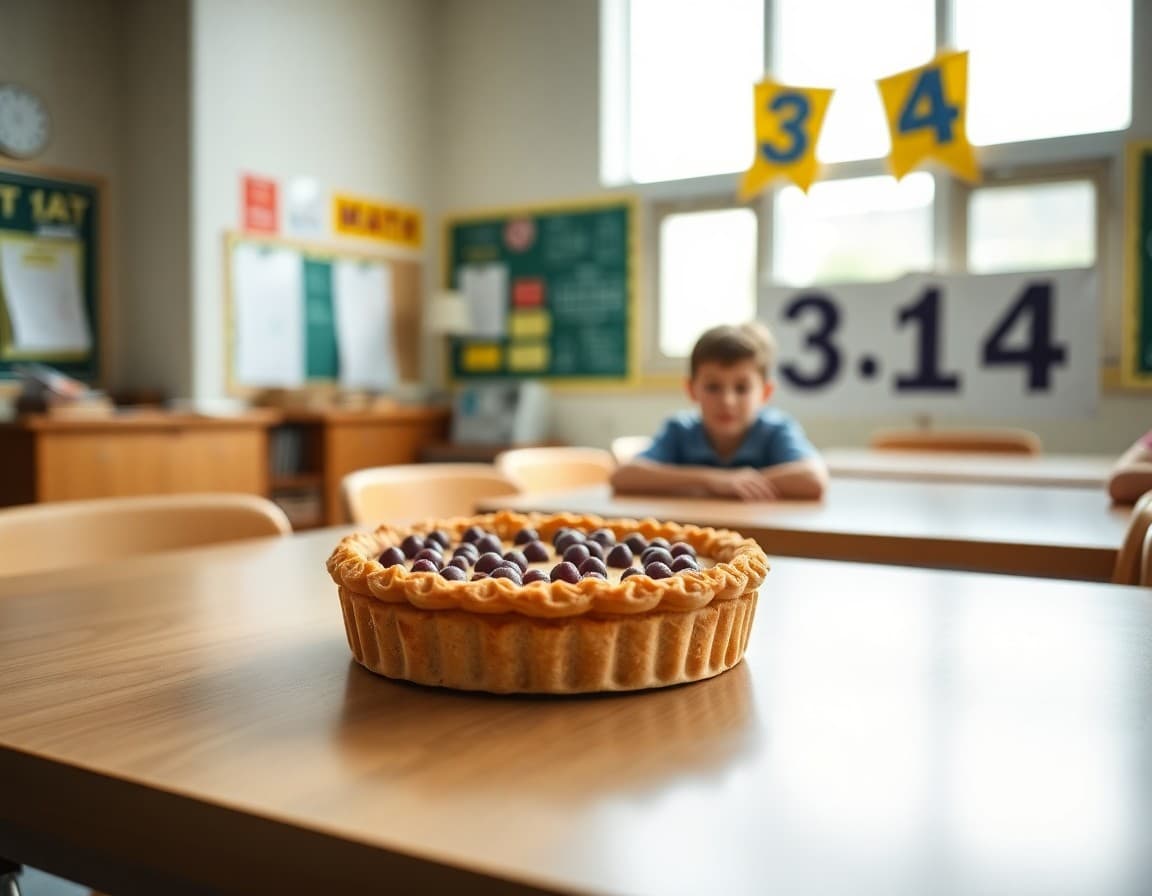
Pi Day on March 14 (3.14) is one of the most accessible school celebrations because it connects a real mathematical concept to something everyone loves: pie. A newsletter that explains what Pi Day is, what students are doing at school, and how families can participate at home turns a clever calendar quirk into a genuine community moment around mathematical thinking.
What Is Pi and Why Do We Celebrate It
Give families a plain, accurate explanation of what pi is -- the ratio of a circle's circumference to its diameter, approximately 3.14159 -- and why March 14 became Pi Day. Explain the connection to real-world applications: engineers, architects, and scientists use pi constantly in their work. This brief explainer serves families who want to answer when their child asks 'why are we celebrating a number?' -- and gives them a reason to think the math is genuinely interesting.
Pi Day Activities Happening at School
Describe the specific activities planned for Pi Day at each grade level. A measurement activity where students calculate pi using real circular objects. A pi memorization contest. A problem-solving challenge connected to circles and geometry. A cross-curricular activity that connects pi to art, music, or literature. Specific descriptions of what students will do make Pi Day real and exciting rather than abstract.
The Family Pie Connection
Invite families to celebrate Pi Day at home with a pie -- any pie, savory or sweet. Include a brief math tie-in: measure the circumference and diameter of your pie, calculate the ratio, see how close you get to 3.14. This activity is accessible to any family, requires no materials beyond what is already at home, and makes the abstract mathematical constant tangible. A brief at-home activity suggestion in the newsletter gives families a fun way to connect school learning to family life.
Math Anxiety and Why It Matters
Pi Day is a good opportunity to address math anxiety directly. Research consistently shows that parental math anxiety transfers to children, affecting their performance and confidence. A brief, nonjudgmental note in the newsletter: how families talk about math at home matters. Avoid saying 'I was never a math person' in front of your children. Instead, frame math struggles as normal and solvable. Celebrate mathematical curiosity, not just correct answers.
Pi Day and Career Connections
Connect pi and mathematical thinking to the careers that require it. Architecture, medicine, engineering, video game design, data science, music production. A brief list of careers that use math beyond basic arithmetic helps students -- especially those who are not yet sure why they are learning this -- see the practical relevance of what they are studying. Pi Day is a natural moment to make that connection visible.
Recognizing Math Achievement at Your School
Share any notable math achievement from the past year: students who competed in math leagues, a classroom that reached a milestone goal, a student who made a significant improvement. Specific recognition of mathematical achievement signals that the school values and celebrates mathematical skill -- not just sports and performing arts.
Math Is More Than Numbers
Close with a message that connects mathematical thinking to the broader skills students are building: logical reasoning, pattern recognition, spatial thinking, problem-solving under uncertainty. These skills are valuable in every academic and professional field. A school that communicates about math in terms of its broader cognitive value -- not just computation skills -- shifts the way families think about their children's mathematical development and makes Pi Day feel like part of something bigger.
Get one newsletter idea every week.
Free. For teachers. No spam.
Frequently asked questions
What should a Pi Day Fun and Math Across the School newsletter cover?
The most effective newsletters for this observance cover three things: what the school is doing to recognize or celebrate the month or week, how families can participate or reinforce the themes at home, and who at school to contact for more information or to get involved. Lead with the specific activities happening at school, not with a generic description of the observance. Families respond to what is real and local, not to national awareness month statistics.
When should the school send this newsletter?
The week before or the first week of the observance month or week. Families need enough lead time to participate in any events, volunteer for relevant activities, or have informed conversations with their children about the topics being raised at school. A newsletter that arrives after the week has already started is useful for context but misses the participation window.
How do you keep this kind of observance newsletter from feeling generic?
Connect every awareness month or week to something specific happening in your school building. A student who shared their experience. A classroom project in progress. A community organization the school is partnering with. A specific action families can take this week. Generic awareness newsletters list facts about the month. Specific newsletters tell families what their community is actually doing about it.
Should the newsletter include community resources?
Yes, briefly. Include one or two community organizations or helplines relevant to the observance if appropriate. For mental health awareness months, crisis lines. For financial literacy month, free local resources. For heritage months, community cultural organizations. This section takes one minute to add and significantly increases the newsletter's value as a community resource beyond school walls.
How does Daystage help schools send observance newsletters?
Daystage lets school staff create a clean, formatted newsletter for any observance month or week and send it to all families in a few minutes. You can include event details, resource links, and family action steps in a mobile-friendly format that arrives directly in every family's inbox. Templates can be reused and adapted each year.

Adi Ackerman
Author
Adi Ackerman is a former classroom teacher and curriculum writer with 8 years in K-8 schools. She writes about school communication, parent engagement, and what actually works in real classrooms.
More for Community Outreach
Ready to send your first newsletter?
3 newsletters free. No credit card. First one ready in under 5 minutes.
Get started free