
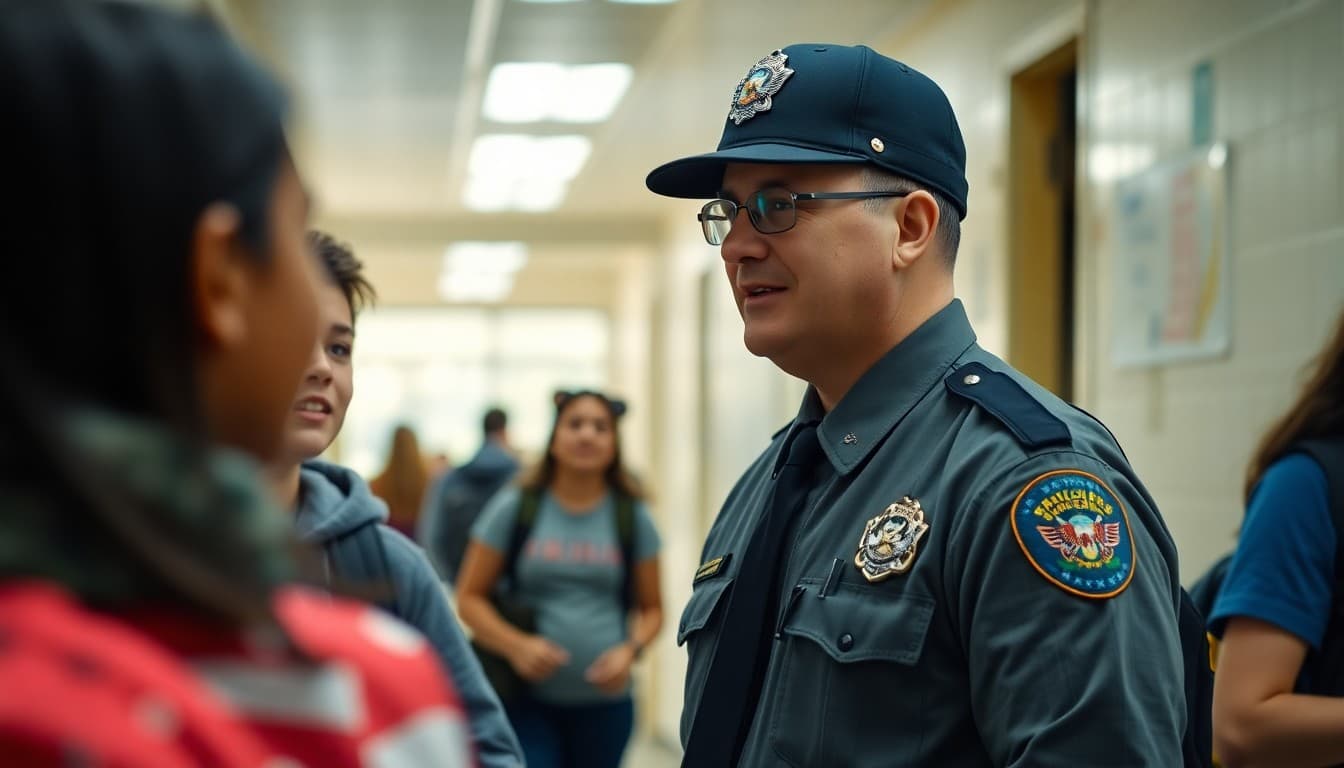
School-Police Community Newsletter: Building Relationships

School-police relationships are among the most complex partnerships any school manages. Done well, they create safety, trust, and connection. Done poorly, they create fear, reduce reporting of problems, and harm the most vulnerable students. A newsletter that introduces the school's relationship with law enforcement should be honest about the complexity, specific about the role and boundaries, and genuinely responsive to the range of concerns families bring to this topic.
Introducing Your School Resource Officer
The most effective introduction of an SRO is personal and specific. Name the officer. Include their photo with their permission. Describe their professional background and why they chose to work in a school setting. Describe their specific role at your school as the principal and department have defined it. What situations will they respond to? What situations are handled by school administration without their involvement? What does a typical week look like for them at the school? The more specific and human the introduction, the more it functions as an actual introduction rather than an institutional announcement.
Being Honest About the History and the Complexity
A newsletter that presents the school-police partnership as unambiguously positive will not be trusted by families who have had negative experiences with law enforcement. This is especially relevant in communities where over-policing, racial disparities in school discipline, and the school-to-prison pipeline are part of families' lived experience. Acknowledging that these concerns are real and describing specifically how your school has structured the SRO role to minimize those risks is more credible than a newsletter that only presents the partnership in a positive light. Families who trust the school's honesty are more likely to engage productively with concerns rather than opting out of communication entirely.
What the SRO Does and Does Not Do at Your School
The clearest communication a school can provide on this topic is a direct description of when the SRO is and is not involved. At our school, the SRO responds to situations involving criminal behavior, credible safety threats, medical emergencies, and situations where a student or staff member is at risk of immediate harm. The SRO does not respond to routine classroom disruptions, discipline referrals for behavior like defiance or dress code violations, or situations that can be resolved through the principal's office. Stating this specifically gives families a clear picture of what the partnership looks like in practice and reduces both the fear that police are policing student behavior and the misconception that the SRO is a passive bystander.
Community Policing and Relationship-Building Activities
SROs who build genuine relationships with students before any enforcement situation arises are more effective and more trusted than those who are only visible during incidents. Describe the specific relationship-building activities your SRO participates in. Do they eat lunch with student groups weekly? Do they coach an extracurricular activity? Do they participate in career day or advisory lessons? Do they attend school events like sports games or concerts? These activities are worth naming specifically because they show families that the SRO's presence is primarily relational rather than punitive.
Sample Template Excerpt
Here is a section you can adapt for your own newsletter:
Meet Officer Rivera: Our School Resource Officer
Officer Maria Rivera joined our school this fall after 12 years with the city police department, most recently working in the department's youth services division. She requested assignment to a school because she wanted to build the kind of sustained relationships with young people that patrol work does not allow.
What Officer Rivera does at our school: She responds to situations involving criminal behavior or immediate safety concerns. She is a go-to resource for students or families who want to connect with legal assistance or community services. She eats lunch with student groups on Tuesdays and Thursdays and coaches our after-school running club on Fridays.
What Officer Rivera does not do: She is not involved in standard school discipline. If a student is disruptive in class or violates the dress code, that goes to the assistant principal, not Officer Rivera. We have a clear agreement with the police department about this distinction.
If you have questions or concerns about our SRO program, contact principal [name] directly at [email].
Addressing Family Concerns Proactively
Before sending this newsletter, anticipate the questions and concerns families will have and answer them directly in the text rather than waiting for them to arrive as emails and phone calls. What happens if a student is involved in a situation with the SRO? Do parents get notified? Can a family request that the SRO not be involved in interactions with their child? What is the complaint process if a family believes the SRO behaved inappropriately? These questions deserve direct, policy-based answers in the newsletter. Schools that answer hard questions in writing demonstrate transparency and build the trust that sustains complex partnerships over time.
Get one newsletter idea every week.
Free. For teachers. No spam.
Frequently asked questions
What is the role of a school resource officer?
A school resource officer (SRO) is a law enforcement officer assigned to work in a school setting. The role includes law enforcement responsibilities, emergency response, mentorship, and community relationship building. SROs are expected to be visible, approachable, and knowledgeable about resources available to students and families. The degree to which an SRO focuses on enforcement versus relationship-building varies significantly by department policy and individual officer approach. Your newsletter should describe your specific SRO's focus and how the school has defined the role.
How should schools address families who have concerns about police presence in schools?
Acknowledge the concern directly and honestly. Many families, particularly families of color, have valid reasons to feel differently about police presence in schools based on their experiences with law enforcement. A newsletter that does not acknowledge this complexity will not be trusted by the families who most need to hear from the school on this topic. Describe the specific training and protocols your SRO follows, what kinds of situations they are and are not involved in, and who to contact if a family has a concern about an interaction.
What are SROs not supposed to do in school settings?
Best practice guidelines from NASRO (National Association of School Resource Officers) and many district policies specify that SROs should not serve as primary enforcers of school discipline, should not be called to resolve standard classroom management situations, and should not be involved in situations that could be handled through traditional school discipline channels. SROs are most appropriately involved in situations involving criminal behavior, safety threats, or situations where a student or staff member is at immediate risk. Your newsletter should describe your district's specific policy.
How can SROs build positive relationships with students?
The most effective SROs invest significant time in relationship-building outside of enforcement contexts. Eating lunch with students, coaching extracurricular activities, presenting career day information about law enforcement, participating in school events, and being a visible and approachable presence during transitions all build the trust that makes students more likely to come to the SRO with concerns rather than viewing them only as an authority figure to avoid.
How can Daystage help with school-police community communication?
Daystage makes it easy to send a community introduction newsletter introducing the SRO by name and photo, describing their role in plain language, and providing contact information for families with questions. When community policing events like meet-and-greet nights or school safety presentations are scheduled, Daystage can send invitations to all families at once. Schools that communicate proactively and transparently about SRO programs experience fewer family concerns than those where families learn about police presence informally.

Adi Ackerman
Author
Adi Ackerman is a former classroom teacher and curriculum writer with 8 years in K-8 schools. She writes about school communication, parent engagement, and what actually works in real classrooms.
More for Community Outreach
Ready to send your first newsletter?
3 newsletters free. No credit card. First one ready in under 5 minutes.
Get started free