
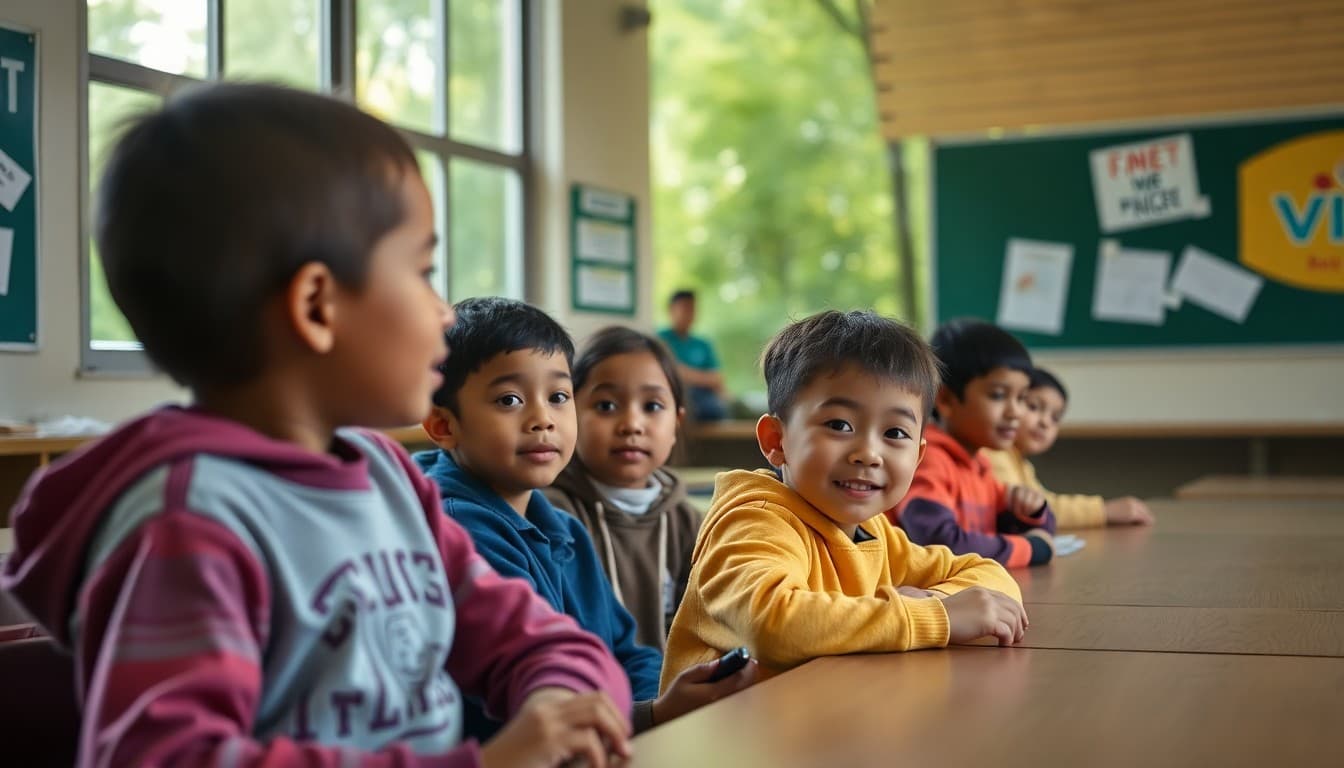
Parks and Recreation School Partnership Newsletter

Parks and schools share a common constituency. The families who use the park on weekends are the same families who send children to school on weekdays. A school-parks department partnership leverages that overlap to create outdoor learning experiences, after-school programming, and shared spaces that benefit students and families in ways neither institution could provide alone. A newsletter about this partnership shows families what is available and makes the connection between the park down the street and their child's education concrete and actionable.
Why Outdoor Education Belongs in the School Partnership Portfolio
Research on outdoor education consistently shows that students who learn in natural settings demonstrate better attention, higher levels of engagement, and stronger retention of science and environmental concepts than peers in exclusively indoor settings. The National Environmental Education Foundation found that outdoor education increases academic achievement, reduces behavioral problems, and improves student health outcomes. Schools that partner with parks departments can access these benefits without the significant cost of developing their own outdoor education programming. The park is the classroom. The parks department provides the expertise. The school provides the students and the curriculum context.
Outdoor Programs Your School and Parks Are Running Together
Your newsletter should describe the specific outdoor programs resulting from the partnership. If a parks naturalist visits your school's fourth grade every fall to lead a watershed investigation at the adjacent creek, describe what students do and what they learn. If your fifth graders spend one Friday morning per month at the nature center in the nearby park, describe the program's learning goals and what parents should know about preparation. If your PE classes have access to the park's trail system for cross-country running, explain how that works and what safety protocols are in place. Specific descriptions of real programs are more compelling than general statements about the value of outdoor education.
After-School Programs Through the Parks Department
Many families are unaware that their city or county parks and recreation department offers significantly subsidized after-school programming. These programs often include homework help, arts and crafts, sports, and free play in a supervised environment, at a cost that is a fraction of private childcare. For families who are managing the after-school gap between school dismissal and the end of the work day, this information can be genuinely life-changing. Your newsletter should include the program name, location, hours, cost, and how to register. A family that receives this information in September rather than discovering it by accident in March has more time to benefit from it.
Sample Template Excerpt
Here is a section you can adapt for your own newsletter:
Our School and Riverside Parks: What This Partnership Means for Students
We have a formal shared use agreement with Riverside Parks and Recreation that gives our students access to park facilities and programming year-round.
Outdoor science at Riverside Creek: Every October, our third and fourth grade classes walk to Riverside Creek for a three-session outdoor science investigation led by parks naturalists. Students test water quality, identify macroinvertebrates, and chart seasonal changes. This program is free to our school as part of the parks partnership.
After-school at Riverside Community Center: The parks department runs an after-school program at the community center, two blocks from school, Monday through Friday from 3:00 to 6:00 PM. Cost is $8 per day or $120 per month with scholarship options available. Register at parks.riversidemunicipal.org or call [number].
Summer camps: Parks summer camps provide structured programming for ages 6-16. School families who register before March 1st receive a 15 percent early registration discount. Ask the front office for the promo code.
Environmental Education as Curriculum Support
Parks department naturalists bring curriculum expertise that classroom teachers do not always have. A naturalist who leads a field investigation of a local wetland as part of a school's ecology unit is delivering content that connects to the state science standards the classroom teacher is responsible for. This is not an extracurricular enrichment activity. It is core curriculum delivered in an optimal setting. When you describe outdoor programs in your newsletter, connect them explicitly to the academic units they support so families understand the educational rationale rather than seeing them as fun field trips.
Accessing Parks Resources Year-Round
Many families do not think to use parks programming during the school year because they associate parks with summer activities. Your newsletter can shift that perception by describing parks resources available in every season. Fall hiking programs that align with ecology units. Winter nature journaling that connects to observation skills across subjects. Spring garden programs that pair with plant science. Year-round nature playgrounds that support unstructured outdoor time for young children. Parks are open 365 days per year. The partnership between school and parks should extend the school's reach into those days and seasons when family engagement with learning is hardest to maintain.
Get one newsletter idea every week.
Free. For teachers. No spam.
Frequently asked questions
What do school-parks department partnerships typically look like?
Common school-parks department partnerships include shared use agreements for parks facilities during school hours, joint programming like outdoor education and nature exploration, after-school program hosting in park community centers, youth sports leagues that overlap with school physical education goals, summer camp programs promoted through schools, environmental education curriculum delivery by parks naturalists, and facility improvements funded through joint grants. The most successful partnerships involve regular communication between the principal and parks director rather than one-time agreements.
What outdoor education programs can parks staff provide to schools?
Parks and recreation naturalists and educators can deliver field-based programs in local parks and green spaces including nature journaling, plant and animal identification, watershed ecology, environmental science investigations, outdoor fitness and movement programs, and garden-based learning. These programs complement science, social studies, and physical education curricula in ways that classroom instruction cannot replicate. Students who learn science concepts outside, through direct observation and hands-on investigation, retain and apply them differently than students who only encounter them in a textbook.
How do shared use agreements between schools and parks work?
A shared use agreement is a formal memorandum of understanding between a school district and a parks department that defines when and how each party can use the other's facilities. Schools may use park fields for PE classes or school events. Parks programs may use school gymnasiums after school hours. These agreements address liability, maintenance responsibilities, scheduling protocols, and access hours. Families who know about these arrangements understand why they sometimes see non-school activities on school grounds or school groups in the park.
How do parks and recreation programs help with after-school childcare needs?
Many parks and recreation departments offer structured after-school programs in community centers at rates significantly below private childcare costs. These programs often include homework help, enrichment activities, and supervised free time. When a school newsletter points families to these programs, particularly families who are stretched on childcare options, it provides a practical community resource that directly affects family stability and student wellbeing. Connecting families to parks programs is one of the most practical community support actions a school newsletter can take.
How can Daystage help communicate school-parks partnerships?
Daystage lets schools send a formatted newsletter announcing parks programming, field trip schedules, and shared facility use to all families at once. Before an outdoor education unit, a Daystage newsletter can prepare families for what students will experience and what they should bring. After a parks program, Daystage can share student photos and learning highlights that celebrate the partnership and demonstrate its educational value to families who were not present.

Adi Ackerman
Author
Adi Ackerman is a former classroom teacher and curriculum writer with 8 years in K-8 schools. She writes about school communication, parent engagement, and what actually works in real classrooms.
More for Community Outreach
Ready to send your first newsletter?
3 newsletters free. No credit card. First one ready in under 5 minutes.
Get started free