

Growth Mindset Newsletter: How We Build Resilience in Our Students
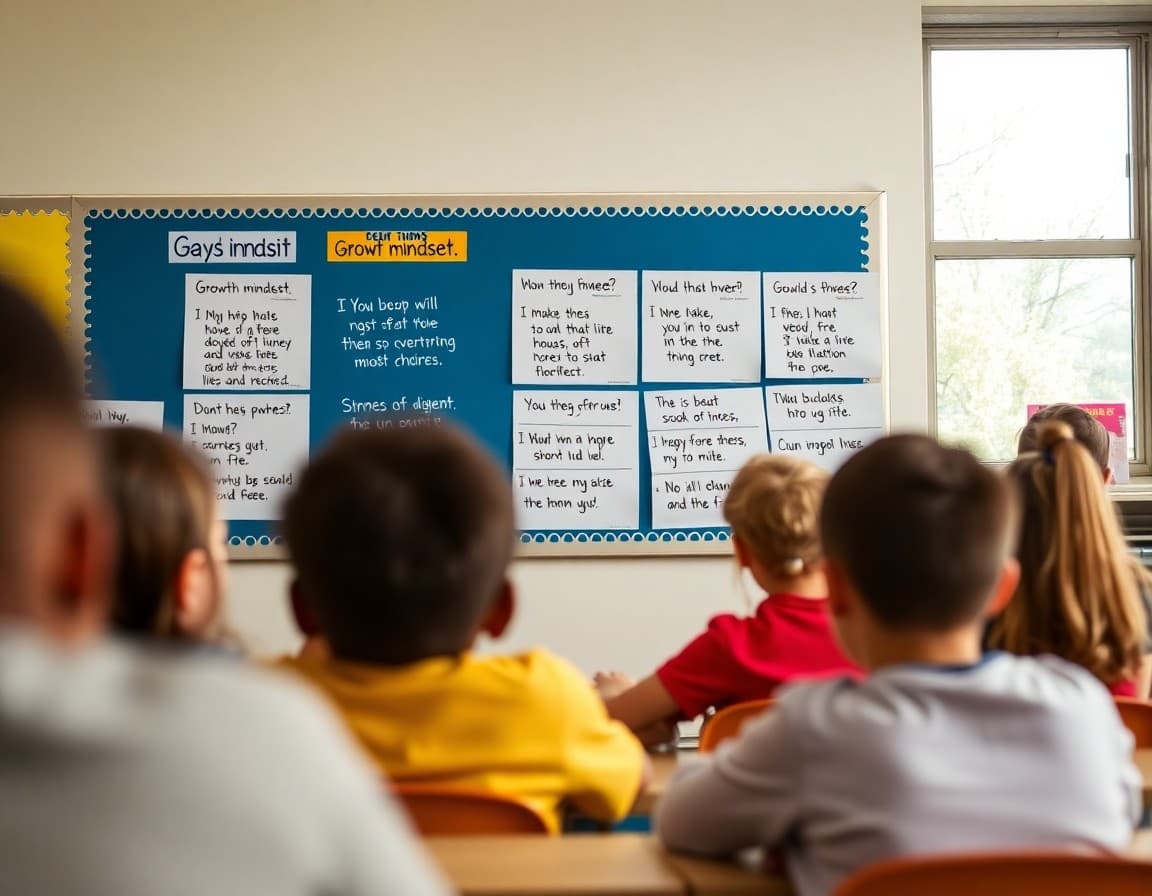
Growth mindset research has been one of the most influential ideas in education over the past two decades. The core finding -- that students who believe their abilities can develop through effort perform better than those who believe abilities are fixed -- has practical implications for how schools teach, how teachers give feedback, and crucially, how families talk to their children about challenge and failure. A newsletter that explains this clearly gives families the tools to reinforce what the school is teaching.
Fixed vs. Growth Mindset: The Core Distinction
A fixed mindset treats abilities as innate and unchangeable: you are either good at math or you are not. A growth mindset treats abilities as developable through effort, strategy, and learning from mistakes: you are not good at math yet, but with practice and the right strategies, you can improve. This distinction has profound implications for how students respond to challenge. Students with a growth mindset persist. Students with a fixed mindset avoid challenges that might reveal their limitations.
What Students Are Learning About Growth Mindset
Describe the specific growth mindset activities happening in classrooms. Brain science lessons showing that the brain physically changes when students practice hard things. Celebration of mistakes as evidence of learning. Praise for effort and strategy rather than results. The word 'yet' added to capability statements. Specific descriptions give families a way to recognize these concepts when their children bring them home.
How Families Inadvertently Undermine Growth Mindset
One of the most practically useful things a growth mindset newsletter can do is name the ways well-meaning parents unintentionally reinforce fixed mindset. Telling a child 'you are so smart' praises a fixed trait rather than an effort. Protecting children from failure robs them of the learning experience. Expressing sympathy when a child struggles ('you just are not a math person') reinforces the belief that struggle is evidence of a permanent limitation. These patterns are common and well-intentioned -- but reversible once named.
Specific Language Shifts for Families
Give families a concrete language guide. Replace 'you are so smart' with 'you worked really hard on that.' Replace 'you failed' with 'what did you learn from that?' Replace 'I am just not a math person' (said in front of children) with 'math is challenging for me, and I keep practicing.' Replace 'this is too hard' with 'this is hard right now -- what strategies have you tried?' Small, specific language shifts that families can practice make growth mindset more than a school concept.
The Role of Appropriate Challenge
One of the most important family applications of growth mindset is supporting children in seeking appropriate challenge rather than avoiding it. A child who always chooses the easiest book level, the safest project topic, or the most predictable social situation is protecting their sense of being good at things. Families who gently encourage stretching -- choosing the slightly harder book, trying out for the team even if the outcome is uncertain, attempting the more ambitious project -- are building resilience in real time.
Failure as Data, Not Identity
Give families a practical framework for conversations after failure or disappointment. What did you try? What happened? What might you do differently next time? What did you learn? These questions frame failure as information rather than evidence of inadequacy. Students who regularly have these conversations with parents develop a habit of self-reflection that carries into every learning environment they enter.
The Research and Its Limits
A brief, honest note about what the research actually shows -- growth mindset interventions produce modest but real improvements in academic motivation and performance, especially for students who have experienced academic failure -- gives families an accurate picture. Growth mindset is not a magic solution. It is one evidence-based tool among many. A school that communicates this honestly is one families trust to implement educational research responsibly.
Get one newsletter idea every week.
Free. For teachers. No spam.
Frequently asked questions
What should this newsletter cover?
Lead with what your school is specifically doing or observing this month. Connect the theme to family action at home, name who at school to contact, and include one community resource. Specific, school-rooted content gets read. Generic awareness content gets archived.
When should it go out?
The week before or the first week of the relevant observance. Families need lead time to participate in events, prepare for activities, or have conversations with their children. A newsletter that arrives after the observance has started is contextual but misses the action window.
How do you make it feel personal rather than institutional?
Name specific students, staff, or community members. Share a classroom activity in progress. Include a direct quote from a teacher, counselor, or student. Specificity is what makes a school newsletter feel like it comes from people who care, not from a template.
How does Daystage help with this newsletter?
Daystage lets school staff create a clean, formatted newsletter and send it to all families' inboxes in minutes. Templates can be reused each year for recurring observances. Families receive the newsletter directly in their email and can reply to ask questions.
Should it include community resources?
Yes, briefly. One or two relevant organizations or helplines make the newsletter useful beyond school hours. Families who find a practical resource in a school newsletter develop trust in the school as a community hub, not just an educational institution.

Adi Ackerman
Author
Adi Ackerman is a former classroom teacher and curriculum writer with 8 years in K-8 schools. She writes about school communication, parent engagement, and what actually works in real classrooms.
More for Community Outreach
Ready to send your first newsletter?
3 newsletters free. No credit card. First one ready in under 5 minutes.
Get started free