
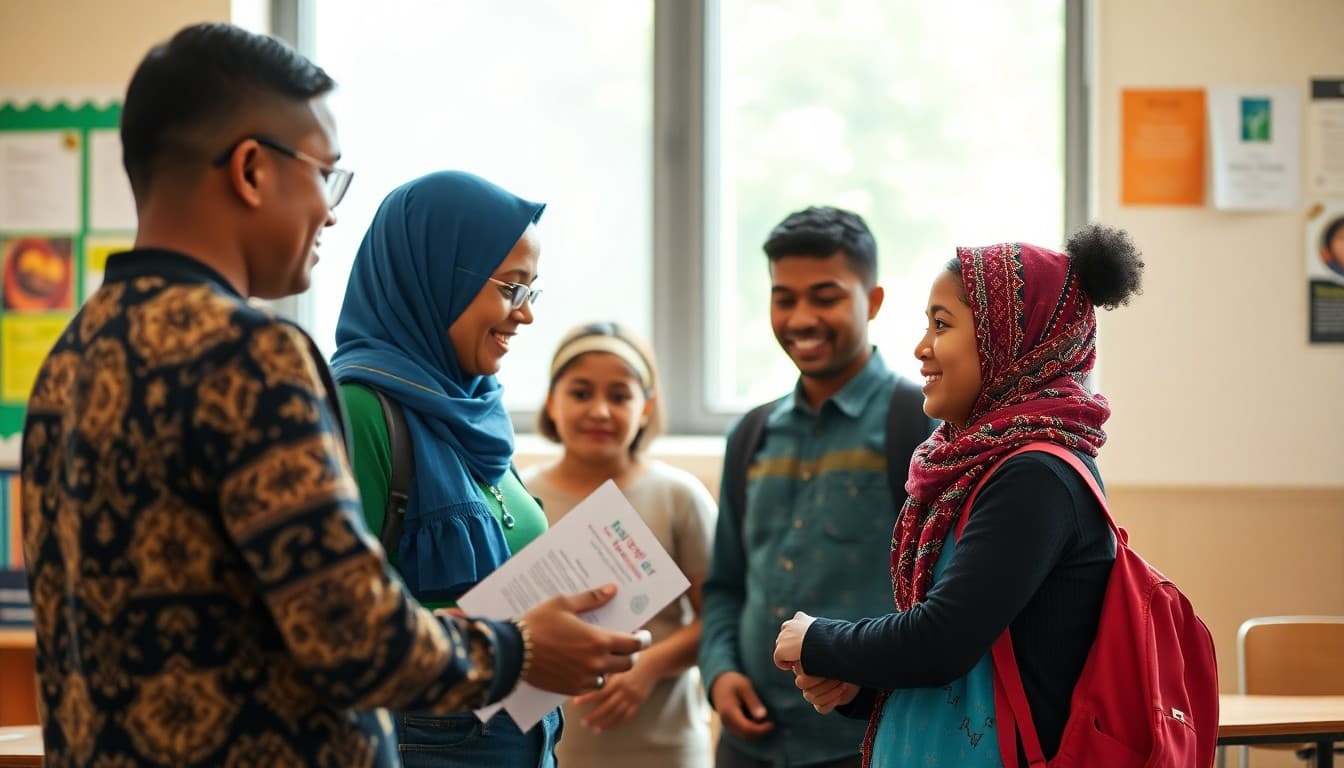
Cultural Liaison School Newsletter: Bridging Communities

A cultural liaison newsletter does something most school newsletters cannot do on their own: it speaks directly to families who may not recognize themselves in standard school communication. When a family arrives from a country with a fundamentally different school system, or when they speak a language that is not English, the standard parent update reads like information intended for someone else. A well-written cultural liaison newsletter changes that.
Start with what the school system actually is
Families who are new to the US school system do not know that grades K-12 exist, that attendance is compulsory, that parent-teacher conferences are expected, that backpacks go home daily with papers, or that free breakfast and lunch are available without stigma in most Title I schools. A cultural liaison newsletter for newly enrolled families should not assume any of this knowledge. A brief section that explains how the grade they just enrolled their child in fits into the larger system helps families navigate with confidence rather than confusion.
Translate school policies, not just words
A translated newsletter that uses the same bureaucratic framing as the original English version is not culturally bridging. A policy like "students must be in their seat by 7:45 AM to be counted present" translates clearly in words but may not communicate that arriving at 7:46 has documented academic consequences. A liaison newsletter should explain what a policy means in practice, not just what it says on paper, using examples and scenarios that match how the family experiences school time.
Name yourself as the contact, not the school office
The most common barrier families from non-dominant cultures face when trying to communicate with schools is not knowing who to call or whether their call will be understood. A cultural liaison newsletter that gives the liaison's direct phone number, names the languages they speak, and describes exactly what they can help with removes that barrier. "Call me, Maria, at [number] if you have a question and you need Spanish. I am here Tuesday through Friday from 8 AM to 3 PM" is infinitely more actionable than "contact the school main office."
Acknowledge the cultural calendar
Schools that observe Christian holidays but not Eid, Lunar New Year, Diwali, or Ramadan communicate something about whose culture is centered at the school. A cultural liaison newsletter that acknowledges the holidays and observances of the families it serves signals that the school sees their culture as real and present, not as a curiosity to be occasionally noted. Acknowledge upcoming observances by name, note whether the school can accommodate fasting schedules or family commitments, and ask families what the school should know.
Connect families to community before they ask
Families who have recently moved, recently emigrated, or recently experienced a change in family structure often do not know what community resources exist. A liaison newsletter that lists the halal food pantry, the Somali community center's homework help program, the Spanish-speaking immigration attorney who offers free consultations, and the after-school program with bilingual staff gives families access to the community network the liaison has already built. That is the newsletter's most practical function.
A sample liaison newsletter opening that works
"Dear families of [School Name], My name is [Name] and I am your family liaison for [Language] speaking families. I speak [Language] and English and I am here to help you understand how the school works, connect with teachers and staff, and find help in the community. This month I want to share three things that will help your child have a good month at school."
That opening works because it names the person, establishes the service, and makes a specific promise about what the newsletter will deliver. Families know immediately whether this communication is for them.
Report out on what you did this month
A brief paragraph noting what the liaison did in the past month builds credibility and visibility for the role. "This month I helped 14 families complete Title I consent forms, interpreted at 6 parent-teacher conferences, and connected 3 families to the county housing assistance program" makes the liaison's work visible and demonstrates its value. Families who see that report are more likely to reach out when they need support.
End with a specific ask or invitation
Every cultural liaison newsletter should end with one specific action families can take. Attend a coffee meeting on the 12th. Complete this short survey about what you need from the school. Call or text if your child missed school this week and you are not sure how to report it. A single clear ask beats a general invitation to stay connected, which is easy to ignore.
Get one newsletter idea every week.
Free. For teachers. No spam.
Frequently asked questions
What does a school cultural liaison do?
A school cultural liaison bridges communication between families from immigrant, multilingual, or underrepresented communities and the school. They translate documents, interpret at meetings, explain school expectations in culturally relevant ways, connect families to community resources, and advocate for families within the school system. They are often the first point of contact for newly enrolled families from specific cultural communities.
What should a cultural liaison newsletter cover?
The newsletter should explain how the US school system works at the grade level the family is navigating, translate key school policies and procedures into plain language, share upcoming dates that matter to the families served, list community resources available in the relevant language, and introduce the liaison as a named contact with a specific phone number or email. It should be written as a direct communication from the liaison to the family, not as a repackaged school announcement.
How do you build trust through a cultural liaison newsletter?
Trust builds through consistency, specificity, and cultural respect. Sending the newsletter on a predictable schedule, using language that reflects the community's own expressions rather than translated bureaucratic English, naming the liaison personally, and acknowledging cultural events and holidays that matter to the community all contribute to a relationship rather than a transactional information transfer.
Should a cultural liaison newsletter be in English or in the home language?
It should be in the family's primary home language first, with English available for families who prefer it. A newsletter to Spanish-speaking families that leads in English and includes a Spanish translation at the bottom signals that the English-speaking parent is the primary audience. Leading in the home language signals that the family is the intended reader.
How does Daystage help cultural liaisons communicate with families?
Daystage allows cultural liaisons to build and send newsletters in multiple languages simultaneously, with consistent formatting across all versions. The platform tracks which families opened the newsletter, so liaisons can follow up personally with families who may not have received it. That targeted follow-up is especially important for newly enrolled families who are still building a connection to the school.

Adi Ackerman
Author
Adi Ackerman is a former classroom teacher and curriculum writer with 8 years in K-8 schools. She writes about school communication, parent engagement, and what actually works in real classrooms.
More for Community Outreach
Community Resource Fair School Newsletter: Free Help Available
Community Outreach · 6 min read
Community Advisory Board Newsletter: Communicating the Work of Your School's Advisory Council
Community Outreach · 5 min read
Adult Education Program Newsletter at School: Communicating Learning Opportunities for Parents and Caregivers
Community Outreach · 5 min read
Ready to send your first newsletter?
3 newsletters free. No credit card. First one ready in under 5 minutes.
Get started free