

Junior Year College Planning Newsletter: Timeline and Next Steps
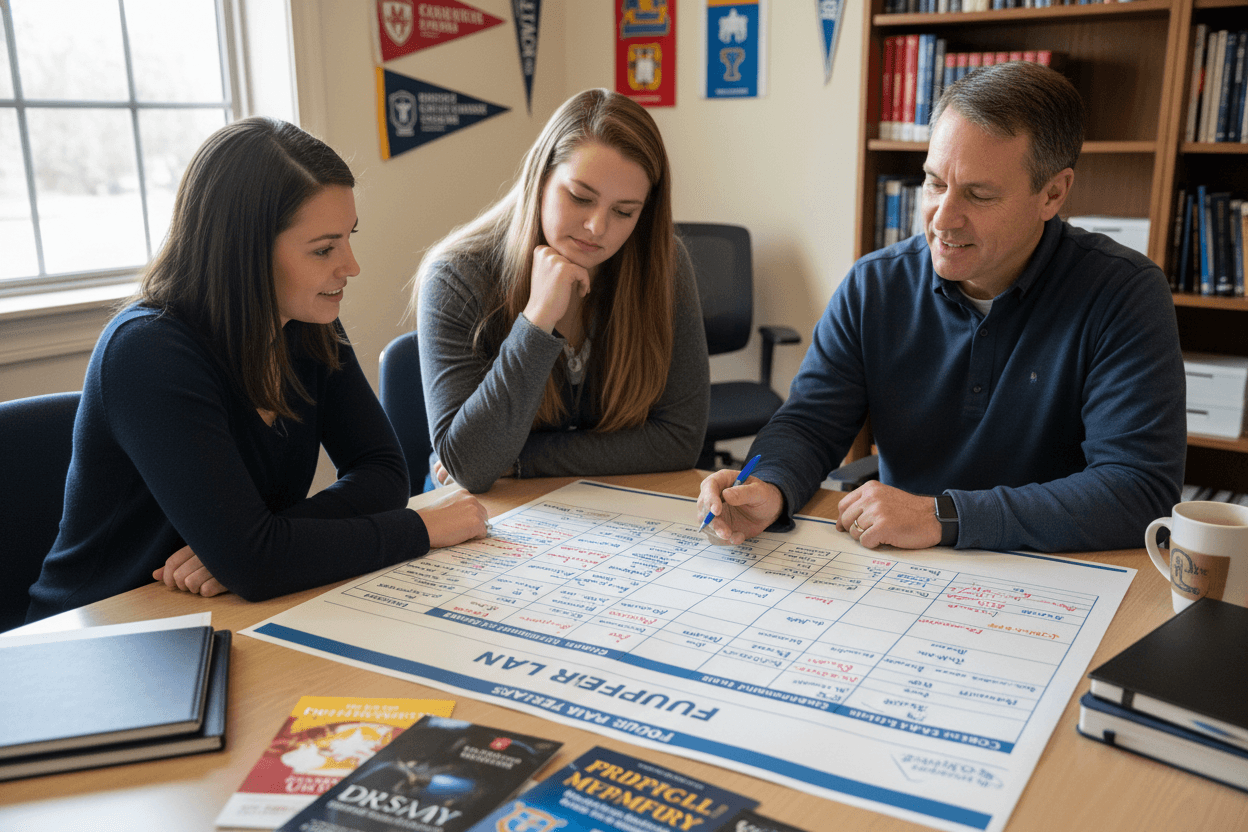
Junior year is when college planning stops being theoretical and starts being urgent. The decisions students make in eleventh grade, from which standardized tests to take and when, to how they spend the summer before senior year, directly shape the quality of their applications. A counselor who communicates clearly with junior families throughout the year gives students the context they need to make those decisions intentionally rather than reactively.
This guide covers what to include in a junior year college planning newsletter, how to pace the communication across the school year, and which topics most need explicit explanation for junior families.
September: setting the framework for the year
The September newsletter for juniors is an orientation to the whole college planning year. It should name the major milestones without overwhelming families with every detail: PSAT in October, SAT or ACT preparation and registration through the winter and spring, college list building, campus visits when possible, and a summer plan that positions the student well for senior year applications.
Introduce the concept of the college list now, not in senior year. A junior who has never thought about what size school, what geographic region, what academic environment, and what financial constraints apply to their college search will enter senior year under-prepared. September is when that thinking should begin.
The PSAT in October
The PSAT serves two purposes. First, it is the qualifying test for National Merit Scholarship recognition, which begins with the score on the junior-year PSAT. High scorers in each state earn Commended Student recognition or become National Merit Semifinalists, a distinction that carries scholarship eligibility and a significant boost in many college applications.
Second, the PSAT score provides a personalized data point for SAT preparation. Students who link their PSAT results to a Khan Academy account receive a customized practice plan built around their actual performance. The newsletter should explain both purposes and encourage students to take the PSAT seriously, not treat it as a low-stakes practice session.
Planning the SAT and ACT testing schedule
Most juniors take the SAT or ACT at least once in the spring of junior year and again in the fall of senior year if needed. The junior spring attempt produces a score the student can use to evaluate whether additional preparation is worthwhile before senior year testing.
Your newsletter should walk through the SAT and ACT test dates for the spring semester, with registration deadlines for each, and encourage students to register for at least one test by December so they have committed to a date. Students who plan to take the test "eventually" without a registered date rarely complete their preparation with the same discipline as those who have a concrete deadline on the calendar.
Building the college list with realistic criteria
A newsletter issue dedicated to college list building should help families think about fit across several dimensions: academic selectivity, cost and financial aid generosity, geographic preferences, campus size and environment, and available programs in the student's area of interest. Families who build a list based on name recognition alone often find that the schools they applied to were not the best fit, regardless of where they were admitted.
Direct families to the net price calculator on each college's website, which is required by federal law to be present on all college websites. This tool gives families a personalized estimate of what a specific school would cost based on their financial situation, which is far more useful than the published sticker price.
Planning a meaningful summer
The summer before senior year is the last summer with significant free time before applications are due in the fall. Students who use it purposefully enter senior year with stronger application materials. Summer activities that carry weight include: academic programs at universities, internships or work experience, meaningful community service, or sustained independent projects in an area of genuine interest.
The key word is genuine. A newsletter that encourages students to pursue things they actually care about produces stronger outcomes than one that lists prestigious programs for resume padding. Admission readers are skilled at distinguishing authentic engagement from curated appearance.
Starting the conversation about recommendations early
Letters of recommendation are due in the fall of senior year, but the relationships that produce strong recommendations are built over time. A junior-year newsletter that reminds students to take their junior-year teacher relationships seriously, and to identify potential recommenders before senior year begins, gives students time to cultivate these connections authentically.
Explain the typical recommendation request timeline: students should approach potential recommenders in the spring of junior year or at the very beginning of senior year, not three weeks before the application deadline. Teachers who receive last-minute requests produce last-minute letters. Teachers who have been asked thoughtfully and early produce letters that are specific, detailed, and genuinely persuasive.
Spring semester: narrowing the list and preparing for senior year
By April and May of junior year, students should have a narrowed college list, at least one standardized test score in hand, and a general plan for the summer. The spring newsletter can prompt this synthesis: where are you in the list? Have you taken an SAT or ACT? What are you planning for summer?
Students who can answer these questions clearly by June are in a strong position for senior year. Students who cannot should be directed to a counselor appointment before the school year ends. Daystage makes it simple to send this junior-year sequence as a consistent monthly newsletter series, keeping every family in the loop without requiring individual outreach for each communication.
Get one newsletter idea every week.
Free. For teachers. No spam.
Frequently asked questions
What are the most important college planning tasks for high school juniors?
Junior year carries more college planning weight than any other year. The four most important tasks are: taking the PSAT in October and using the results to guide SAT or ACT preparation, building an initial college list based on honest academic and financial criteria, researching summer programs that strengthen the application profile, and beginning conversations about letters of recommendation with potential recommenders. Students who complete these four tasks in junior year enter senior year with a significant head start.
Should juniors visit colleges before applying?
College visits in junior year are more productive than visits in senior year because the student still has time to add or remove schools from their list based on what they learn. In-person campus visits are valuable, but virtual tours and information sessions are a reasonable substitute for distant schools. The most useful visit activity is sitting in on a class or speaking with a current student rather than attending the official tour, which tends to cover logistics rather than culture.
How many colleges should a junior have on their initial list?
An initial junior-year list of ten to fifteen colleges is a reasonable starting point. This list will narrow throughout junior year and into the summer before senior year. A balanced list typically includes three to four schools where the student's academic profile is comfortably above average for admitted students, four to six schools where the student is in the middle range, and two to three schools where the student is highly likely to be admitted. Financial fit should be applied alongside academic fit at every level of the list.
What should a junior year college planning newsletter say about AP courses?
Junior year is often when students take their most challenging AP courses. The newsletter should remind families that AP performance matters to colleges and that junior year grades are among the most carefully reviewed in the application. Students who are struggling in an AP course should consider whether to continue or step down to an honors section, since a poor grade in AP Chemistry is more damaging to an application than a strong grade in honors Chemistry. Counselors should not push students into courses that exceed their genuine readiness level.
How does Daystage help counselors send junior year college planning newsletters?
Daystage makes it easy to maintain a separate subscriber list for junior families and send them targeted college planning content throughout the year. Counselors use it to deliver the junior-specific newsletter issues alongside senior content without confusion, and the mobile-friendly format ensures families read the newsletter where they actually check information.

Adi Ackerman
Author
Adi Ackerman is a former classroom teacher and curriculum writer with 8 years in K-8 schools. She writes about school communication, parent engagement, and what actually works in real classrooms.
More for College Prep
Ready to send your first newsletter?
3 newsletters free. No credit card. First one ready in under 5 minutes.
Get started free