

First Generation College Student Newsletter: Supporting Families
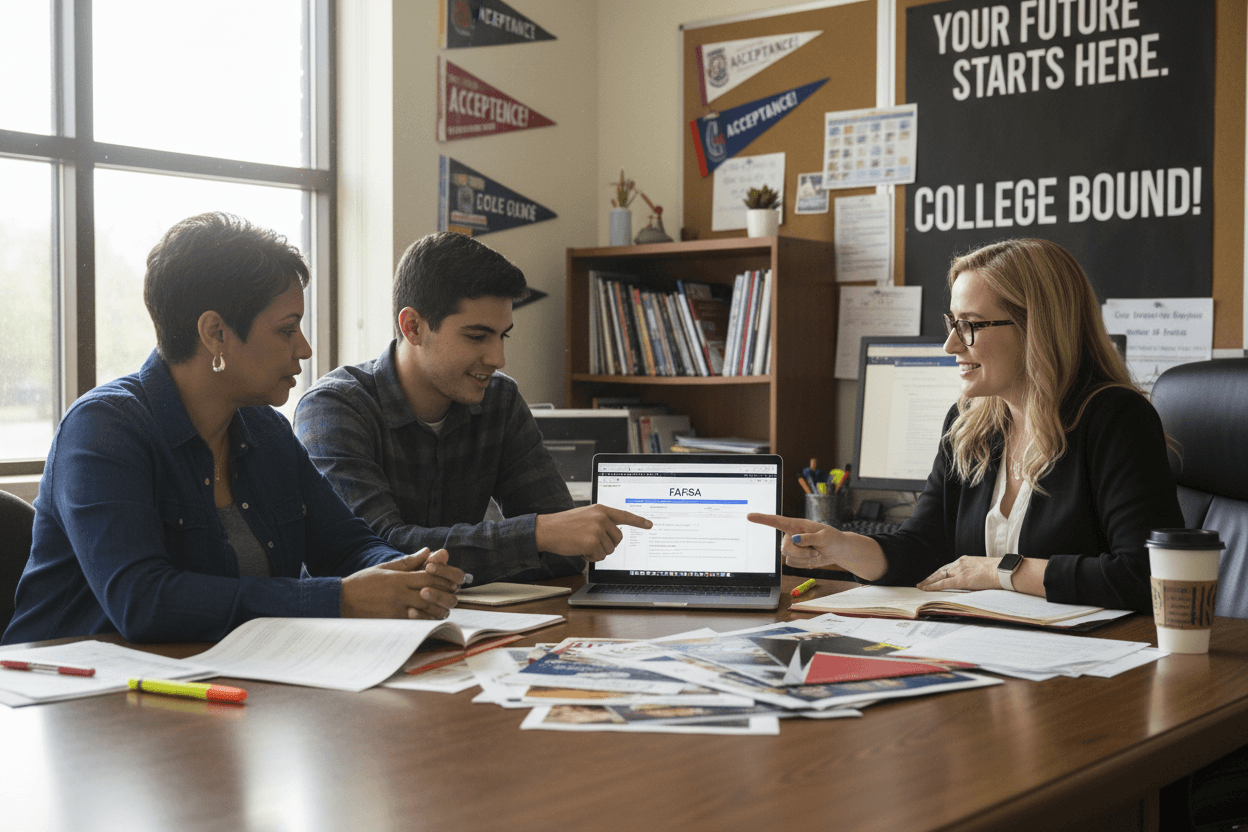
First-generation college students are applying to college without a family member who has been through the process before. That means the information most families absorb informally, through dinner table conversations, campus visits with parents, and a general sense of how the system works, does not exist for these students and their families. The counselor's newsletter is often the most direct line of communication available to fill that gap.
A first-gen college newsletter is not about writing more inspirational content about going to college. It is about delivering specific, actionable information at the right time, in a format that is accessible to families who are navigating this process for the first time.
Start with what families do not already know
The most common mistake in first-gen college communication is assuming that families know what they do not know. Many first-generation families do not know that the FAFSA must be completed each year, not just once. They do not know that applying for financial aid does not commit a student to any particular college. They do not know that fee waivers are available so the application process does not have to cost money upfront. They do not know that a counselor letter of recommendation needs to be requested weeks in advance, not the week before a deadline.
A newsletter that names these specific knowledge gaps and addresses them directly serves first-gen families in a way that general college prep content does not.
Build a calendar-anchored communication structure
First-gen college newsletters work best when they are tied to the actual timeline of the college application cycle. In September, cover FAFSA opening and what documents families need to gather. In October, cover the Common App and how to request fee waivers. In November, cover early decision and early action deadlines and what they mean. In January, cover regular decision deadlines and financial aid verification. In April, cover how to compare financial aid award letters, which many families find confusing and counterintuitive.
A newsletter that arrives at the right moment in the cycle, just before a family needs to take a specific action, is more useful than a newsletter that covers everything at once or arrives without a connection to what is happening right now.
Name the programs available to first-gen students specifically
Many support programs exist specifically for first-generation college students and their families. TRiO programs, funded by the federal government and available at many high schools, provide tutoring, mentoring, and college preparation support for students who are the first in their family to pursue higher education. Gear Up operates similarly in many states. QuestBridge connects high-achieving, low-income students with highly selective colleges and can result in a full four-year scholarship for eligible students.
State-level programs vary significantly. Many states have college promise programs that cover tuition at community colleges or state universities for eligible students. Local community foundations often have scholarships specifically for first-generation students. A newsletter that names these programs specifically, with a link to more information, gives families something concrete to follow up on.
Address FAFSA in plain language every time
The FAFSA is the most consequential single step in the college financial aid process, and it is the step that first-generation families most commonly delay, skip, or complete incorrectly. A first-gen college newsletter should address the FAFSA directly and plainly in multiple issues throughout the year.
The most important points to communicate: FAFSA opens October 1 and should be completed as early as possible because some aid is awarded on a first-come, first-served basis. Completing the FAFSA does not commit a student to any school. Families should complete it regardless of what they expect the outcome to be because many families are surprised by their eligibility. Students whose parents did not file taxes or who have complicated income situations should contact the counseling office for guidance on how to proceed.
Include local and community-based resources
National programs matter, but local resources are often more accessible and more relevant to the specific circumstances of your school's first-gen population. Local scholarship funds, community organizations, regional college fairs designed for first-generation students, and college access networks that serve your geographic area are worth including in newsletters. A family is more likely to act on a resource that exists in their city than on a program described in general terms.
If your school has a partnership with a local college access organization, name it and describe what it offers. If a local community foundation awards scholarships each spring, include the deadline and application link in your January or February newsletter. Specificity is what makes a newsletter useful rather than informational.
Make the counseling office feel approachable
First-generation students consistently underuse the counseling office compared to their peers from college-educated families. Part of this is time. Part of it is not knowing what the counselor can help with. Part of it is a reluctance to ask for help that can come from navigating systems as an outsider.
A newsletter that names the specific things the counseling office helps with, application fee waiver requests, FAFSA filing questions, recommendation letter coordination, scholarship searches, and application review, removes the ambiguity that prevents students and families from reaching out. Include drop-in hours, a direct email address, and a note that appointments are available in Spanish or other languages if that is true for your office.
Use Daystage to send first-gen newsletters consistently throughout the year
The value of a first-gen college newsletter is in the consistency of delivery. Families who receive timely, specific information at each key moment in the college prep cycle are significantly better positioned than families who receive occasional updates. Daystage gives counselors a professional newsletter tool built for school communication, with templates that can be reused and scheduled throughout the school year, so the newsletter goes out on time without requiring a new production effort each month.
Get one newsletter idea every week.
Free. For teachers. No spam.
Frequently asked questions
What should a first-gen college newsletter cover every month?
Cover the most time-sensitive action item for that point in the school year, a financial aid or scholarship resource with a specific deadline, a local or regional support program for first-generation students, and a plain-language explanation of one part of the application process families may not already understand. Keep each newsletter focused on three or four items rather than trying to cover everything at once.
How do I reach parents who do not read English fluently?
Send a translated version alongside the English version whenever possible. For counseling offices that serve significant Spanish-speaking, Somali-speaking, or other language communities, translation signals that the information is meant for that family, not just for families who already navigate these systems easily. Community liaisons or parent volunteers can sometimes assist with translation and delivery.
What community programs should I mention in a first-gen college newsletter?
TRiO programs (federally funded, available at many schools), Gear Up, local college access networks, community foundation scholarships, QuestBridge for high-achieving low-income students, and any state-specific college promise programs. Check with your district or regional college access organization for programs specific to your area.
How far in advance should first-gen families start preparing for college applications?
Ideally the conversation starts in ninth or tenth grade around course selection and building a college-going identity. Practically, many first-gen families engage seriously in junior year when the timeline becomes real. A newsletter that starts the conversation early, before senior year, gives families more time to act on the information and reduces the crisis mode that senior year often brings.
How does Daystage help counselors reach first-generation families?
Daystage gives school counselors a professional, consistent channel for sending newsletters to first-generation student families throughout the school year. You can build a recurring template with the sections families need most, schedule it to go out at key points in the college prep calendar, and track who is opening and reading the communication. Consistent delivery is what makes the difference for families who cannot rely on informal networks to fill in the gaps.

Adi Ackerman
Author
Adi Ackerman is a former classroom teacher and curriculum writer with 8 years in K-8 schools. She writes about school communication, parent engagement, and what actually works in real classrooms.
More for College Prep
Ready to send your first newsletter?
3 newsletters free. No credit card. First one ready in under 5 minutes.
Get started free