
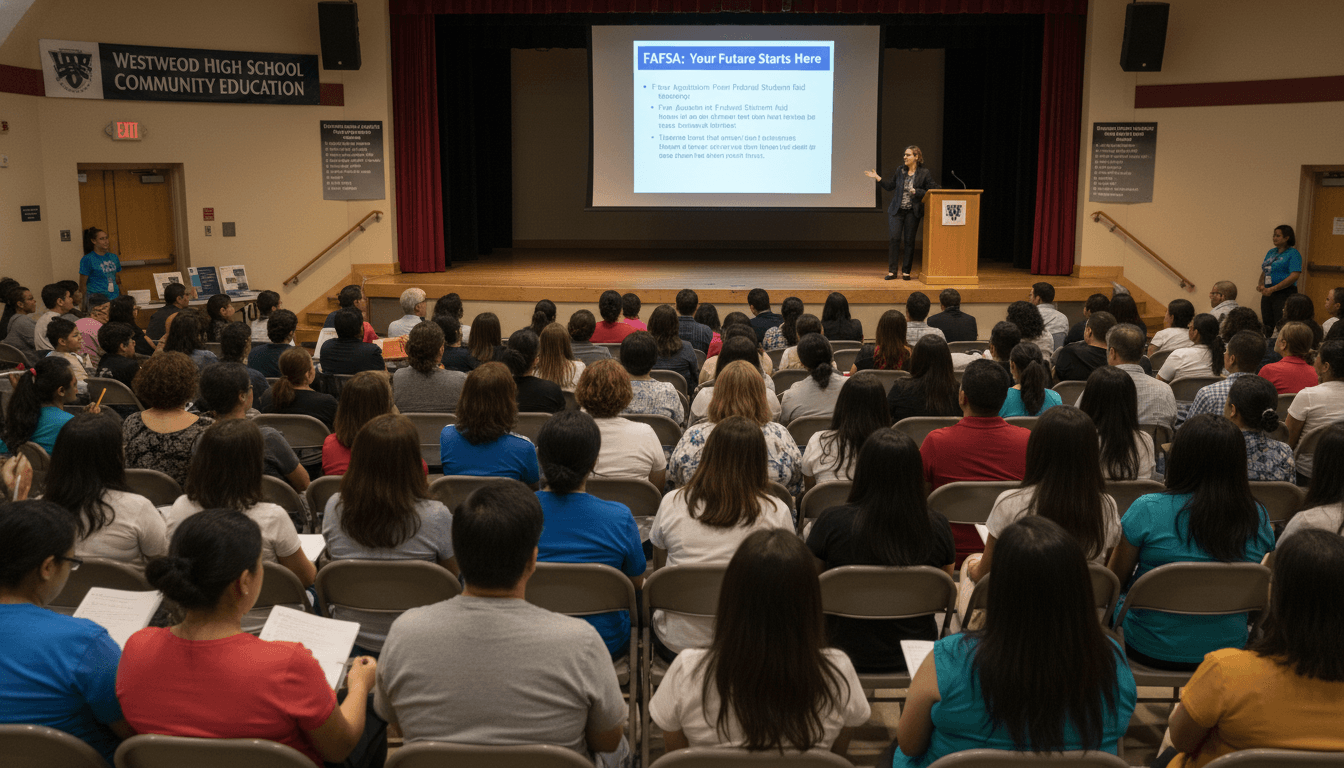
Financial Aid Night Newsletter: Before and After the Event
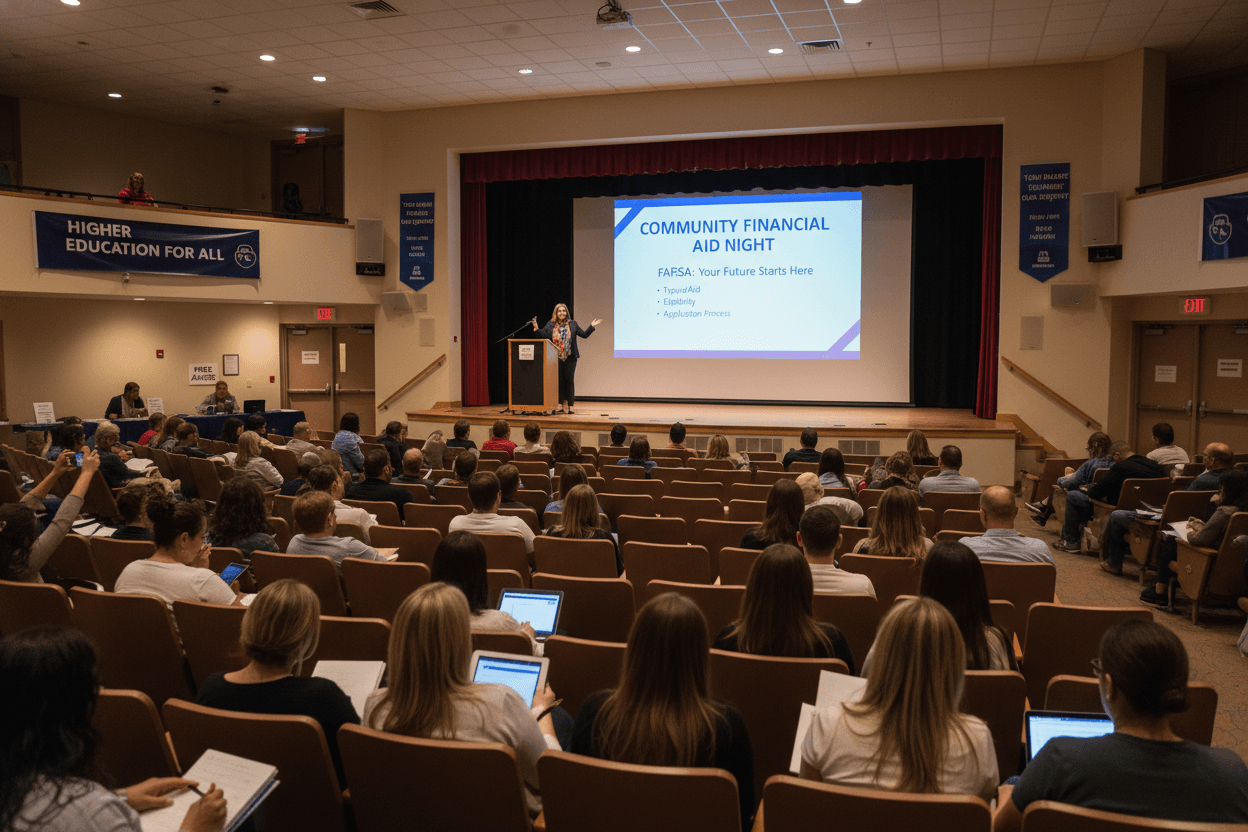
Financial aid night is often the most important event the counseling department hosts all year, and for many families it is also the most anxiety-producing. Parents and guardians arrive wondering whether their student can actually afford the schools on the list. Students sit beside them hoping the conversation will not end with the words "you need to pick somewhere cheaper."
The newsletter you send before and after that night can determine whether families arrive prepared and leave with a plan, or whether they never show up at all.
Why the pre-event newsletter matters more than the event itself
Families who arrive at financial aid night knowing what FAFSA is, knowing that they need to bring their most recent tax return, and knowing that a financial aid award letter is not the same as a bill get far more out of the event than families who arrive cold. The pre-event newsletter is your opportunity to level the playing field before anyone walks through the door.
Send the first announcement three to four weeks out. Include the logistics, the topic list, and a one-paragraph explanation of why this event matters. That explanation is the part most counselors skip. Do not skip it. A parent who understands that attending this event could save their student thousands of dollars in unneeded borrowing will rearrange their schedule. A parent who receives only a date and a room number probably will not.
What the invitation newsletter should include
Keep the invitation specific. List every topic the presenter will cover, because families need to decide whether this event is relevant to them. Topics typically include the FAFSA submission process, the CSS Profile if your school serves students applying to institutions that require it, how to read and compare award letters, and the local scholarship search process. If a bilingual presenter or translator will be available, say so clearly. If childcare is offered, say so clearly. Both details can make the difference between a family attending or not.
Also list what families should bring. Tax returns from the prior year, the student's Social Security number, and the parent's FSA ID credentials are the essentials. Families who do not know to bring these materials arrive unable to participate in the live FAFSA walkthrough portion of many financial aid nights.
The reminder newsletter
Send a shorter reminder seven to ten days before the event. This one does not need to repeat all the logistics. Restate the date, time, and location. Include a link to register if registration is required. Add one sentence reminding families to gather their tax documents. That is enough.
Send a final brief reminder two days before the event. Keep it under five sentences. Families who have been meaning to add the date to their calendar will do it when they see this one.
Serving families who cannot attend
Financial aid nights held on weeknights exclude families who work evening shifts, families without transportation, and families who did not see the invitation in time. Plan for this in advance. If the event will be recorded, say so in every pre-event communication. If you will share the slide deck after, say so. Families who know they will have access to the materials are more likely to stay connected to the process even when they cannot attend in person.
What the post-event newsletter must do
Send the follow-up within 48 hours of the event. This is the newsletter that does the actual work of financial aid night communication, because it reaches everyone: families who attended and want the slide deck, and families who did not attend and need everything.
Include the recording link, the slide deck PDF, and the key deadlines that were discussed. Name the next three actions families should take and provide a clear contact point for questions. Families who received this follow-up and attended the event will use it to review what they heard. Families who could not attend will use it as a substitute for being there.
Addressing the families who are most anxious about cost
Financial aid communication works best when it is concrete. Abstract reassurances that "financial aid is available" do not move families. Concrete examples do. Include a sample award letter in your post-event newsletter with the cost breakdown clearly labeled: total cost of attendance, grant and scholarship aid, loans, and the resulting net cost. Show families what they are actually looking at when they open an award letter from a school. That visual alone reduces the confusion that leads families to make poor financial decisions during the decision period.
Building the financial aid newsletter sequence into your calendar
Financial aid night communication is most effective when it is part of a broader semester calendar rather than a standalone event push. The invitation newsletter, two reminder newsletters, and the post-event follow-up are four pieces of communication that work as a sequence. When counselors plan them together, they take about an hour of total writing time and can be scheduled weeks in advance. That is a small investment for an event that shapes how families navigate one of the most financially significant decisions of their student's life.
Get one newsletter idea every week.
Free. For teachers. No spam.
Frequently asked questions
How far in advance should counselors send the financial aid night announcement newsletter?
Send the first announcement three to four weeks before the event, then a reminder one week out, and a final nudge two days before. Three touchpoints gives families enough runway to rearrange schedules. Families who receive only one notice, sent a week before the event, have low attendance rates, especially for evening events that compete with work and childcare.
What should be in the pre-event financial aid night newsletter?
Include the date, time, location, and whether the event is in person or virtual. Name the topics that will be covered, specifically FAFSA, CSS Profile if applicable, award letter comparison, and the local scholarship search process. List what families should bring, such as tax returns and student ID numbers. Mention if a translator will be available and whether childcare is offered.
What should the post-event financial aid night newsletter cover?
Send a follow-up within 48 hours with a recording link if the event was recorded, a PDF of the slide deck, and the next three dates families need to act on. Include contact information for follow-up questions. Acknowledge that many families who could not attend will rely on this follow-up to get the same information.
How do you write a financial aid newsletter for families who are anxious about cost?
Lead with the practical, not the aspirational. Many families arrive at financial aid night convinced that college is unaffordable. Use concrete examples. Show a sample award letter with net cost clearly labeled. Explain the difference between cost of attendance and what a family is actually expected to pay. Frame FAFSA as the necessary first step to finding out, not the final answer.
How does Daystage help counselors manage financial aid night communication?
Daystage lets counselors send pre-event, reminder, and follow-up newsletters to grade-level subscriber lists without building separate campaigns each time. The mobile-friendly format means families read the announcements on their phones, which is where most school communication gets opened. Counseling teams that use Daystage report better attendance at events like financial aid night because families actually see the invitations.

Adi Ackerman
Author
Adi Ackerman is a former classroom teacher and curriculum writer with 8 years in K-8 schools. She writes about school communication, parent engagement, and what actually works in real classrooms.
More for College Prep
Ready to send your first newsletter?
3 newsletters free. No credit card. First one ready in under 5 minutes.
Get started free