
Introducing Zones of Regulation to Families Through Your Teacher Newsletter

Why Zone Language Needs to Go Home
Zones of Regulation gives students a shared vocabulary for emotional states. That vocabulary is most powerful when it is not confined to school. When a parent picks up a child who is clearly in the Yellow Zone, being able to say "It sounds like you might be in Yellow right now. What tool helps you?" continues the regulation work without the parent needing to understand the full curriculum.
Your newsletter is how you give families that language.
Introduce the Four Zones Early and Visually
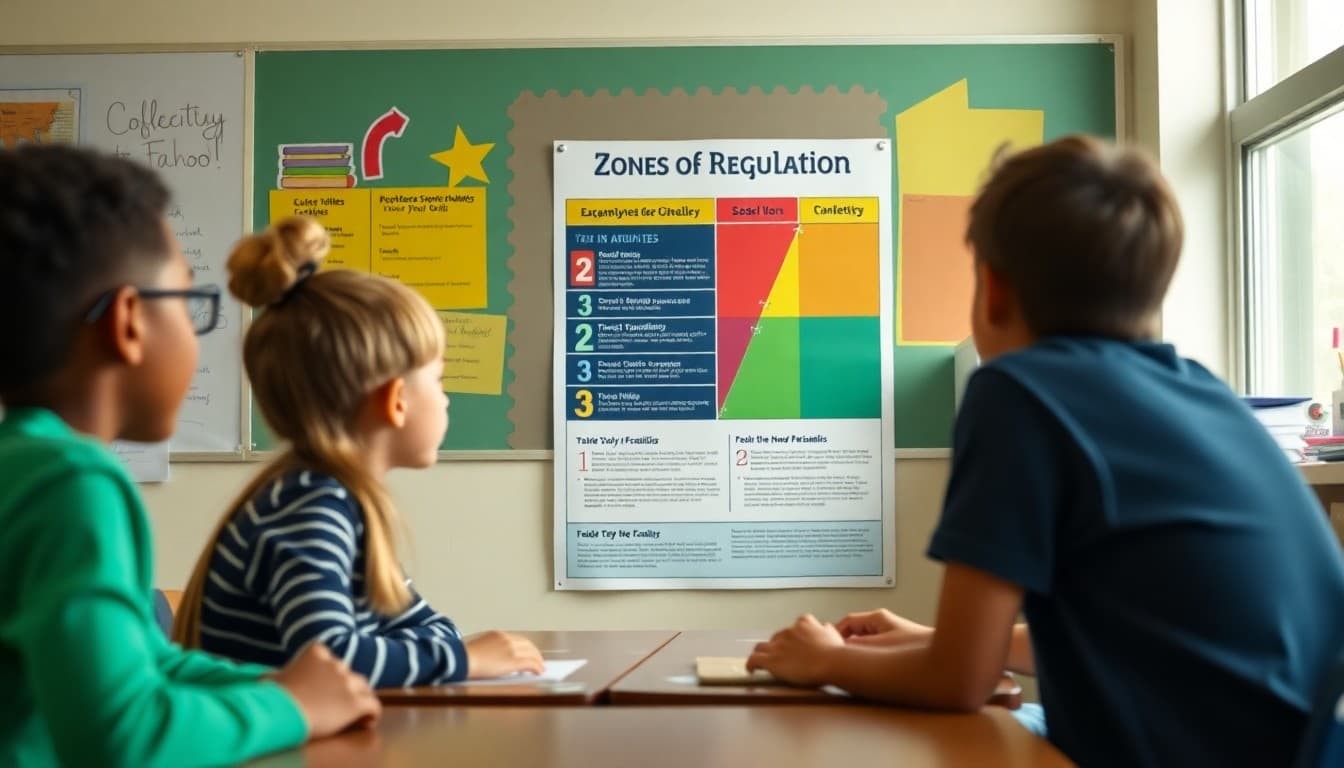
In your first or second newsletter, describe all four zones. Keep it brief. Each zone gets one sentence and two examples. Blue is low energy, like being tired or sad. Green is calm and ready to learn. Yellow is heightened, like feeling excited, worried, or frustrated. Red is intense, like feeling overwhelmed or out of control. That is enough for families to understand the framework and start using the language.
If your newsletter tool supports images, include the four-color graphic. Visual reinforcement helps families remember the zones faster than text alone.
Separate Zones From Behavior Expectations
This is the most important thing to communicate clearly: no zone is "bad." All emotions are valid. The goal is not to stay in the Green Zone all day. The goal is to recognize which zone you are in and make choices about how to manage it. A student who is in the Yellow Zone is not in trouble. They are an emotional being who needs tools, not punishment.
Say this clearly in your newsletter because families often assume yellow and red are disciplinary categories. They are not.
Share the Tools Alongside the Zones
Knowing which zone you are in is only half the framework. The other half is having tools to move between zones when needed. In your newsletter, mention the tools your class uses: deep breathing, a quiet corner, a short walk, drawing, or simply naming the feeling. When families know the tools, they can offer them at home: "You seem like you might be in Yellow. Do you want to try the breathing we learned?"
Connect Zones to Classroom Events
When something significant happens in the classroom that involves emotional regulation, reference it in your newsletter without identifying students. "This week we practiced what to do when we feel ourselves moving into the Yellow Zone during a frustrating activity. The class did a really good job of noticing and using their tools." This kind of update keeps families informed about SEL work without requiring a separate explanation every time.
Give Families a Weekly Zone Check-In Prompt
Include a one-sentence home practice in your newsletter whenever you reference the zones. "Ask your child what zone they were in at their hardest moment this week and what tool helped them." That question gives families an entry point and gives students a chance to apply what they are learning to real experiences at home. It takes thirty seconds to ask and creates a meaningful conversation.
Be Patient With the Learning Curve
Zone language takes time to become fluent, for students and for families. Your newsletter can normalize that. "We are in the early weeks of learning zone vocabulary. If your child forgets the names or mixes up the colors, that is completely normal. The goal right now is just that they start noticing how they feel." That kind of realistic framing sets families up for the long game rather than immediate results.
Get one newsletter idea every week.
Free. For teachers. No spam.
Frequently asked questions
What are the four Zones of Regulation?
Blue Zone: low energy, tired, sad, sick. Green Zone: calm, happy, focused, ready to learn. Yellow Zone: elevated emotions, excited, frustrated, anxious, wiggly. Red Zone: intense emotions, anger, panic, feeling out of control. Students learn to identify their zone and use tools to regulate.
How do I explain the zones to families in simple terms?
Tell families the zones are a color-coded system for naming how your body and brain feel. The goal is not to always be in the Green Zone but to recognize which zone you are in and have tools to manage it. Name the zones and give an example of each.
How can parents use zone language at home?
Encourage families to ask 'What zone are you in right now?' instead of 'How are you feeling?' The zone language gives kids a concrete framework to answer. Over time, using the same vocabulary at home and school strengthens self-awareness.
What if a parent thinks zone talk is unnecessary?
Explain that the zones are a practical tool, not a therapy exercise. They give children specific language for emotions, which research consistently shows improves behavior and reduces meltdowns. Keep the explanation grounded in outcomes rather than theory.
How does Daystage help teachers share social-emotional learning updates with families?
Daystage makes it easy to include a dedicated SEL section in your weekly newsletter. You can introduce the zones at the start of the year and reference zone language in context throughout, without needing a separate communication for each SEL update.

Adi Ackerman
Author
Adi Ackerman is a former classroom teacher and curriculum writer with 8 years in K-8 schools. She writes about school communication, parent engagement, and what actually works in real classrooms.
More for Classroom Teachers
Introducing Your Classroom Calm Corner to Families in Your Teacher Newsletter
Classroom Teachers · 6 min read
Using Daily Feelings Check-Ins in the Classroom: A Guide for Families
Classroom Teachers · 6 min read
Communicating Collaborative Problem Solving to Families via Teacher Newsletter
Classroom Teachers · 6 min read
Ready to send your first newsletter?
3 newsletters free. No credit card. First one ready in under 5 minutes.
Get started free